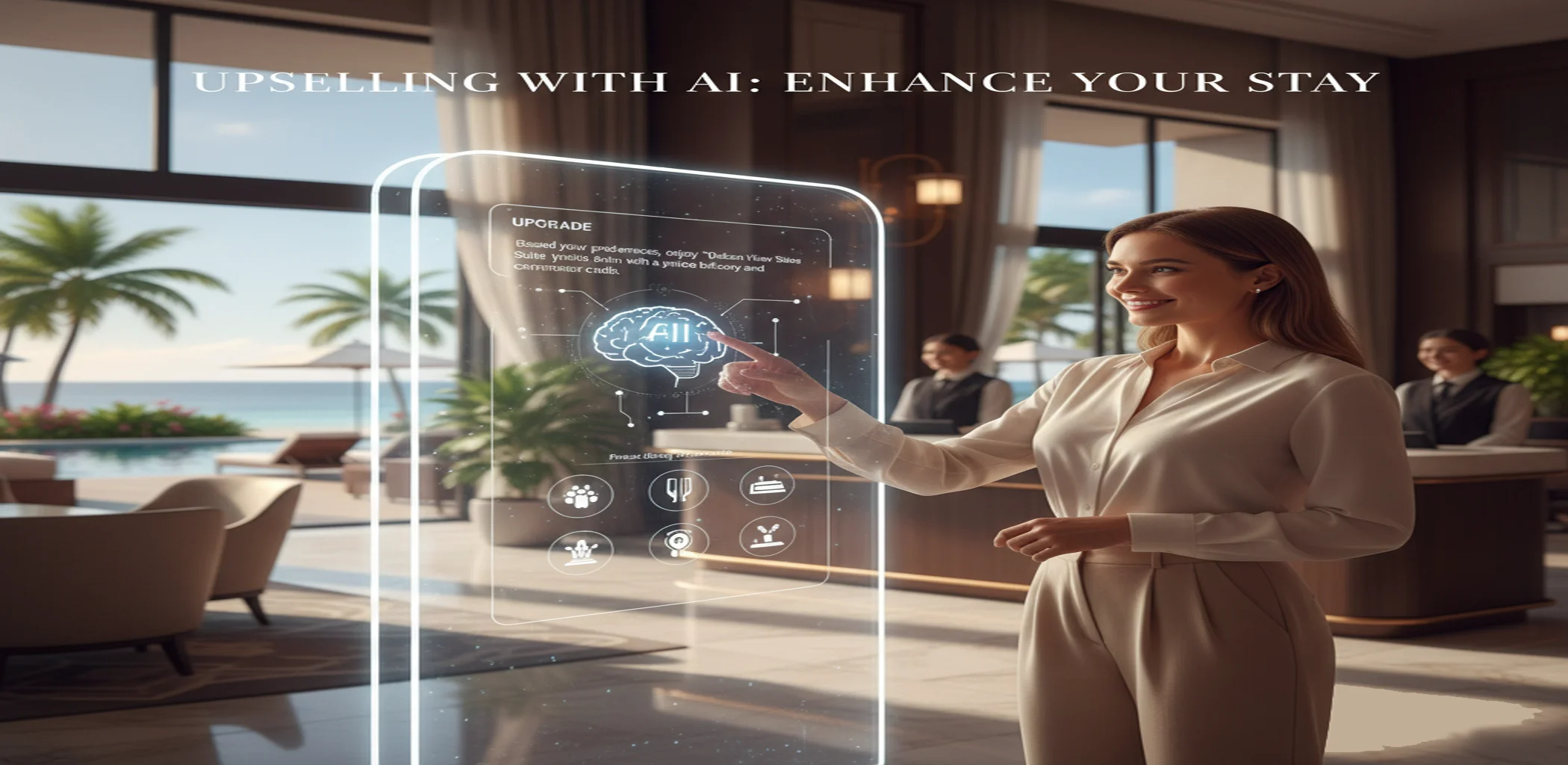
In the highly competitive hospitality environment, growth has to come not just through volume of bookings but also through incremental revenue per guest. For hotels and resorts, this means looking beyond the standard room revenue to upselling — that is, offering guests additional value and enhancing the stay experience while increasing spend. When paired with artificial intelligence (AI) and data-driven automation, upselling becomes far more effective: personalized, timely, seamless, and integrated into the guest journey.
Let us explore how AI is transforming upselling strategies in hotels and resorts — why it matters, how it works, what the best practices are, what organizational and technological changes are needed, and, importantly, how URAHL’s hospitality investments is leverage it.
Why Upselling Matters – The Business Case
Revenue and margin opportunity
- Many hotels leave significant revenue on the table by treating upsells as ad-hoc offers at check-in or check-out, with low conversion rates. For example, one source cites a typical check-in upgrade conversion of only ~2-5% under legacy methods.
- With smarter methods, hotels have achieved conversion rates in the 15-30% range for targeted upsells.
- A property with 200 rooms, 70% occupancy, ADR USD 150 and 5% current upsell rate at USD50 value can expect ~USD127,750 annual upsell revenue. With a 15% upsell rate the same hotel could reach ~USD383,250 — an uplift of USD255,500.
- Beyond room upgrades, upselling ancillary services (F&B, spa, experiences, late checkout) often carry higher margins. AI-driven upsells improve not just revenue but also profitability.
- For a group of properties (such as chain of cloud kitchens or resort acquisitions), incremental revenue scales. Given URAHL’s strategy of acquisitions, upgrades and tokenization (via UHT) the incremental spend per guest becomes a key value driver for the asset.
Guest experience, loyalty and differentiation
- Upselling, when done poorly, may feel pushy, opportunistic or disconnected from guest needs. But when done well — with relevance, timing, personalization — it enhances the stay experience. For example, offering the right guest an early check-in or a spa voucher at the right moment can be viewed as service, not sales.
- Personalization increases guest satisfaction, which leads to higher loyalty, repeat bookings and stronger brand reputation. AI-driven upsells support this by using guest data smartly.
- As guest expectations rise (especially among younger, digital-native travellers), hotels that use technology for relevant offers gain competitive advantage. According to one trend piece: “Gen Z expectations drive demand for eco-conscious and digital-first experiences” — which puts a premium on relevant upselling offers delivered via digital channels.
Fit with investment and supply-chain strategy
- For owners/acquirers, achieving higher spend per stay boosts RevPAR, GOPPAR (gross operating profit per available room) and ultimately asset value. Upselling is one lever.
- Offer upgrades and ancillary add-ons (premium meals, curated experiences, F&B bundles) via AI-driven guest/consumer channels.
- Upselling mechanisms also create demand for premium services (e.g., high-end spa equipment, upgraded F&B menus).
- For tokenized asset strategy (UHT), demonstrating robust incremental revenue streams via upselling strengthens the story to token investors about value-creation beyond room revenue.
What Is AI-Assisted Upselling in Hospitality?
Definition and key components
AI-assisted upselling in hotels/resorts means using machine-learning models, guest data, channel automation and real-time decisioning to deliver personalized upgrade or add-on offers at the optimal moment in the guest journey — rather than relying on manual front-desk scripts.
Key components:
- Guest profiling & propensity scoring: AI models analyze past behavior, booking patterns, channel of booking, purpose of stay, guest demographics, interaction history, spend history — to estimate “upgrade propensity”.
- Real-time decision engine: This lever triggers the right offer — what upgrade or add-on, at what price, via which channel – in real time or at the right moment of guest interaction. Machine learning enables dynamic pricing of the upsell.
- Omni-channel delivery: The offer is delivered via multiple guest touchpoints — pre-arrival email or SMS, in-app notification, chatbot, WhatsApp/WeChat, during check-in, in-room tablet, voice assistant, post-stay.
- Automation and scale: The system automates trigger, communication, payment capture and inventory management (i.e., room upgrades, late checkout slots, spa sessions) so that staff effort is reduced.
- Insights and feedback loop: Performance metrics (conversion rates, incremental revenue, guest satisfaction) feed back into the model to refine targeting, offer content and timing.
Traditional vs AI-powered upselling
Here’s a side-by-side comparison:
| Feature | Traditional upselling | AI-powered upselling |
| Timing of offer | Mostly at check-in / front-desk, limited staff time | Across journey – pre-arrival, in-stay, post-stay, automated |
| Personalization | Broad segments, static offers | Individualised offers based on guest profile and real-time context |
| Channel | Face-to-face or manual call | Digital, chatbot, voice, app, automated email/SMS |
| Conversion rate | Low (2-5% typical) | Higher (15-30% typical) with some platforms reporting up to 200% uplift |
| Staff burden | High | Lower — automated triggers free staff time for high-touch service |
| Revenue focus | Room revenue mainly | Room + ancillary + cross-sell services |
| Data usage | Poor / limited | Advanced analytics, machine learning driven |
In short: AI upselling shifts the model from “let’s try to offer something good at check-in” to “we know what this guest values, we engage them when they are receptive, and we make the offer seamless to accept”.
The Guest Journey: When & How to Upsell
For maximum effect, upselling must be orchestrated across the full guest journey — not just at check-in. Here’s a breakdown of phases and strategies.
1. Pre-Booking / Booking stage
- At the time of booking (or immediately after), you can present upgrade or add-on offers (e.g., room category upgrade, early check-in, breakfast package, VIP welcome set). AI can identify guests with higher propensity to accept (corporate travellers, couples on special occasions, etc.) and target accordingly.
- Show value-added bundles rather than price alone (“Upgrade to the Premium room and enjoy lounge access & welcome drinks” rather than “Pay extra USD 50”).
- Use dynamic pricing: AI can adjust the upgrade increment depending on occupancy, guest segment, seasonality, length of stay, booking lead-time.
- Use digital channels (email, SMS, mobile app) for the offer so guests can accept ahead of arrival, removing friction.
2. Pre-arrival (3-7 days before check-in)
- One of the highest conversion windows for upsells. AI triggers personalized offers: e.g., “Would you like late check-in? Arrival time suggests you’ll reach late.” Or “We’ve reserved a connecting room for your family — would you like to upgrade to a two-bed suite?”
- Examples: According to Guestara, pre-arrival upselling often drives “early check-in” and “room upgrade” offers.
- Use in-app or WhatsApp messages. Some platforms report WhatsApp open rates over 80%.
- Tailor offers based on purpose of stay: business traveller, family, honeymoon, group, etc.
3. At Check-in / Arrival
- The front-desk remains a key touchpoint. But with AI assistance, the staff can receive prompts: “Guest John Smith booked direct, stay 3 nights, arriving 20:00, previous spa booking on last stay — suggest spa + late checkout.” Tools like live-coaching AI (e.g., URAHL’s Whitney, Hishoo) help real-time upsell offers.
- In the digital check-in process (mobile kiosk/tablet) you can embed upgrade offers: “Skip the queue, upgrade your room now”.
- Signal scarcity: “Only 2 deluxe suites left at this rate” increases conversion. AI can signal scarcity honestly based on inventory and segmentation.
- Maintain guest-friendly tone: it should feel like a service offer, not a hard sell.
4. In-Stay Engagement
- During the stay, AI can trigger relevant offers based on context: e.g., guest browsing spa menu online, chat asking about pool hours → the system offers cabana rental or spa treatment.
- Use in-room tablets, mobile app, chat/voice assistants, push notifications. For example: “You arrive late from the airport, would you like breakfast in your room tomorrow morning?”
- Upsell ancillary services: F&B special menus, local experiences/tours, late checkout, valet/parking upgrade, premium WiFi, lounge access etc. For resorts, adventure activity add-ons, family excursion packages. AI can recognize segments (families, couples, business travellers) and target accordingly.
- Use “micro-moments”: At the moment the guest shows an intent (asks for pool towel, room service) trigger offer: “Would you like a poolside cabana for just US X extra?”
- Use staff prompts: Where staff interact (concierge, restaurant) the system can give suggestions: “This guest is staying 4 nights and last time used spa — mention the 60-minute massage upgrade”.
5. Pre-Checkout / Checkout
- Just before checkout is an often-missed opportunity: Offer late checkout, return stays, loyalty program enrollment, gift shop or F&B voucher for next visit. Examples: AI-driven upsell tools report up to 20% of incremental revenue here.
- Use the post-stay phase: After checkout the guest still engages — e.g., email: “Thank you for your stay — would you like to pre-book your next stay with special package or upgrade option?” This converts returns & leverages the positive memory.
- Block a second-stay offer: “Book now for 2026 and enjoy a complimentary club lounge upgrade”.
6. Post-Stay / Loyalty Engagement
- AI monitors guest feedback, spending history, satisfaction scores, and triggers offers for future stays (e.g., anniversary gift, loyalty exclusive upgrade).
- Use the data gathered to refine segmentation and propensities for future upsell campaigns.
- Encourage social sharing with “If you loved the suite upgrade, here is a referral link for your friends & your next stay”.
Key Technology Enablers
To support AI-assisted upselling, hotels and resorts need a stack of capabilities. Below are the major enablers and considerations.
Data and Integration
- Guest profile data: past stays, booking source, length of stay, spend components, purpose of stay, preferences (e.g., spa, lounge, family).
- Reservation system/PMS (Property Management System) integration: Real-time availability, room categories, upgrade inventory.
- CRM/Guest-profile system plus loyalty program data.
- Real-time behavioral data: mobile app usage, chat-bot interactions, room-service orders, spa inquiries.
- Channel and timing data: when guest engaged, what offer delivered, conversion metrics.
- Data privacy and consent: As you capture guest data and deliver personalized offers, comply with GDPR, CCPA, Indian privacy laws (if operating in India) and hospitality-specific data protection.
- AI/ML models: To compute propensity scores, dynamic pricing, recommended offers, segment clustering.
- Decision engine: Rules and ML model combined to trigger offers at the right time, via the right channel.
- Automation & workflow: Email/SMS push, mobile app notifications, chatbot/voice assistant, front-desk staff prompts.
- Reporting and analytics: Measure conversion, incremental revenue, offer performance by segment, channel.
AI techniques & capabilities
- Machine Learning & Predictive Analytics: Use historic guest data to predict which guest will accept which offer at which time.
- Dynamic Pricing: Adjust upgrade/add-on price based on occupancy, guest profile, length of stay, booking lead time, competitive pricing.
- Natural Language Processing (NLP) & Chatbots: For conversational upselling via chat or voice assistants in guest’s language.
- Real-time Decisioning & Event Triggering: Recognizing when a guest is interacting (app open, chat message, check-in) and triggering an offer.
- Omnichannel automation: Across mobile app, SMS, WhatsApp, in-room device, staff interface. For example, one vendor claims 53% of guest chats via WhatsApp are automated.
- Feedback loop & model tuning: Conversion and revenue data feed back to refine offers.
- Voice/Video Upselling: Some advanced systems use voice assistants (caller/IVR) or video content to showcase upgrades.
Vendor / Platform examples
- URAHL: AI virtual concierge available 24/7, offering upsell/cross-sell throughout guest journey.
- Guestara: Upselling tool automating personalized offers, pre-arrival and in-stay, claims upsell increase up to 200%.
- HiJiffy: AI virtual concierge available 24/7, offering upsell/cross-sell throughout guest journey.
- Nor1 (part of Oracle): Decision-intelligence engine powering upsell platforms for major chains.
- Hishoo: Real-time AI coach for front-desk upselling.
Implementation considerations
- Inventory management: Ensure room upgrade inventory, late-checkout slots, spa bookings, etc. are available and tracked so overselling does not degrade guest experience.
- Staff interface: Front-desk and guest-service teams need UI prompts and training to work with AI suggestions rather than be replaced.
- Guest experience design: Upselling must feel helpful, not pushy. The offer must reflect guest context (purpose, timeline, preferences). For example, offer spa treatment when the guest has free afternoon, not when they’re checking out at 8 am.
- Channel orchestration: Choose which channel for which segment/timing. For example, business travellers may respond to WhatsApp or mobile app, leisure travellers to email or in-room tablet.
- Privacy and transparency: Guests should understand why they are receiving offers, and data-use must be lawful.
- Culture and change management: Staff will need to shift from ad-hoc “try to sell upgrade” mindset to working with AI prompts and guest-centric offers.
- Performance tracking: Set baseline metrics (conversion, incremental revenue), then monitor improvement and ROI.
- Avoiding offer fatigue: Too many offers risk guest annoyance. AI must help pace and sequence offers appropriately.
- Integration with revenue management: Upselling must align with broader RevPAR and inventory strategy; upsells should not cannibalize higher-margin bookings or spoil yield management.
Strategy Framework: Building a Successful AI Upsell Program
Here is a recommended strategic framework for hotels/resorts (and by extension, your portfolio assets) to build or enhance an AI-enabled upselling program.
Phase 1 – Assessment (Discovery)
- Review current upselling performance: conversion rate, average incremental spend per guest, channels used, staff involvement.
- Inventory check: What upgrade/add-on opportunities exist (rooms, suites, F&B packages, spa, experiences, late checkout, parking, airport transfer, kids’ activities, etc.).
- Guest segmentation: Analyze your guest base (corporate vs leisure, family vs couple, direct vs OTA, domestic vs international, loyalty vs first-time).
- Data audit: What guest data is available (PMS/CRM/booking data, spend history, channel of booking, preferences, interactions).
- Technology audit: What systems exist (PMS, CRM, mobile app, chat/WhatsApp, mobile check-in/out, in-room tablets) and how integrated are they.
- Staff readiness: What is the current staff process for upselling, training level, incentives, culture.
- KPIs and baseline metrics: Set baseline for incremental revenue, conversion rate, attach rate, guest satisfaction, cost per upsell, ROI horizon.
Phase 2 – Design (Strategy & Architecture)
- Define upsell offer catalogue: Create relevant upgrade/add-on products (e.g., Suite upgrade, early/late check-in/checkout, breakfast/half-board, premium WiFi, spa voucher, tour package, kids’ club add-on, romantic dinner, etc.).
- Map guest journey touchpoints: Pre-booking, pre-arrival, check-in, in-stay, checkout, post-stay. For each touchpoint define offer type, channel and timing.
- Segmentation and personalization: Define which segments get which offers, and triggers based on behavior. For example: business traveller – lounge access upgrade; family – connecting room + kids’ club voucher; couple – romance package.
- Pricing strategy: Use dynamic pricing for upsells. Set incremental pricing thresholds to ensure positive margin and acceptance. In slow periods, price more aggressively; in peak, price higher for high-propensity guests.
- Channel plan: Determine which channels will be used (email, SMS, WhatsApp, mobile app push, in-room tablet, front-desk staff scripts, voice assistant).
- Technology architecture: Define data flows, integration points (PMS, CRM, mobile app, guest interaction channels, chatbot/voice, decision-engine). Decide on vendor or build.
- Staff enablement: Define front-desk/concierge interface prompts, script design, incentives or gamification for staff upselling, training plan.
- Guest experience strategy: Ensure the upsell-offer feels like an enhancement of the stay, not a hard-sell. Offer benefit-led messaging (“Relax in our spa with 20% off”) rather than only price increase.
- Governance: Set policy for offers, inventory, approval, audit, guest data usage, privacy compliance.
Phase 3 – Implementation (Pilot)
- Select pilot property or segment (e.g., resort with 150 rooms, or business hotel in Delhi market) to test.
- Work with vendor/platform or internal build. Ensure integration: guest data, decision-engine, offer catalogue, delivery channel.
- Populate offer content and creative templates (email, app push, WhatsApp message, in-room tablet pop-up).
- Staff training: Introduce front-desk/concierge to new prompts and workflows.
- Set target metrics: e.g., improve upsell conversion by X%, incremental uplift USD Y, attach rate +Z%.
- Run pilot for defined period (e.g., 3–6 months) and collect data: offer deliverables, guest acceptance, incremental revenue, guest feedback, staff satisfaction.
- Monitor guest satisfaction and avoid negative feedback (ensure upgrade execution is flawless).
- Use analytics to refine: Which offers worked best by segment/channel; tweak timing, price; adjust model.
Phase 4 – Roll-Out & Scale
- Expand to other properties in your portfolio (for example across your 20 cloud-kitchen locations, or across resort portfolio in India).
- Standardize upsell catalogue, but allow local specialization (local tours, regional flavors).
- Roll out across channels and guest touchpoints globally. Maintain local language support and appropriate channels (e.g., WeChat for Chinese guests).
- Introduce continuous optimization: use machine-learning feedback loops for propensity scoring, offer pricing adjustments, channel performance.
- Link upsell program into Loyalty & CRM: Recognize returning guests, reward them with exclusive upgrade offers.
- Align with revenue management: Ensure upselling strategy supports overall yield and pricing strategy, not undermines it.
- Staff incentives and culture: Gamify upsell performance; celebrate success; integrate upselling metrics into performance reviews.
- Governance & measurement: Monthly/quarterly review of KPIs (conversion, incremental revenue per room, GDPAR – gross departmental profit available per room, cross-sell attach rate, guest satisfaction, ROI).
Phase 5 – Continuous Improvement & Innovation
- Use advanced technologies: voice AI, video messaging, augmented reality previews of suite upgrades, sentiment analysis to detect guest mood and trigger offers.
- Expand upsell catalogue to new domains (e.g., curated local experiences, sustainable/eco-packages, digital wellness, hybrid work-stay packages).
- Explore gamification for guests (upgrade “surprise” offers, loyalty tiers), orchestration across property brands.
- Monitor guest feedback in real time; apply A/B testing for offer content, timing, pricing.
- Keep eye on data ethics, guest privacy, personalization boundaries.
- Update staff training and culture: Embrace tech + human synergy: tech suggests, staff executes guest delight.
KPIs & Metrics to Track
Tracking and reporting are crucial to validate the investment, optimize performance and justify your strategy.
Key KPIs include:
- Upsell conversion rate: (% of guests presented with an upsell offer who accept)
- Attach rate: % of stays in which upsell is sold
- Incremental revenue per room (or per stay): Additional revenue generated divided by number of stays/rooms
- Incremental profit per stay: Beyond revenue, consider margin (costs of delivering the upgrade/service)
- Incremental RevPAR or GOPPAR: How much the upsell contributes to overall room/available room revenue metrics
- Average value of upsell: Average spend on upsells per accepted offer
- Channel performance: Which channels (email, app push, chatbot, WhatsApp) yield highest conversion
- Segment performance: Conversion by guest type (business, leisure, loyalty, first-time, family etc.)
- Timing performance: Which offer time (pre-arrival, check-in, in-stay) yields highest uptake
- Cost per acquisition (CPA): Cost of running upsell program (licensing, staff training, etc.) divided by incremental revenue
- Guest satisfaction/NPS impact: Are guests who accept upsell more satisfied, more likely to return?
- ROI / Pay-back period: Compare incremental revenue minus cost vs investment (in tech, staff, process) and compute pay-back period.
In practice many hotels implementing AI upselling report revenue uplifts of 15-20%. One vendor claims ancillary revenue increases of up to 23% and upsell package sales up to 200%.
Benchmarking example:
- If current upsell attach rate is 5%, average upsell value USD 50 → incremental USD X
- Target (via AI) attach rate 15% → 3× improvement → incremental revenue 3×
- If cost of system (licence + integration + training) USD 24k/year (source) and incremental revenue USD255k/year (as earlier example) → pay-back in under one quarter.
Challenges & Risks — and How to Mitigate
While the upside of AI-assisted upselling is compelling, there are significant challenges and risks to address.
Guest perception risk
- If upsell offers are irrelevant or intrusive, guests may feel sold to rather than served. The result: dissatisfaction, brand damage. Solution: Use guest data for personalization; keep tone service-oriented; limit frequency.
- Too aggressive upselling may undermine trust. Mitigation: Define contact frequency caps; allow guests to opt-out of upsell communications; monitor guest feedback.
Inventory and operational risk
- Over-promising upgrades/add-ons without ensuring delivery capacity may lead to disruption (e.g., sold upgrade but not ready, spa booked but overbooked). Solution: Real-time inventory management, coordination with operations teams, service capacity buffers.
- Cannibalization risk: An upsell offer might lead to guests paying less for base room or displacing full-rate bookings. Mitigation: Align upsell pricing with revenue management; ensure incremental spend doesn’t reduce overall yield.
- Staff process mismatch: If the upsell is offered but staff not trained or resistant, execution fails. Mitigation: Staff training, incentives, careful change management.
Data & technology risks
- Data quality: Poor or inconsistent guest data (PMS, CRM) will degrade ML predictions. Solution: Data hygiene, integration, governance.
- Integration complexity: Many hotels have legacy systems; seamless integration of PMS, CRM, mobile app, chatbot can be challenging. Solution: phased build, API-first vendors, vendor ecosystem.
- Privacy & compliance: Use of guest data for personalization must comply with local laws (e.g., GDPR in EU, Indian data protection framework). Solution: Guest consent protocols, data usage policies, audit trail.
- Offer fatigue: If guests are bombarded with upsell offers, they may ignore them or disengage. Solution: Use AI to pace offers, limit to one or two high-relevance offers per guest per stay.
- ROI risk: Investment costs (vendor licenses, integration, change management) may be significant; if conversion or incremental revenue is lower than expected ROI may be delayed. Mitigation: Start with pilot, set realistic targets, track ROI carefully.
Cultural/Organizational risk
- Staff resistance: Front-desk teams used to manual upselling may resist automation prompts or feel threatened by AI. Solution: Emphasize the tool as assistant, not replacement; include them in design, provide training, incentivize adoption.
- Misaligned incentives: If staff are not incentivized for upsells or if focus remains solely on room revenue, upselling may be deprioritized. Solution: Align KPIs and incentives (attach rate, incremental revenue, guest satisfaction).
- Guest-experience conflict: Upselling strategies must align with brand promise (luxury, boutique, experiential) — mis-match (e.g., generic offers at luxury resort) will harm brand. Solution: Customize offer catalogue and messaging to brand voice.
Specific Considerations for Resorts / Large Properties / Indian Market
Resorts & leisure-focused properties
- Inventory: Resorts typically have more ancillary inventory (spa, F&B experiences, excursions, kids activities, cabanas, event spaces) compared to city hotels. Upselling should tap these.
- Segmentation: Families, couples, groups, MICE (meetings & incentives) travellers. AI segmenting helps tailor offers (family connecting room + kids club voucher; couple romance package).
- Local experiences: For resorts, upselling “local culture/experience” (guided jungle walk, cooking class, adventure sports) is high value. AI can identify guests with interest (e.g., previous excursions) and target accordingly.
- Seasonal dynamics: Resorts often have off-peak/peak seasons — dynamic pricing of upsells is vital (e.g., bundle spa + F&B discount in shoulder season).
- Mobile & on-property touchpoints: In-stay upsells at resorts may rely more on in-room tablets/mobile apps, because guests are more relaxed and open to exploring – use push notifications or in-stay chat.
- Indian market nuance: In India, guests may prefer packaged offers rather than à la carte upgrades. Upselling bundles (e.g., upgrade + breakfast + airport transfer) may work better. Also multilingual guest profiles, mobile-first behavior.
Indian regulatory & cultural factors
- Data privacy: India’s personal data protection framework is evolving. Ensure you capture guest consent for communications (SMS/WhatsApp) and personalization.
- Mobile penetration: India is highly mobile-first — deliver offers via WhatsApp, mobile app, SMS rather than email alone. Studies show WhatsApp open rates >80%.
- Payment behaviors: Offer seamless payment options (UPI, mobile wallets) for guest to accept upgrades easily.
- Language/cultural adaptation: Offer messages in regional languages when appropriate; tailor offers for domestic vs international guests.
- Localized offers: Leverage local experiences (heritage walks, local cuisine tasting, cultural shows) for upsell packages — given domestic Indian travellers often value experience-bundles.
- Price sensitivity: In Indian market, incremental spend may be more price-sensitive. Use AI to gauge willingness-to-pay and set optimal pricing for upsell.
- Operational execution: For asset acquisitions in India, ensure on-ground team is trained and able to deliver high-touch service once upsell is accepted (especially in resorts, F&B experiences).
Implementation Roadmap – A Practical Plan
Here’s a step-by-step roadmap your hospitality platform could adopt, linking to your wider strategy (URAHL’s M&A, cloud kitchens, supply-chain ventures):
- Define scope & pilot site Choose one property/resort (or one of your cloud-kitchen brands) where upselling potential is high and data systems are relatively mature. Secure stakeholder buy-in (GM, revenue manager, F&B director, guest experience/IT). Set pilot timeline (e.g., 4–6 months).
- Data & system readiness Map data sources: PMS, CRM, mobile app/guest portal, booking engine, F&B/spa system. Clean and integrate data; ensure guest profiles unified. Select vendor or develop in-house decision engine. Draft offer catalogue and channel strategy. Ensure inventory planning (upgrade rooms, spa slots, etc) aligned.
- Offer creation & messaging Develop tiered upgrade/add-on offers (standard → premium). Create messaging templates (for email, SMS, WhatsApp, in-app push). Use benefit-led language. Develop front-desk/concierge scripting and prompts (supported by AI coach). Define real-time triggers: e.g., guest arrival time >22:00 → send “Would you like early check-in or night-cap lounge access?”
- Launch pilot & measurement Launch digital offer campaign (pre-arrival) + staff prompts at check-in + in-stay mobile notifications. Track KPIs weekly/monthly: offers sent, acceptance rate, incremental revenue, guest satisfaction, channel performance. Use dashboards for insight: Which offer types, segments, channels perform best. Adjust model: refine segmentation, pricing, messaging, timing.
- Scale & embed Roll out to other properties and segments. Link into loyalty program: frequent guests get “exclusive upgrade offers” pre-arrival. Tie into your acquisition strategy: For newly acquired resorts, embed upsell program early as part of asset-value enhancement. Align supply-chain: Your “Hotel Supply Express” can feed premium service partners (spa equipment, F&B premium vendors) needed to deliver upsell offers. Integrate with your cloud-kitchen chain: Use guest/consumer data to upsell premium meal bundles, membership upgrades, add-ons.
- Continuous optimization and innovation Use A/B testing for message content, timing, pricing. Explore voice AI or video-based upsell offers (showcase suite upgrade via video clip) as next-gen. Monitor guest feedback and ensure upsell execution is seamless (e.g., room upgrade ready, spa voucher honored, etc.). Maintain governance: Data usage, privacy, program review, staff training. Link to asset reporting: For your tokenized hotel assets (UHT), report upsell incremental revenue as value-creation metric to investors.
Case Studies & Evidence
Evidence from third-party research
- One data source: Hotels that adopt AI-powered upselling have upsell revenues increasing between 15-25%. Some upsell package sales via software show up to 200% increase.
- According to a hospitality tech article: Machine learning offers “take the guesswork out of what to offer, when to offer it and how to price it”.
- A recent trends article for 2025 in hospitality notes: “Chatbots provide 24/7 upselling opportunities, boosting revenue by 10–20%.”
- Vendor metrics: Viqal reports 35-120% higher conversion from upsells via WhatsApp AI guest assistant.
- Another vendor (FifthKeys) claims measurable benefits: Ancillary revenue increases of 15-20%+; guest satisfaction up by 25-30%; staff workload reduced.
Illustrative example
Imagine a resort property of 120 rooms in India (Delhi/Noida market) with an ADR of INR 12,000 (~USD 145) and average occupancy 70%.
- Baseline: 5% of stays accept an upgrade/add-on. Average additional spend INR 3,000 (~USD 36).
- Annual stays = 120 rooms × 365 × 70% = ~30,660 stays.
- Baseline incremental revenue = 30,660 × 5% × INR 3,000 ≈ INR 4,599,000 (~USD 55,000). With AI-driven upsell: assume attach rate becomes 15% and average spend becomes INR 4,000.
- Incremental revenue = 30,660 × 15% × INR 4,000 ≈ INR 18,396,000 (~USD 220,000). That adds ~USD 165,000 in annual incremental revenue — a significant uplift. If cost of AI program is say USD 24,000/year and incremental margin is high, ROI is rapid.
Best Practices – Do’s and Don’ts
Do’s
- Do segment your guests and personalize offers — “one size fits all” no longer works.
- Do integrate with your PMS/CRM and ensure real-time data is flowing.
- Do schedule offers at the right time in journey; not just at check-in.
- Do package meaningful value, not just price increase. Show benefit (“you’ll enjoy breakfast in lounge” vs “pay X more”).
- Do monitor and refine: track conversion, incremental revenue, guest satisfaction.
- Do train staff and align them with the strategy, so they are comfortable with AI-prompts and can deliver.
- Do ensure service delivery after upsell: A guest pays for premium, you must deliver premium.
- Do include localized, relevant offers especially for resorts (local tours, cultural experiences).
- Do respect guest privacy, include opt-outs, and communicate data usage clearly.
- Do align upselling with brand values and guest promise (luxury, boutique, family friendly).
Don’ts
- Don’t bombard guests with upsell offers at every touchpoint – risk of fatigue.
- Don’t treat upselling as purely revenue-driven – guests sense pushy offers.
- Don’t ignore operational capacity – selling what you cannot deliver harms reputation.
- Don’t run offers in isolation from revenue management or channel strategy – they must align.
- Don’t deploy technology without staff readiness and training.
- Don’t neglect guest feedback — if upgrades consistently disappoint, guests will reject offers.
- Don’t assume all guests want/need upgrades; the right offer for the wrong guest is irrelevant.
- Don’t over-price upgrades such that acceptance falls off steeply — dynamic pricing must optimize uptake vs margin.
Looking Ahead – Trends & Innovation
- Voice & Video Upselling: As highlighted earlier, voice AI (automated calls or in-room voice assistants) and video messaging (personalized video of suite upgrade) are emerging.
- Emotion/Sentiment-Driven Offers: Future AI may detect guest mood (via voice tone, chat sentiment, facial expression) and propose offers accordingly (e.g., stressed guest → spa offer).
- Augmented Reality (AR)/Virtual Reality (VR) Previews: Guests may get immersive preview of suite upgrade via AR/VR in mobile app, boosting conversion.
- Sustainable/Value-Driven Upsells: Increasing guest interest in eco-friendly, experiential stays. Upsell offers could include “green upgrade” (low carbon package) or “digital detox” package. Trend articles mention Gen Z digital-first expectations.
- Blockchain & Loyalty Integration: Tokenization and loyalty programs may link: e.g., via your UHT token asset narrative, loyalty points could be tokenized/upgraded; guests get exclusive upsell offers via token membership.
- Predictive Inventory & Autonomous Offers: AI will predict which rooms will be unbooked, and automatically adjust upgrade pricing or push targeted offers to fill them.
- Hybrid Work-Stay Packages: With shifting work patterns, upsell offers may bundle workspace upgrades, connectivity, lounge access, “bleisure” extras. AI can identify business travellers and propose accordingly.
- Integration with IoT/Smart Room Data: Smart-room sensors may detect guest patterns (time in room, minibar usage) and trigger relevant upsells (“you spent 3 hours in room — would you like a premium dining package delivered?”).
Conclusion
In a world where hotel and resort competition is fierce, and guest expectations are rising, the ability to deliver relevant, timely, value-adding upsell offers is a key differentiator. AI assistance turns that from occasional manual attempts into a scalable, data-driven growth engine. For hospitality investors and operators, it is not just about rooms sold — it is about enhancing the guest stay, increasing spend, and generating higher profits and asset value.