
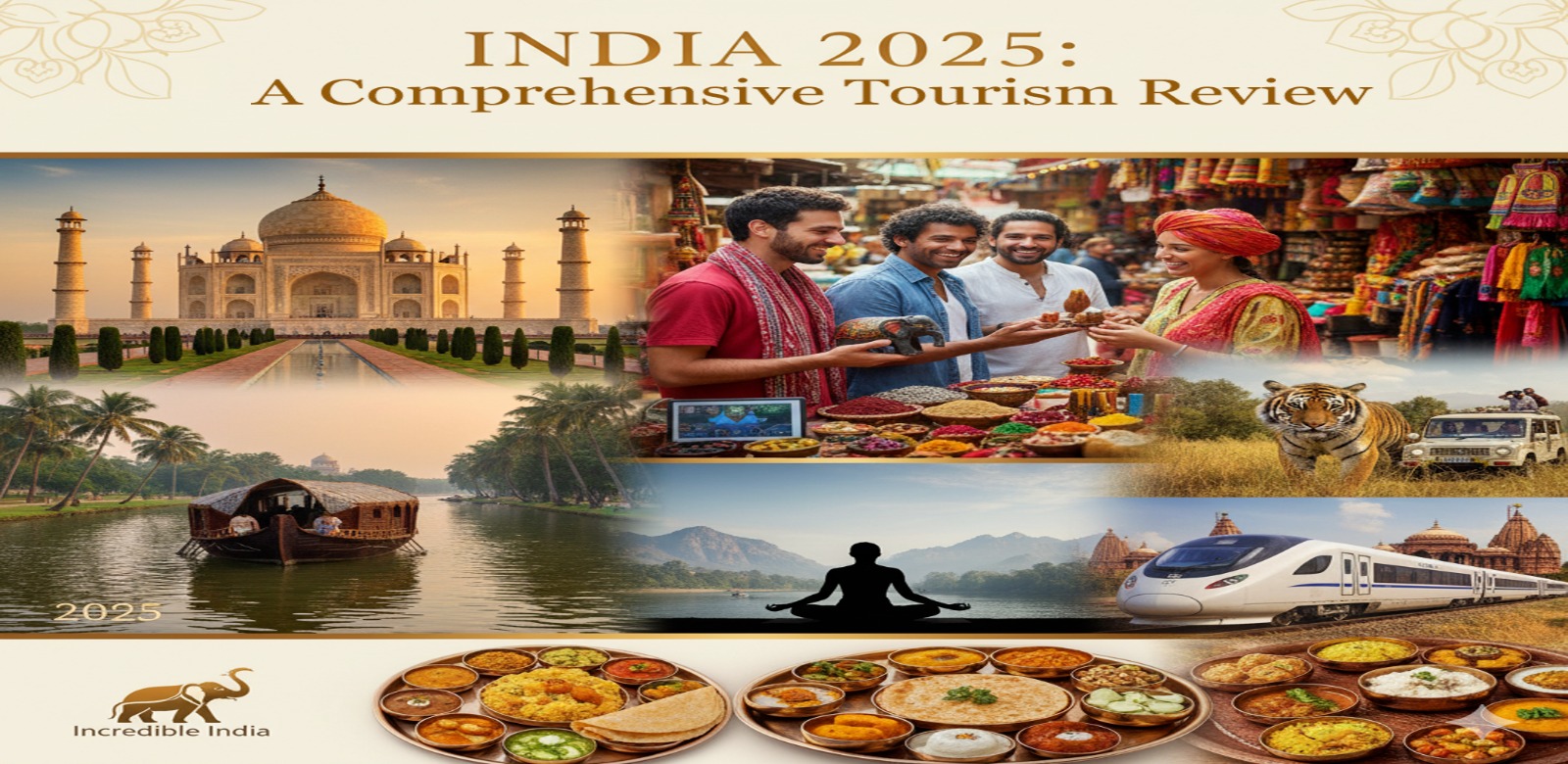
Overall inbound tourism to India rose in 2025 compared with the recent past, driven by stronger international air connectivity, higher visitor spending, and recovery in several source markets. That rise is supported by Indian government provisional data, UNWTO/IATA global indicators, and independent industry research — but the recovery is uneven by market, purpose of travel, and destination, and some indicators (like foreign tourist arrivals vs. NRI visits or total tourism receipts) need careful reading.
- Provisional government data and multiple industry sources indicate that inbound tourism to India increased in 2025 relative to 2024 when measured by a variety of indicators: foreign tourist arrivals (FTAs) for portions of 2025, international visitor spending, and air passenger demand to/from India. Press Information Bureau+2World Travel & Tourism Council+2
- The increase is not uniform: while total international tourist arrivals and visitor spending rose in aggregate, several source markets (notably China) have only partially recovered to pre-pandemic levels; at the same time NRI/OCI and medical tourists contributed significantly to the totals. policyedge.in+1
- Infrastructure and destination readiness remain mixed — airports and airlines expanded capacity, but some destinations and smaller towns report signage, waste and environmental pressures. Reuters+1
- Policy, visa facilitation, airline capacity and targeted marketing are the main proximate drivers; geopolitical shifts, currency moves and global aviation trends also played a role. IATA+1
The data: what the key sources report
1. India – Ministry of Tourism (MoT) / Bureau of Immigration (official, provisional)
- The Ministry of Tourism’s provisional release for 2025 reported 32.41 lakh (3.241 million) FTAs during January–April 2025, and later briefings indicate 56 lakh (5.6 million) FTAs up to August 2025 (provisional). The Ministry’s published tables and Monthly Tourism Snapshots provide the month-by-month breakdown and provisional foreign exchange earnings figures. These are the primary official figures used by analysts. Press Information Bureau+1
- The Ministry’s India Tourism Data Compendium 2025 and Annual Report place 2024 FTAs at roughly 9.7–9.95 million (different provisional/revised series), and note both foreign tourists and substantial NRI/non-resident arrivals being counted in broader “international tourist” tallies. tourism.gov.in+1
2. WTTC and independent industry bodies
- The World Travel & Tourism Council (WTTC) reported record international visitor spend for India in 2024 (₹3.1 trillion, reported in mid-2025 analysis) and indicated continuing strong momentum into 2025. Rising spend can reflect a combination of more visitors, longer stays, higher per-capita expenditure, or a mix. World Travel & Tourism Council+1
3. UNWTO & global context
- The UNWTO World Tourism Barometer observed global international arrivals up about 5% in the first half of 2025, with Asia and the Pacific showing stronger rebounds than other regions. That global rebound helps explain higher arrivals to India as air routes reopened and capacity increased. Untourism+1
4. Aviation and air connectivity (IATA / industry)
- IATA reports through 2025 point to continued increases in international passenger demand and load factors in 2025 (double-digit growth in some months relative to 2024), and India has been expanding international seat capacity via carriers and new routes — an essential enabler of inbound tourism. Industry analyses show India among the fastest growing aviation markets globally. IATA+1
5. Media and on-the-ground reporting
- News outlets and trade publications in 2025 documented record or near-record tourist footfall in many popular states and festival periods (e.g., Dasara, regional festivals) and also highlighted destination-level issues — for example, airport growth and airlines expanding international fleets, while some heritage towns struggle with signage and local infrastructure. The Times of India+1
Load-bearing takeaway: Multiple independent sources — official MoT provisional numbers, WTTC, UNWTO and IATA — point to an overall increase in inbound tourism during 2025 (vs. recent years), with visitor spending and air passenger traffic reinforcing that view. Press Information Bureau+2World Travel & Tourism Council+2
Is the increase “back to pre-pandemic levels”?
This is a frequent framing question and requires nuance.
- By some metrics India has surpassed or approached 2019 levels: WTTC reported higher international visitor spend in 2024 than 2019, and some counts of “international travel” (depending on whether NRIs/OCs are included) show numbers comparable to or exceeding 2019. World Travel & Tourism Council+1
- But foreign tourist arrivals (strictly foreign nationals, excluding NRIs/OCIs) in some official series still trail 2019 — for instance, many reports show foreign tourist arrivals (FTAs) in 2024 at slightly below 2019 peaks (2019 saw seasonal spikes and monthly highs that remain the benchmark). ThePrint and other analyses noted FTAs in 2024 were slightly below 2019 pre-pandemic peak figures even as NRI arrivals rose. ThePrint+1
So: India’s tourism in 2025 shows strong recovery and growth, but whether the sector is “fully back” depends on the metric: visitor spending and aggregate international arrivals (including NRIs and medical tourists) may already exceed 2019; strictly measured foreign tourist arrivals from abroad are close or recovering unevenly across source countries.
Who came — source markets & segments
- Top source countries in recent months and years include the USA, UK, Bangladesh, Australia and Canada (rankings vary by month and data series). Some western markets (US/UK) have recovered strongly; others like China have recovered more slowly due to their domestic policy timing and travel patterns. India Brand Equity Foundation+1
- NRI/OCI travelers and medical tourists made up a nontrivial share of international arrivals in 2024–25 and helped push aggregate “international tourist” totals higher. The Ministry flagged medical tourism and diaspora travel explicitly in 2025 updates. Press Information Bureau+1
- Leisure demand (holiday travel), business/meetings (MICE) and medical travel all contributed; return of business travel and conferences in 2024–25 sharply raised high-spend segments. WTTC noted business travel also reached record figures in its 2024/2025 analyses. World Travel & Tourism Council
Drivers behind the 2025 rise
- Expanded air connectivity and airline capacity. Indian carriers and foreign partners increased frequencies and aircraft types suitable for longer haul routes; major carriers have publicly signaled long-haul expansion plans (airlines converting/ordering widebodies) and foreign carriers increased capacity to India. This created the supply to carry more inbound tourists. Reuters+2Reuters+2
- Strong international demand & higher spending. Global travel recovery in 2025 (UNWTO, IATA) and higher per-visitor spending (WTTC) translated into stronger receipts for India. Higher spend was driven by business travel returning, higher hotel demand, MICE and increased discretionary spending by tourists. Untourism+1
- Policy and visa facilitation. India has continued incremental liberalization of e-visas and facilitation for key source markets; such steps reduce friction and raise conversion of intent to travel. (MoT bulletins and industry commentary emphasize visa facilitation as a key lever.) tourism.gov.in
- Destination marketing & mega-events. Targeted global marketing, festivals, regional development schemes and events (including government tourism schemes and an active campaigns calendar) supported inbound demand to specific states and attractions. Press Information Bureau
- Pent-up and substitution demand. After years of disrupted travel patterns, travelers explored new destinations in India (remote valleys, pilgrimage and wellness circuits) — but these also raise sustainability concerns. The Times of India
Where growth concentrated — destinations & seasons
- Gateway cities and well-known leisure states (Delhi, Mumbai, Goa, Rajasthan, Kerala, and major metro gateways) continued to capture most inbound flows, aided by better flight connectivity. Coastal and festival circuits saw spikes during peak seasons. India Brand Equity Foundation
- Smaller and remote destinations saw surges in some cases (e.g., Vyas valley in Uttarakhand) as domestic and international travelers sought lesser-crowded experiences — but this produced local capacity and environmental stress. The Times of India
Economic impact — receipts and jobs
- Foreign exchange earnings (FEE) from tourism rose significantly across 2022–2024 and continued strong into 2025: the Ministry and related releases document rising FEEs (2024 provisional figures reported around ₹2.9 lakh crore), and provisional 2025 FEE figures for early months indicate continued growth. WTTC reported record international visitor spending in India in 2024, reinforcing that receipts (not just arrivals) are up. Press Information Bureau+1
- Employment and value chain impacts: hotels, transport, F&B, guides and MICE ecosystems benefited; however, labor shortages and skill gaps remain concerns in some regions.
Constraints, risks and caveats
- Uneven market recovery. China and some Southeast Asian source markets lag relative to Europe/US, so some corridors remain below 2019 traffic. Recovery varies by visa rules, flight connectivity, and origin-market sentiment. LinkedIn
- Data comparability & classification. Some official series count NRIs, pilgrims, or medical tourists differently; some datasets are provisional. Always check whether a series is counting only foreign nationals or all international arrivals. MoT often publishes provisional (P) numbers. Press Information Bureau+1
- Destination preparedness & sustainability. The rapid growth in new or remote destinations created environmental, infrastructure and signage shortfalls in places (local reporting flagged issues), which can degrade tourist experience and create long-term risks. The Times of India+1
- Macroeconomic & geopolitical headwinds. Currency fluctuations, global inflation, energy prices, and geopolitical tensions can affect both outbound source market demand and airline economics — potentially reversing gains if conditions deteriorate.
What the 2025 rise means for stakeholders
- For governments and DMOs: Maintain focus on reliable monthly tracking, sustainable destination management, visa facilitation for strategic markets, and investments in last-mile infrastructure (signage, waste management, trained staff). Official monthly snapshots are valuable; they should be used to target marketing and capacity investments. tourism.gov.in
- For airlines and airports: Continued route expansion and fleet modernization are sound—airlines are already ordering widebodies and expanding capacity to capitalise on growing international demand. This expands potential feeder markets. Reuters+1
- For local businesses and communities: Opportunity to monetize rising demand — but they must plan for sustainability (carrying capacity, community benefit sharing, environmental safeguards) to avoid overtourism pitfalls. The Times of India
- For investors and hospitality owners: Stronger receipts and occupancy/ADR trends suggest improved returns, especially where destinations have adequate infrastructure and connectivity.
Outlook — short to medium term (remainder of 2025 → 2026)
- Momentum likely to continue if airline capacity, visa facilitation and marketing remain in place and if global travel demand remains healthy. UNWTO’s mid-2025 barometer and IATA’s passenger demand reports support an optimistic short-term outlook. However, watch for volatility from external shocks (economic slowdowns, security incidents, or health scares). Untourism+1
- Longer term: India’s large domestic market and improving global connectivity position it for strong medium-term growth in tourism, but the pace and distribution of growth will depend on infrastructure, sustainability policies, and continued diaspora & medical travel flows.
Practical takeaways (concise)
- Has inbound tourism into India increased in 2025? — Yes. Multiple indicators (provisional FTAs, visitor spending, air passenger growth) show an increase in 2025 versus prior years. Press Information Bureau+2World Travel & Tourism Council+2
- Is the sector fully back to pre-pandemic norms? — Partially. Aggregate receipts and some passenger counts equal or exceed 2019, but strictly measured foreign tourist arrivals and some source markets still lag 2019 in places. policyedge.in+1
- Key enablers: airline capacity, visa facilitation, higher business/MICE travel, and stronger average spend. Reuters+2tourism.gov.in+2
- Key risks to monitor: uneven market recovery, data classification caveats, local infrastructure/sustainability pressures. LinkedIn+1
Sources and where to read more (selected)
- Ministry of Tourism, India — Monthly Tourism Snapshots, Annual Report, India Tourism Data Compendium 2025 (official PDFs and press releases). tourism.gov.in+2tourism.gov.in+2
- World Travel & Tourism Council (WTTC) — press releases and Economic Impact Research on India’s visitor spend. World Travel & Tourism Council+1
- UNWTO — World Tourism Barometer (mid-2025) and regional annexes. Untourism+1
- IATA — Air passenger market analyses (through 2025) that document rising international demand and how aviation capacity enabled travel flows. IATA+1
- Indian and international media coverage (Reuters, Economic Times, Times of India, ThePrint) covering airline fleet expansions, airport passenger growth, and destination-level reporting. Reuters+2The Times of India+2
Final assessment:
Inbound tourism to India increased in 2025, supported by stronger visitor spending and expanding air capacity. The recovery is robust but uneven (market by market and metric by metric). Policymakers and industry players should treat this as an opportunity—while urgently addressing destination-level infrastructure and sustainability challenges—so that growth is durable, equitable and environmentally manageable.