
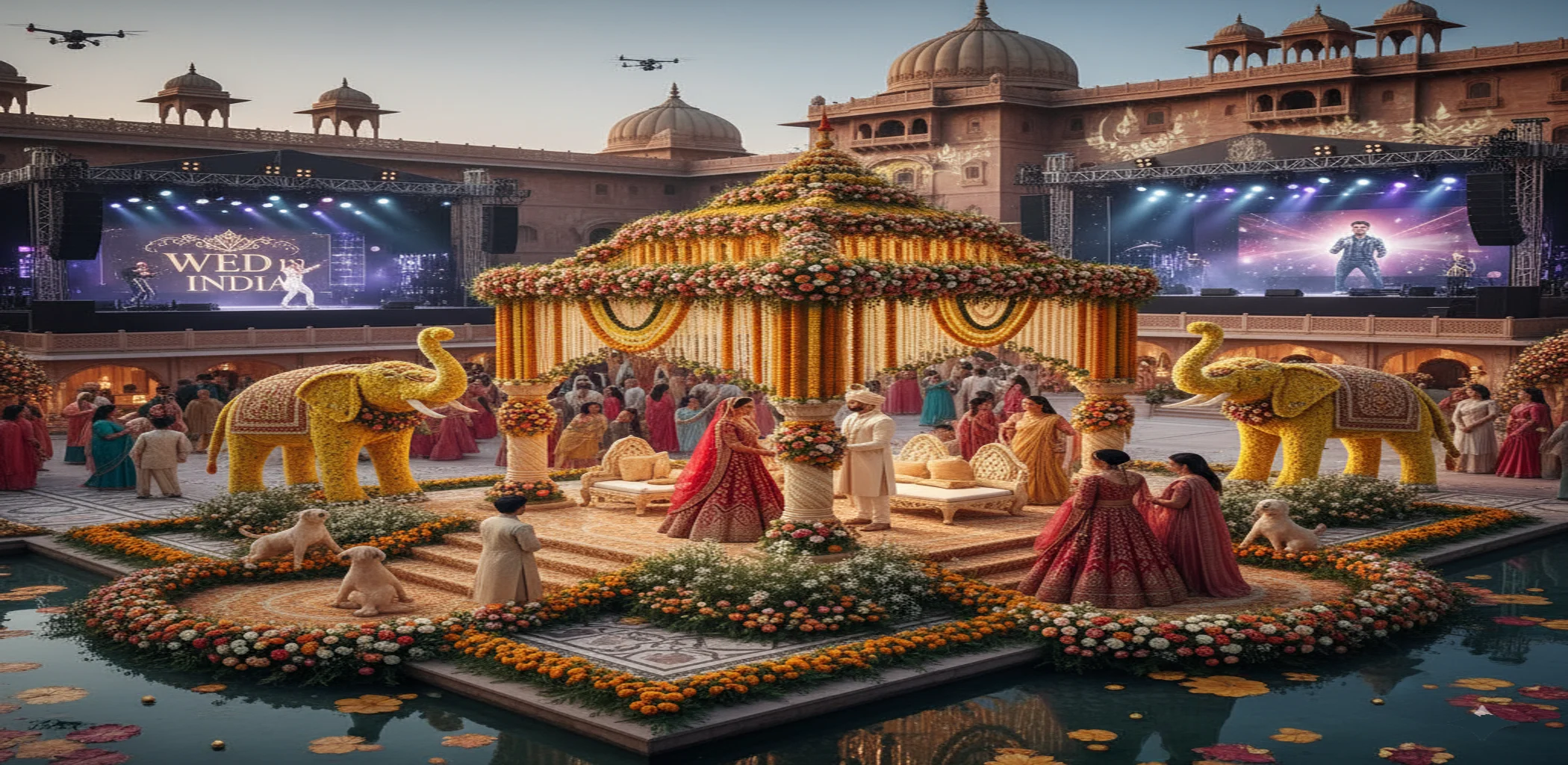
The Indian wedding industry is undergoing a significant transformation, with a notable shift from traditional international destinations to luxurious Indian locales. This movement, dubbed the “Wed in India” initiative, is gaining momentum among affluent couples seeking to celebrate their nuptials within the country. Inspired by high-profile events like the Ambani-Merchant wedding, this trend reflects a blend of cultural pride, economic sensibility, and a desire to showcase India’s rich heritage to the world.
The Ambani-Merchant Wedding: A Catalyst for Change
The wedding of Anant Ambani and Radhika Merchant in July 2024 served as a monumental example of this emerging trend. Held at Mumbai’s Jio World Convention Centre and the Ambani family’s residence, Antilia, the event spanned six days and boasted an estimated budget ranging from $600 million to $1 billion. The celebration featured:
- Lavish Decor: Floral sculptures of animals and replicas of the couple’s pets, created by renowned florist Preston Bailey, adorned the venues.
- Celebrity Performances: International artists like Rihanna and Justin Bieber graced the event, adding to its global appeal.
- Cultural Celebrations: The festivities included traditional rituals such as the haldi, mehendi, and sangeet ceremonies, highlighting India’s rich cultural tapestry.
This opulent affair not only captivated the nation but also set a new benchmark for luxury weddings in India, inspiring other affluent families to consider domestic venues for their celebrations.
Factors Driving the “Wed in India” Movement
Several key factors contribute to the growing preference for hosting weddings within India:
1. Government Initiatives and Policy Support
Prime Minister Narendra Modi’s call for a “Wed in India” movement, akin to the “Made in India” initiative, has encouraged affluent families to celebrate weddings domestically. This policy aims to boost local tourism, generate employment, and promote India’s rich cultural heritage.
2. Enhanced Infrastructure and Luxury Venues
India’s hospitality sector has seen significant improvements, with the development of world-class hotels, resorts, and convention centers. Destinations like Rajasthan, Goa, and Uttarakhand now offer state-of-the-art facilities that rival international counterparts, making them attractive options for luxury weddings.
3. Economic Considerations
Hosting weddings abroad often entails high costs, including travel, accommodation, and logistics. By choosing domestic venues, families can reduce expenses while still enjoying luxurious settings. Additionally, spending within the country contributes to the local economy and supports domestic businesses.
4. Cultural Significance and Family Traditions
Celebrating weddings in India allows families to honor traditional rituals and customs in familiar settings. It also provides an opportunity to incorporate regional elements, such as local cuisine, attire, and music, enriching the wedding experience.
Notable Indian Wedding Destinations (Explore URAHL Venues)
Several Indian locales have emerged as premier wedding destinations, offering a blend of luxury and cultural heritage:
- Udaipur, Rajasthan: Known as the “City of Lakes,” Udaipur offers palatial venues like the City Palace and Lake Palace, providing a regal backdrop for weddings.
- Goa: With its pristine beaches and vibrant culture, Goa is a popular choice for destination weddings, offering both luxury resorts and intimate venues.
- Corbett, Uttarakhand: For couples seeking a serene and nature-inspired setting, Corbett’s resorts amidst the Himalayas provide a tranquil environment for weddings.
- Jammu & Kashmir: The picturesque landscapes and historic venues make Jammu & Kashmir a sought-after destination for couples desiring a royal wedding experience.
The Economic and Social Impact
The “Wed in India” movement has far-reaching implications:
- Boost to Local Economy: Weddings contribute significantly to the hospitality, tourism, and retail sectors. By hosting events domestically, families support local businesses and create employment opportunities.
- Promotion of Indian Culture: Showcasing India’s diverse traditions and customs to a global audience fosters cultural exchange and appreciation.
- Sustainable Practices: Domestic weddings can reduce the carbon footprint associated with international travel, aligning with eco-conscious values.
Conclusion
The “Wed in India” movement signifies a paradigm shift in the luxury wedding industry. Inspired by landmark events like the Ambani-Merchant wedding, affluent couples are increasingly choosing to celebrate their unions within India. This trend not only showcases India’s rich cultural heritage but also contributes to the nation’s economic growth and global standing. As the wedding landscape continues to evolve, India’s prominence as a premier destination for luxury weddings is set to rise, offering couples unparalleled experiences that blend tradition, opulence, and cultural pride.