1. Introduction
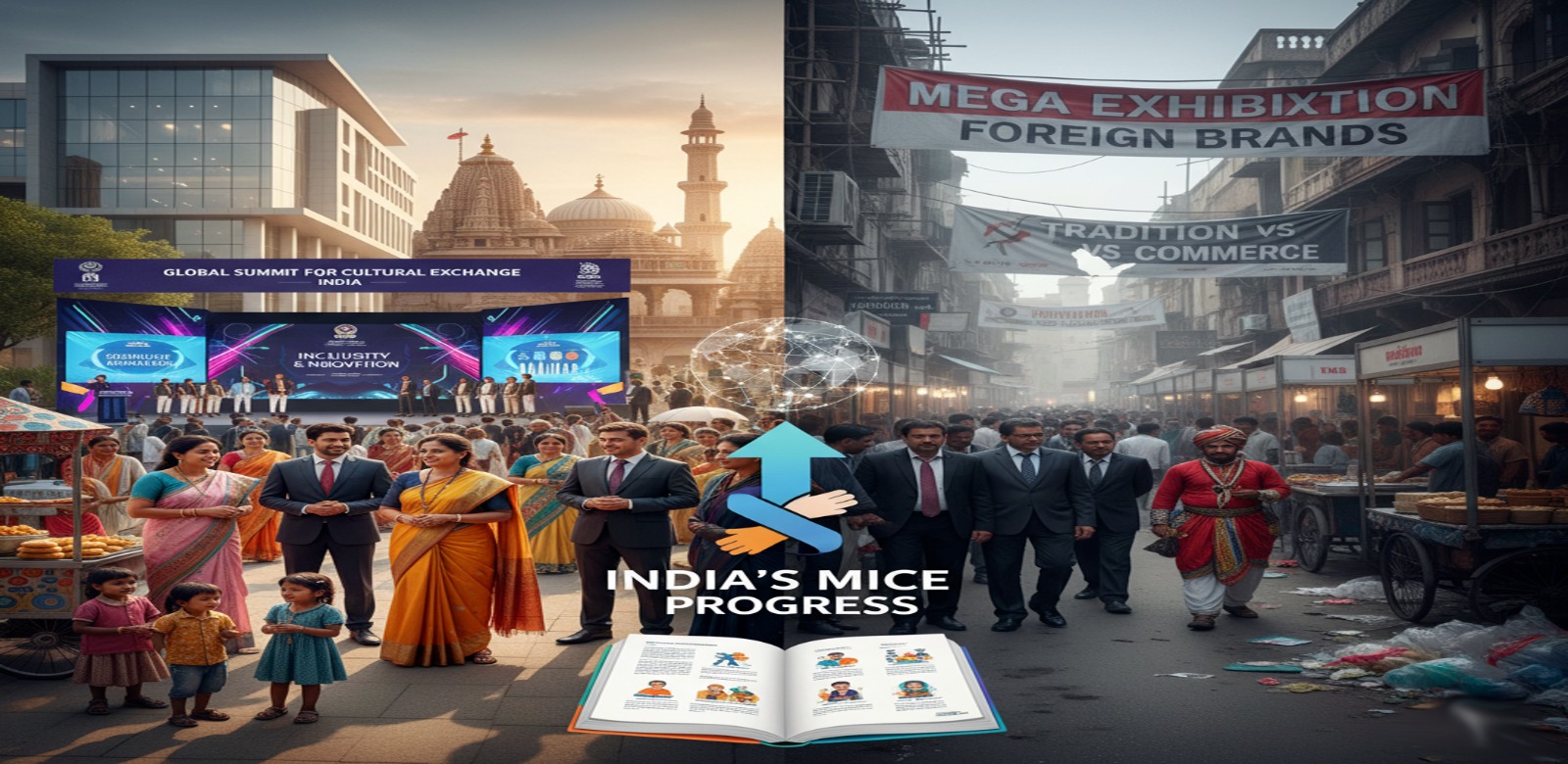
MICE tourism is more than just economic numbers. When large groups of people gather for meetings, conferences, incentive trips or exhibitions, there are profound socio-cultural effects on host communities, local cultures, identity, norms, inclusivity and interactions. Some of these effects are intentionally designed; many are emergent, and their progressiveness depends on how thoughtfully events are planned and managed.
In a diverse, culturally rich country like India, these impacts are especially important. The interplay of tradition, modernity, regional identity, social stratification, linguistic, religious, gender, caste, class divides and rapid urbanization means that MICE can either reinforce positive cultural exchange and inclusion, or exacerbate tensions and loss of authenticity.
The article that follows analyzes:
- What socio-cultural impacts MICE has globally and in India
- Which of those are positive / progressive, which are negative / risk exposures
- The mechanisms through which impacts are mediated
- How mature or progressive India is in realizing the positive side and mitigating the negatives
- Key recommendations for maximising progressive socio-cultural outcomes
2. Socio-Cultural Impacts of MICE: Global Evidence
2.1 Positive Impacts
- Cultural Exchange and Mutual Understanding
- Delegates from different countries, cultural backgrounds, professional sectors get together; local artisans, performers, cultures are presented, shared. This leads to increased intercultural awareness, breaking stereotypes.
- Example: Conference tracks infused with regional culture, performances, food, local crafts can generate appreciation among delegates.
- Preservation and Revitalization of Local Traditions
- Demand for authentic cultural content (art, music, cuisine, rituals) can help support local craftspeople and traditional performance arts. Without demand, some art forms near extinction can be revived.
- Incentive travel often includes offsite local tours, indigenous cultural experiences, which puts a premium on preserving heritage.
- Community Pride, Identity & Local Participation
- Hosting major events often gives communities a sense of pride: their city/town is “on the map.”
- Locals gain opportunities to participate as service providers, guides, vendors, hosts.
- Language, Skills & Social Capital Development
- Exposure to global communication norms, languages (English, etc.), protocol, event management skills.
- Local people gain skillsets in hospitality, customer service, cross-cultural communication, technical AV, logistics, etc.
- Social Inclusivity and Access
- Progressive events emphasize accessibility (for persons with disability), gender parity, inclusion of underrepresented groups.
- Incentive trips, leadership conferences may bring in participants from diverse geographies (including rural), thus broadening social networks.
- Infrastructure & Amenities That Also Benefit Locals
- Roads, airports, public transport, hotels, conference centres upgraded for the event yield long-term social benefit. Increased safety, better public services (internet, health, sanitation) often enhanced.
- Enhanced Civic and Cultural Governance
- For events with large public or semi-public element (government, associations), planning often requires consultation with local authorities, cultural boards, heritage committees. This can lead to stronger regulation or preservation policies.
2.2 Negative Impacts / Risks
- Cultural commodification
- Traditions simplified, staged for tourist appeal; authenticity lost. Rituals or performances may be performed out of original context.
- Local artisans may be pressured to adapt or stereotype to suit external tastes.
- Loss of Local Identity
- Over time, the influx of external norms (dress, behavior, language) can dilute local customs. Younger generations may see globalization as more “prestigious.”
- Social Stratification & Exclusion
- Local elites, established vendors benefit disproportionately; marginalized groups may be excluded.
- Rising costs of living, real estate/micro-economy inflation around event zones can harm poorer locals.
- Displacement or Gentrification
- Neighborhoods may be restructured, small local vendors displaced in favour of larger service providers.
- Cultural Conflicts or Tensions
- Between local community values and behaviors of delegates (e.g., dress, consumption, noise).
- Clash of expectations, religious sensitivities, or norms when large global events happen.
- Loss of Sustainability / Environmental Threat to Cultural Sites
- Large numbers of visitors can stress fragile heritage structures, sacred sites.
- Poor waste management, noise, light pollution etc. can degrade cultural environment.
3. Mechanisms of Socio-Cultural Impact: How Effects Happen
Understanding how socio-cultural change takes place helps in steering toward progressive outcomes.
| Mechanism | Description |
| Event Design & Content Choices | What is included in the program: local culture, food, tours, languages, speaker profiles etc. |
| Vendor & Supplier Sourcing | Using local artisans, local crafts, local foods influences how culture is represented and who benefits. |
| Participant Demographics & Behavior | The diversity of delegates, their sensitivity, expectations, behavior norms. |
| Communications & Marketing | How local culture is portrayed; whether marketing is respectful, accurate, stereotyped. |
| Infrastructure & Spatial Planning | Venue location, accessibility, inclusion design, community impact of event traffic. |
| Policy, Regulation & Governance | Rules around cultural heritage protection, zoning, local permissions, consultation. |
| Education & Capacity Building | Skill training, awareness of local culture among event planners, sensitivity training, inclusion practices. |
4. How Progressive Are These Impacts: The Global & Indian Situation
4.1 Global Trends and Progressiveness
- Post-COVID, there is much greater sensitivity to responsible events: hybrid formats, sustainable sourcing, inclusion, accessibility are now baseline expectations in many places.
- Major associations, global event organizers (UN bodies, medical associations, etc.) are increasingly requiring ethical, ESG compliance, which includes socio-cultural aspects.
- Tools and standards (GSTC, ISO, etc.) are embedding socio‐cultural criteria.
- Stakeholders (venue owners, cities) understand image risk from ignoring local community impact (protests, negative media).
- Technology helps: AR/VR, digital platforms for virtual attendance reduce pressure on physical spaces, allowing cultural content without large physical impact.
4.2 The Indian Context: Progress and Gaps
Progress:
- Growing awareness & policy interest
- Studies from Indian researchers show increased focus on socio-cultural impacts of MICE. For example, “Progress in MICE Industry Research: Case of India” shows that innovation, collaborative research, local cultural dynamics are being studied. Christ University Journals
- Some state governments have started cultural festivals tied to conferences, emphasizing local art, food, traditions.
- Use of local vendors, artisans, cultural components
- Many events in India include regional performances, handicrafts stalls, cuisine from local sources, promoting local culture and livelihoods.
- Increased inclusion and accessibility
- Some conferences and conventions are increasingly offering accessible facilities; awareness is growing of gender inclusion, representation from diverse regions and communities.
- Technical improvements and digital hybridization
- Hybrid and virtual components reduce the need for physical travel; this helps some communities to access knowledge without displacement. Scholarly work (“The impact of social changes on MICE tourism management…”) shows adaptation in management practices globally, which is mirrored in parts of India. SpringerLink
Gaps / Areas still to improve:
- Consistency & Standardization
- The approach is patchy; many events in Tier-1 metros are more progressive, but many in smaller cities lack infrastructure for inclusion, high technical quality, or preservation sensitivity.
- Over-commercialization & loss of authenticity
- Pressure to impress delegates often leads to generic, “safe” cultural content rather than deep, authentic local culture. Sometimes local culture is used as backdrop rather than being meaningfully integrated.
- Community engagement tends to be limited
- Local residents or stakeholders are often not consulted in the planning; event traffic, noise or disruptions cause friction.
- Cultural & economic inequity
- Often biggest beneficiaries are large hotels, big vendors; smaller artisans or remote communities get less of the value.
- Awareness & Training
- Some event planners or vendors lack training in cultural sensitivity, inclusion, local norms, particularly for religious or linguistic diversity.
- Infrastructure weaknesses
- Many smaller towns / secondary cities have venues that aren’t accessible (physical access, disability access), or lack cultural heritage protection frameworks.
5. Socio-Cultural Impacts of MICE in India: Specific Examples & Case Studies
While comprehensive longitudinal data is limited, several case‐studies and studies highlight India’s socio-cultural impacts of MICE:
- “Tourists’ Perspective on MICE Tourism in Chennai” shows that delegates rate availability of advanced facilities, settlement (accommodation), technology and cleanliness highly; but attendees also note the importance of local cultural content as part of their “experience.” IJISAE
- Progress in MICE Industry Research: Case of India finds much of the recent research focusing on socio-cultural issues: motivation, incentives, behavior, and the role of local culture in event success. Christ University Journals
- Some incentive travel packages in India have started incorporating rural community visits, including local craft markets or folk arts as part of itinerary, which can generate income and promote cultural pride.
- As per “The Impact of Social Changes on MICE tourism management in the age of digitalization” (global, but with India as part of evolving research) shows that COVID catalyzed social shifts: increased desire for meaningful purpose in events, inclusion, health, safety, hybrid, local authenticity. SpringerLink
6. Measuring Progress: Indicators, Maturity Levels & Metrics
To assess how progressive socio-cultural impacts are, it helps to define maturity levels and metrics.
6.1 Key Indicators
| Indicator | What to Measure |
| Local Community Involvement | % of vendors / service providers from local region; level of benefit to local artisans or small businesses |
| Cultural Authenticity | Number and quality of local performances, indigenous art/craft usage; depth of cultural storytelling |
| Inclusion & Accessibility | Facilities for persons with disability; representation of women, marginalized groups in leadership and staffing; linguistic inclusion |
| Community Perception & Satisfaction | Surveys of local residents on impact (noise, traffic, disruption), knowledge pride, cultural respect |
| Education & Skills Transfer | Number of locals trained; long-term employment; knowledge/skill spillovers |
| Heritage Conservation | Damage or wear to heritage sites; contributions to preservation; usage aligned with protection guidelines |
| Social Capital & Networks | New networks or partnerships formed; cross-cultural learning; knowledge exchange outcomes |
6.2 Maturity Levels
- Level 1 – Awareness: Some events include cultural elements; ad hoc use of local vendors.
- Level 2 – Integration: Local culture embedded in event design; community consulted; inclusion efforts visible.
- Level 3 – Institutionalization: Policies and standards (e.g., GSTC‐aligned, certifications, sustainable event guidelines), training, monitoring built in.
- Level 4 – Transformational: Events consistently generate positive social change, equity, heritage preservation, and lasting cultural assets.
7. How Progressive Are Socio-Cultural Impacts in India?
India is somewhere between Levels 1 and 3. In many metros and among well-funded events the model is approaching Level 3. However, across geographies, events, and organizer types, there is wide variation.
- Metropolitan vs Secondary / Tier-2/3 Cities: Metros have higher facility availability, regulatory awareness, vendor base. Smaller cities often lack infrastructure and awareness, so socio-cultural gains are inconsistent.
- Event Planners’ Values: Planners who prioritize ESG or who work with international clients often integrate socio-cultural considerations more meaningfully. Many domestic events still focus on conventionally aesthetic elements (food, décor) rather than deeper cultural meaning.
- Government Policy & Institutional Support: Some states are active (Kerala, Karnataka, Gujarat) in promoting cultural heritage as part of MICE; others have yet to develop frameworks.
- Community awareness & agency: Local communities are increasingly raising expectations: hosting fees, consultation, minimizing disruptions. But in many cases, they are more spectators or service providers, not decision-makers.
- Standardization & Metricization: India lags behind in formal certification for socio-cultural sustainability. Emerging standards (GSTC, others) offer a framework, but uptake is still limited.
8. Factors Influencing How Progressive the Impacts Are
| Enabler | Constraint |
| Strong policy/regulation mandating inclusion, heritage protection, cultural sensitivity | Weak enforcement, lack of regulatory oversight |
| Client/organizer commitment to authenticity, inclusion, community benefit | Budget constraints, pressure to reduce costs, generic expectations |
| Local vendor ecosystems, skilled human resources, availability of artisans | Skill gaps, supply chain constraints, limited access to markets |
| Awareness of cultural heritage, and local pride and agency | Cultural misrepresentation, commodification, loss of authenticity |
| Standardization (certification, guidelines, training) and measurement | Lack of metrics, lack of data, inconsistent reporting |
9. What Progressive Socio-Cultural Practices Look Like: Best-Practice Elements
Drawing on global and Indian examples, here are design elements that make socio-cultural impacts progressive:
- Authentic Local Content Inclusion
- Prioritize local art, cuisine, storytellers; film/document local history; build itineraries around local heritage.
- Vendor Sourcing from Marginalised Communities
- Use local artisans, women’s cooperatives, craft clusters; fair compensation; long-term relationships.
- Accessibility and Universal Design
- Venues made physically accessible; content in multiple languages; inclusive programming.
- Cultural Safety and Identity Respect
- Avoid misrepresentation; ensure community consultation; protect heritage sites; avoid stereotyped “show” performances detached from context.
- Knowledge Exchange and Capacity Building
- Provide workshops for local youth; train local staff; share skillsets and best practices.
- Community Engagement in Planning & Decision Making
- Local advisory boards; surveys; local feedback used to shape event layout, timing, content.
- Legacy Components
- Leave behind something: documentation, infrastructure, cultural centers, tourism promotion for local heritage.
10. Implications: Why Socio-Cultural Impacts Matter (Beyond Goodwill)
- Long-term destination viability: If local culture and community are alienated or degraded, destination attractiveness suffers.
- Branding & Perception: For international clients, sustainability and authenticity are part of decision criteria. Poor socio-cultural credentials hurt reputation.
- Social license to operate: Events need community support; minimizing friction (noise, congestion, culture) is essential.
- Talent & humana resources: Communities with skill development find better opportunities; more talented staff and experiences feed back into better service.
- Policy & incentives alignment: Governments increasingly attach cultural preservation, inclusion to funding/subsidies.
11. Recommendations: How to Amplify Progressive Socio-Cultural Impacts (Particularly in India)
Based on evidence and current gaps, here is what needs to be done:
- Adopt and enforce standards & certifications (e.g. GSTC, local heritage boards) that include socio-cultural criteria.
- Event planners & operators must build inclusive planning teams, consult with local community stakeholders early, budget for cultural authenticity rather than just “decor”.
- Capacity building: training local vendors, artisans, performers; hospitality staff trained in cultural sensitivity.
- Measurement & reporting: implement metrics for socio-cultural impacts (vendor sourcing, inclusion, satisfaction, cultural integrity) and publish these in post-event reports.
- Regulatory frameworks: heritage protection laws, zoning, tax/permit incentives for events that demonstrate cultural respect, inclusion.
- Promoting hybrid / virtual access: enabling content to reach locals who may not attend physically, or organizing “satellite events” in lower-capacity locations.
- Legacy planning: design events so they leave physical, social, cultural legacies (public artworks, art residencies, cultural heritage documentation).
12. Conclusion
MICE activities have a powerful capacity to foster socio-cultural renewal, cross-cultural awareness, inclusion, heritage preservation, skill growth, and community identity. They also hold risks of cultural loss, commodification, exclusion and discontent. The progressiveness of socio-cultural impacts in India depends heavily on the intentionality of planners, the structures and policies that guide them, the empowerment of local communities, and the systems of measurement and accountability.
India is already trending toward more progressive outcomes — especially in metros, with international organizers, or ESG-aware clients — but to unlock fuller socio-cultural transformation, the shift must reach more places, more events, more community voices, and more consistent standardization. With the right momentum, MICE can not only enrich local cultures and identities but also help reframe India’s global cultural footprint in a way that is equitable, sustainable, and authentic.