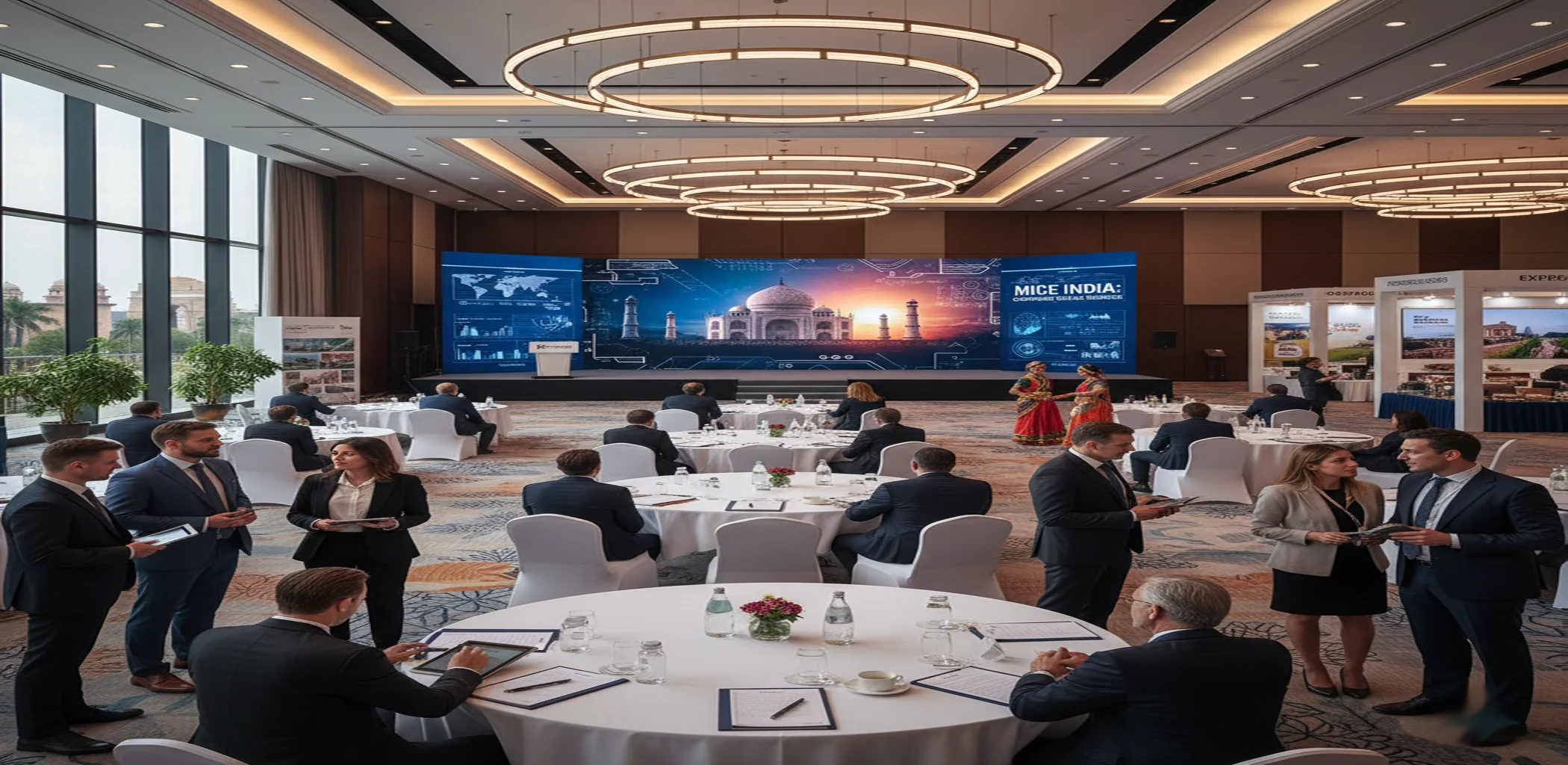
India’s MICE (Meetings, Incentives, Conferences, Exhibitions) Tourism sector is on a fast-rising trajectory. Backed by major new world-class venues, national strategy and active state-level promotion, MICE tourism is becoming a core pillar of India’s tourism and business services economy. Demand is driven by corporate meetings, tech summits, medical conferences, trade exhibitions, incentive travel, and a growing appetite for hybrid and experiential formats. Public investments in large convention infrastructure (Bharat Mandapam, Yashobhoomi/IICC, Jio World Centre) plus policy support and private-sector innovation have created a credible runway for sustained growth. The next decade will be shaped by deeper industry professionalism, technology (5G/AV/hybrid platforms), sustainability, bespoke destination experiences, and integrated service providers such as URAHL that combine venue sourcing, operations, hospitality services and end-to-end event delivery.
With its blend of commerce, collaboration, and culture, MICE tourism is a powerful vehicle for India’s economic transformation. It fills hotel rooms during lean seasons, sustains employment across multiple industries, promotes destination branding, and enhances the nation’s intellectual and diplomatic capital. As India continues to expand its infrastructure and ease of doing business, the MICE sector stands poised to become one of the strongest pillars of its tourism and economic strategy — turning business travel into a driver of sustained national growth and global influence.
1. What is MICE and why it matters for India
MICE — an acronym for Meetings, Incentives, Conferences, and Exhibitions — represents one of the most dynamic and high-value segments of the global travel and hospitality industry. While each of its four components caters to distinct market needs, together they form a powerful ecosystem that drives tourism, trade, investment, and knowledge exchange. In essence, MICE tourism is the business side of travel — a catalyst for both economic growth and global engagement.
Breaking Down the MICE Segments
- Meetings involve corporate gatherings, board meetings, annual general meetings, and strategic retreats, typically organized by companies, associations, or government bodies. These meetings are essential for business planning, policy discussions, and decision-making.
- Incentives refer to reward-based travel programs designed to motivate and recognize employees, distributors, or partners for outstanding performance. These trips combine leisure, exclusivity, and recognition — strengthening loyalty and productivity.
- Conferences include large-scale academic, professional, or industry-specific events that facilitate networking, learning, and the exchange of ideas. They often attract international delegates, thought leaders, and policymakers.
- Exhibitions are trade fairs and expos where companies showcase products, innovations, and technologies, fostering B2B connections and global partnerships.
Individually, these segments meet specific organizational goals — productivity, reward, collaboration, or promotion. Collectively, however, MICE tourism delivers sustained economic benefits that go far beyond traditional leisure travel.
The Economic Power of MICE Tourism
MICE travelers are high-value visitors. They spend significantly more per capita than leisure tourists — not only on accommodation and food but also on local transport, entertainment, event services, and retail. Their trips often involve extended stays, either pre- or post-event, and they tend to travel in groups, generating consistent occupancy and demand for hotels even during off-peak seasons.
Furthermore, MICE events create ripple effects across multiple sectors. From airlines, hotels, and restaurants to printing services, logistics, technology providers, and event planners — an entire ecosystem benefits. According to global tourism trends, every dollar spent directly on a MICE event can generate up to three dollars in indirect economic impact. This multiplier effect makes MICE a key strategic sector for nations seeking to boost tourism revenues, create employment, and attract investment.
Why MICE Matters for India
India’s rise as a global economic and innovation hub makes it a natural contender for MICE growth. The country’s strong corporate base, expanding startup ecosystem, skilled workforce, and improving infrastructure create ideal conditions for hosting business events. Moreover, India’s cultural richness and diverse destinations add a unique experiential dimension — allowing business travelers to blend professional engagement with leisure, wellness, and exploration.
The government’s Dekho Apna Desh, Incredible India 2.0, and G20 presidency initiatives have further spotlighted India as a world-class destination for international events. The development of modern convention centers — such as Bharat Mandapam in New Delhi and Jio World Convention Centre in Mumbai — demonstrates a strong commitment to infrastructure capable of competing with Singapore, Dubai, and Bangkok.
In addition, India offers significant cost advantages. Organizing large-scale conferences or incentive programs here costs a fraction of what it would in developed markets, while still providing high-quality hospitality, connectivity, and service standards. The combination of affordability, talent, and hospitality excellence positions India as a lower-cost, high-value MICE destination.
Beyond Economics — The Knowledge and Image Advantage
MICE is not merely about business events; it’s about reputation and soft power. Hosting global summits, medical or technology conferences, and international expos helps India project its image as an innovation-driven, investor-friendly nation. It enables domestic businesses to network with global peers, exchange ideas, and access cutting-edge knowledge — thereby fostering capacity building and international cooperation.
2. Recent growth, market size and forecasts
India’s Meetings, Incentives, Conferences, and Exhibitions (MICE) industry has entered a new era of accelerated expansion, reflecting the country’s rising stature as a global economic and innovation hub. After the severe pandemic-induced slowdown that paralyzed business travel worldwide, the sector has bounced back stronger — buoyed by pent-up demand for in-person engagement, renewed corporate confidence, and robust government support for tourism infrastructure.
Multiple market-research studies conducted in the 2024–2025 window — including those by global consulting firms, travel associations, and trade bodies — paint a consistent picture of rapid growth and enormous potential. While methodologies and definitions differ, most estimates place India’s MICE market in the tens of billions of U.S. dollars, with annual growth forecasts ranging between 8% and 14% CAGR over the next decade. This trajectory positions India as one of the world’s fastest-growing MICE destinations, alongside Southeast Asia and the Middle East.
Market Size and Structure
As of 2024, industry analysts estimate the Indian MICE market value between USD 20–30 billion, depending on whether one includes both domestic and international segments. The domestic MICE segment — encompassing corporate meetings, incentive travel, government conferences, and regional trade fairs — represents a majority share, contributing approximately 60–65% of the total market. International inbound MICE, though smaller, is growing at a faster pace due to increased foreign participation in India’s global expos, summits, and conventions.
The corporate meetings and incentive travel segment remains the largest contributor, driven by India’s expanding business ecosystem, multinational offices, and a growing recognition of incentives as a motivational and retention tool. The conference and exhibition segments are catching up rapidly, supported by the proliferation of world-class convention centers and a vibrant calendar of industry-specific expos — from technology, manufacturing, and pharmaceuticals to education, tourism, and sustainability.
Key Growth Drivers
Several structural and economic factors are propelling this robust growth trajectory:
- Post-pandemic rebound in corporate travel:
After years of virtual meetings and digital conferences, corporations are returning to in-person engagements to strengthen relationships, build trust, and drive collaboration. The return of global trade fairs and live conferences has reignited MICE activity across sectors. - Rising corporate budgets and hybrid event models:
Indian and multinational companies alike are increasing allocations for business travel and events. While hybrid (physical-plus-digital) formats remain popular for reach and efficiency, the physical experience remains irreplaceable for networking and brand engagement. - Expansion of convention-grade infrastructure:
India has invested heavily in purpose-built venues capable of hosting large-scale international gatherings. Facilities like Bharat Mandapam (Pragati Maidan, New Delhi), Yashobhoomi Convention Centre (Dwarka, New Delhi), Jio World Convention Centre (Mumbai), and Hitex Exhibition Centre (Hyderabad) are redefining India’s MICE landscape. Similar projects are underway in Goa, Ahmedabad, Chennai, and Bengaluru, supported by both government and private developers. - Government policy and promotional initiatives:
Under the Incredible India 2.0 and Dekho Apna Desh campaigns, the Ministry of Tourism has identified MICE as a priority segment for driving high-value tourism. Special incentives for event organizers, simplified permissions, and targeted international roadshows are helping Indian cities position themselves as global MICE hubs. - Growing international trade and investment activity:
As India deepens its global trade partnerships and becomes a manufacturing and innovation hub, it is increasingly hosting international expos and conventions — such as the India Energy Week, Aero India, Auto Expo, and DefExpo — attracting exhibitors and delegates from around the world. - Connectivity and infrastructure upgrades:
The expansion of metro networks, expressways, high-speed rail projects, and airport modernization programs is improving intercity accessibility — a key consideration for MICE planners. Tier-II cities like Jaipur, Kochi, Lucknow, and Bhubaneswar are also emerging as secondary MICE destinations, broadening the geographic spread of events beyond traditional metros.
Forecasts and Future Outlook
Industry experts forecast that by 2030, India’s MICE industry could reach USD 50–60 billion, contributing significantly to GDP and employment across tourism-linked sectors. The number of international delegates visiting India for MICE events is projected to double in the next five years, fueled by visa liberalization, enhanced air connectivity, and a growing reputation for value-driven hospitality.
The World Travel & Tourism Council (WTTC) projects that business travel spending in India will exceed pre-pandemic levels by 2025, with MICE accounting for a substantial share. As companies globalize operations and prioritize experiential engagement, the volume and sophistication of MICE events in India are expected to evolve rapidly — incorporating technology integration, sustainability practices, and localized cultural experiences.
The trajectory of India’s MICE sector is one of sustained, transformative growth. With expanding infrastructure, proactive policies, and a booming corporate landscape, India is not only capturing a larger share of global MICE business but also redefining the standards of value, diversity, and innovation in business tourism. The coming decade promises to establish India as one of the world’s premier destinations for meetings, incentives, conferences, and exhibitions — a vibrant confluence of commerce, culture, and collaboration.
3. Policy push & infrastructure — the game changers
The remarkable rise of India’s MICE Tourism industry over the last few years is not a coincidence — it is the result of deliberate policy direction, strategic planning, and heavy infrastructure investment by both the government and private sector. Recognizing that MICE tourism delivers significantly higher economic yields per visitor, creates sustained employment, and positions cities as global business destinations, India’s Ministry of Tourism and various state governments have made MICE a national priority.
At the core of this effort is the National Strategy for MICE, launched by the Ministry of Tourism as a comprehensive framework to make India globally competitive in hosting business events. The strategy focuses on four main pillars: ease of doing business, destination development, inter-agency coordination, and incentives for event organizers. By addressing these dimensions, the government aims to attract more international conferences, corporate events, and exhibitions while also strengthening domestic event ecosystems across different states.
The ease-of-doing-business reforms specifically target bottlenecks that previously discouraged international event planners — such as complex permissions, delays in venue approvals, and logistical inefficiencies. The strategy now promotes single-window clearances for event organizers, improved coordination between central and state tourism bodies, and facilitated access to heritage monuments and public spaces for event hosting. These steps significantly enhance India’s attractiveness as a MICE destination that combines world-class infrastructure with cultural depth.
A key focus area of policy has been geographic diversification. For years, India’s MICE activity was concentrated mainly in Delhi, Mumbai, Bengaluru, and Hyderabad. The new approach envisions a cluster-based development model, wherein secondary and tertiary cities such as Goa, Ahmedabad, Kochi, Chennai, Jaipur, and Lucknow are being developed as “MICE-ready” destinations. This not only distributes the economic benefits of MICE more evenly but also showcases India’s regional diversity to international participants.
The government’s push is being amplified by massive investments in modern infrastructure. The inauguration of Bharat Mandapam (the revamped Pragati Maidan complex) and Yashobhoomi (India International Convention & Expo Centre – IICC) in Delhi marked a defining moment for India’s MICE landscape. Together, these world-class facilities have transformed the capital into one of Asia’s foremost convention destinations. Bharat Mandapam, which hosted the historic G20 Leaders’ Summit in 2023, exemplifies India’s readiness to stage high-level international events. Meanwhile, Yashobhoomi — with over 300,000 square meters of exhibition and convention space — ranks among the largest convention complexes in the world, designed to handle large-scale summits, trade shows, and multi-track conferences simultaneously.
The private sector has also emerged as a major player in this transformation. The Jio World Convention Centre in Mumbai, developed by Reliance, stands as one of India’s most advanced privately owned venues, equipped with cutting-edge technology, sustainability features, and premium hospitality integration. Similar investments are reshaping the MICE landscape in Bengaluru, Hyderabad, Chennai, Goa, and Ahmedabad, where private developers are integrating large convention spaces with luxury hotels, retail, and entertainment facilities. These developments have not only increased India’s hosting capacity but have also diversified its event offerings — from corporate congresses to global trade exhibitions, tech expos, and medical conferences.
At the state level, several tourism boards have introduced incentive schemes for event organizers, including financial subsidies, venue discounts, tax benefits, and co-branding support. For instance, states like Goa, Rajasthan, Kerala, and Gujarat have incorporated MICE tourism into their broader tourism promotion strategies, recognizing its potential to drive off-season visitation and international exposure.
Another major enabler has been India’s connectivity revolution. Upgraded airports, expanding metro systems, and new expressways have drastically improved accessibility to convention districts. The proximity of Bharat Mandapam and Yashobhoomi to Delhi’s international airport, for example, allows seamless connectivity for global delegates. Similarly, Mumbai’s and Hyderabad’s modern airports complement their respective convention ecosystems.
From a policy perspective, India’s MICE ambitions also align with its G20 legacy and Vision 2047 roadmap, which emphasize global leadership, innovation, and inclusive growth. The experience of hosting high-level international summits has strengthened institutional expertise, streamlined protocols, and fostered public-private partnerships in event management.
The impact of these efforts is tangible: India is now capable of bidding for — and successfully hosting — mega-events that once seemed out of reach. Global organizations, trade bodies, and multinational corporations increasingly view Indian cities as serious contenders for their conferences and exhibitions.
Key Policy and Infrastructure Highlights:
- National Strategy for MICE (Ministry of Tourism): A comprehensive blueprint to make India MICE-friendly through simplified approvals, access to iconic venues, and greater coordination across states.
- Major new venues:
- Bharat Mandapam and Yashobhoomi (IICC) in Delhi — world-class convention facilities built to host global summits.
- Jio World Convention Centre in Mumbai — a landmark private-sector venue integrated with hospitality and technology ecosystems.
- Upgraded expo centers and convention hotels across Bengaluru, Hyderabad, Chennai, Goa, and Ahmedabad — boosting India’s regional competitiveness.
India’s MICE policy and infrastructure ecosystem is evolving at an unprecedented pace. Strategic government support, ambitious infrastructure projects, and proactive private investment have turned what was once a fragmented market into a globally competitive industry. These game changers are not just expanding India’s capacity to host events — they are redefining its global image as a confident, modern, and collaborative hub for business, innovation, and cultural exchange.
4. Demand drivers: who is booking and why
The Indian MICE Tourism market today is defined by a diverse and rapidly expanding demand base — spanning corporate, government, academic, and industry segments. This diversity not only strengthens the industry’s resilience but also ensures that demand flows consistently across the year, balancing out traditional tourism seasonality. What makes India’s MICE demand particularly compelling is the convergence of multiple forces: a fast-growing economy, globalized industries, rising disposable incomes, and a government committed to positioning India as an international business and event hub.
At the forefront of demand are corporate meetings and incentives, which together account for the largest share of the Indian MICE market. Large Indian conglomerates, multinational corporations, and technology-driven “new economy” companies are leading the charge in organizing team engagements, leadership summits, product launches, and annual sales conferences. In the post-pandemic corporate landscape, face-to-face interaction has regained immense importance. Companies recognize that physical meetings build trust, strengthen relationships, and drive creativity in ways virtual communication cannot replicate.
Incentive travel has evolved into a strategic business tool. Rather than being viewed as a luxury expense, it is now treated as a performance and retention investment. Top-performing employees, distributors, and business partners are rewarded with curated trips that blend leisure with recognition. Destinations like Goa, Jaipur, Kerala, and Udaipur remain popular, while emerging venues such as Rishikesh, Coorg, and Andaman are gaining traction for their combination of nature, exclusivity, and wellness experiences. Multinationals increasingly use India as a base for regional incentive programs, capitalizing on the country’s mix of affordability, accessibility, and rich cultural diversity.
Another major demand driver is trade exhibitions and expos, which play a crucial role in business development and industry advancement. Sectors like manufacturing, pharmaceuticals, construction, renewable energy, defence, and hospitality are hosting larger and more specialized trade fairs, attracting buyers, sellers, investors, and policymakers from across the world. India’s industrial growth story and its push for domestic manufacturing under “Make in India” have translated into a surge in B2B exhibitions showcasing cutting-edge products, technology, and innovation. Events such as Auto Expo, India Energy Week, Aero India, and DefExpo are now magnets for global participation. These exhibitions are not merely transaction platforms — they have become networking ecosystems that drive knowledge exchange, investment, and partnerships.
Conferences and knowledge-based events represent another vital layer of MICE demand. Academic institutions, professional associations, medical societies, technology firms, and NGOs regularly organize large-scale conferences and symposiums. In recent years, India has hosted a remarkable range of events — from international medical congresses and developer conferences to policy summits and sustainability forums. Technology-driven sectors, in particular, have emerged as a strong growth engine for conference demand, with product launches, developer summits, and innovation showcases becoming integral to brand-building and community engagement. The rise of India’s startup ecosystem and its vibrant academic and research landscape ensure a steady pipeline of such events throughout the year.
The government and multilateral segment has also grown significantly in importance. High-level summits, investment roadshows, and G-level conferences are now regular features in India’s event calendar. The successful hosting of the G20 Leaders’ Summit in 2023 at Bharat Mandapam marked a turning point, showcasing India’s ability to organize complex, large-scale international gatherings with impeccable logistics and global media visibility. Since then, numerous ministries, state governments, and public-sector organizations have organized investment forums, infrastructure expos, and trade summits to attract foreign participation and position their regions as business-friendly destinations. States like Gujarat (through Vibrant Gujarat), Karnataka, and Maharashtra have developed specialized event portfolios to support economic promotion and policy advocacy through MICE.
Post-pandemic shifts in demand have added new dimensions to how MICE events are conceptualized and delivered. Hybrid formats — blending physical gatherings with digital participation — continue to remain relevant, especially for organizations with global teams or limited travel budgets. This has led to a surge in demand for venues with robust audiovisual infrastructure, live streaming capabilities, and digital networking tools. At the same time, participants increasingly expect immersive, experience-driven programming. Corporates and event planners now design events that go beyond boardrooms — integrating local sightseeing, culinary experiences, cultural performances, and wellness activities. This shift reflects the growing desire for events that connect people emotionally, not just professionally.
Sustainability, too, has emerged as a defining theme shaping MICE demand. Many companies are aligning their event strategies with their ESG (Environmental, Social, and Governance) commitments. This includes selecting venues with green certifications, reducing carbon footprints through shorter travel itineraries, using local suppliers and eco-friendly materials, and minimizing food waste. Event organizers now seek “carbon-neutral” or “zero-waste” event models — a trend particularly evident among global corporations, technology companies, and multilateral organizations.
The demographic transformation of India’s workforce — younger, mobile, and digitally connected — also plays a role in reshaping MICE demand. Younger professionals value experiences, learning, and social connection, leading to demand for more interactive and tech-enabled formats. This is driving innovations like gamified workshops, experiential learning retreats, and thematic corporate offsites.
In essence, India’s MICE demand is being driven by a confluence of traditional business needs and new-generation expectations. Corporates seek engagement and performance motivation; industries seek visibility and partnerships; academia and associations seek platforms for collaboration; and governments seek promotion and diplomacy. Together, these forces are creating a resilient, diversified, and upward-trending demand environment — ensuring that India’s MICE sector continues to grow, evolve, and lead in the region’s business tourism landscape.
5. Top MICE destinations and competitive advantages
India’s MICE Tourism geography is evolving rapidly. While traditional metros like Delhi, Mumbai, Bengaluru, and Hyderabad continue to dominate, a growing number of regional cities are emerging as credible and attractive alternatives for mid-sized conventions and incentive programs. This decentralization of MICE activity not only spreads economic benefits across regions but also aligns with the government’s objective of developing multiple MICE-ready clusters across India. Each city brings distinct advantages rooted in its infrastructure, industry profile, connectivity, and experiential appeal.
New Delhi / NCR – India’s Premier MICE Powerhouse
New Delhi and the National Capital Region (NCR) sit firmly at the top of India’s MICE hierarchy. With the opening of Bharat Mandapam at Pragati Maidan and Yashobhoomi (India International Convention & Expo Centre – IICC) in Dwarka, Delhi now boasts two world-class, large-scale venues capable of hosting global summits, trade expos, and multilateral conventions simultaneously. The successful hosting of the G20 Leaders’ Summit (2023) established Delhi’s credentials as a global conference city. Superior air connectivity via Indira Gandhi International Airport, extensive metro networks, and proximity to government ministries make it ideal for large, policy-driven or international events. NCR’s supporting ecosystem — from premium hotels and catering to exhibition logistics and event tech — adds to its competitive advantage.
Mumbai – The Financial and Entertainment Capital
Mumbai is India’s economic engine and a natural magnet for MICE activity linked to finance, media, entertainment, retail, and consumer industries. The Jio World Convention Centre in Bandra Kurla Complex (BKC) has transformed Mumbai into one of Asia’s most sophisticated convention destinations, offering high-end facilities, integrated hospitality, and seamless connectivity to the city’s business districts. The city’s cosmopolitan appeal, availability of luxury hotels, and vibrant nightlife make it especially attractive for product launches, corporate summits, and incentive programs. Mumbai’s global brand recognition and its concentration of multinational headquarters make it a preferred choice for high-profile meetings and industry exhibitions.
Bengaluru – India’s Innovation and Technology Hub
Bengaluru continues to be the first choice for IT and technology conferences, developer summits, and innovation-oriented events. As the hub of India’s startup ecosystem and a major center for software, AI, and biotechnology, the city attracts a steady stream of global technology companies hosting conferences, hackathons, and networking events. The presence of institutions such as the Bangalore International Exhibition Centre (BIEC) and KTPO (Karnataka Trade Promotion Organisation) ensures strong infrastructure support. Additionally, Bengaluru’s pleasant climate, youthful workforce, and abundance of modern co-working spaces create a natural environment for creative and tech-centric gatherings.
Hyderabad – The Emerging Giant in Pharma and Tech MICE
Hyderabad has rapidly evolved into one of India’s most dynamic MICE destinations. The Hyderabad International Convention Centre (HICC), along with its adjoining Novotel hotel, offers integrated facilities that meet international standards. The city’s thriving IT and pharmaceutical sectors generate year-round demand for industry-specific conferences, trade expos, and corporate events. Efficient connectivity through Rajiv Gandhi International Airport and a growing stock of business-class hotels have further cemented Hyderabad’s position as a strong alternative to traditional metros. Its reputation for safety, hospitality, and cultural richness gives it an added edge.
Chennai, Pune, Ahmedabad, Goa, and Kochi – The Rising Mini-MICE Hubs
A new generation of Tier-II cities is transforming India’s MICE map. Chennai benefits from its strong automobile, port, and manufacturing base, hosting numerous engineering and trade expos. Pune, with its concentration of tech firms, education hubs, and youthful corporate culture, is emerging as a destination for mid-sized conferences and offsites. Ahmedabad continues to attract major investment summits such as Vibrant Gujarat, positioning itself as a regional MICE powerhouse with excellent infrastructure and pro-business policies.
Goa and Kochi are prime examples of “destination MICE” cities that blend business with leisure. Goa’s resort infrastructure, beaches, and relaxed environment make it ideal for incentive travel and corporate retreats, while Kochi’s growing port economy and scenic waterfront venues attract conferences in logistics, tourism, and marine industries. Both cities leverage their natural beauty to offer immersive post-event experiences, aligning with the global trend of integrating leisure into business travel.
A Decentralizing Future
India’s MICE landscape is clearly diversifying beyond its major metros. Regional governments are actively promoting new venues and offering incentives to attract events, while improved air connectivity, highways, and digital infrastructure make smaller cities more accessible. This decentralization supports balanced regional growth and helps relieve congestion in traditional MICE hubs.
In summary, India’s leading MICE destinations each bring their own strengths — Delhi’s scale and governance focus, Mumbai’s corporate energy, Bengaluru’s innovation ecosystem, Hyderabad’s tech-pharma nexus, and the leisure appeal of emerging cities like Goa and Kochi. Together, they form a powerful network of destinations that can serve every segment of global MICE demand — from mega international summits to boutique incentive retreats — positioning India as a multifaceted and globally competitive MICE powerhouse.
6. Economic impact & multiplier effects
The MICE Tourism industry is not only a driver of tourism but also a strategic economic catalyst that delivers exceptional multiplier effects across multiple sectors of the economy. Unlike leisure tourism, which is often seasonal and price-sensitive, MICE tourism generates sustained, predictable, and high-value demand that ripples through local businesses, creating direct, indirect, and induced economic impacts. Every large conference, trade show, or incentive program activates an entire ecosystem — hotels, airlines, transport providers, event managers, caterers, audiovisual companies, logistics firms, and hundreds of local vendors — amplifying its contribution far beyond the event venue itself.
According to the World Travel & Tourism Council (WTTC), travel and tourism contribute significantly to GDP and employment in most economies, and within that, the MICE segment stands out as a premium contributor. MICE travelers typically spend two to three times more per capita than leisure tourists, owing to their preference for business-class flights, higher-category hotel accommodations, business-grade dining, and event-specific services. Their itineraries often include pre- and post-event stays, thereby extending their economic impact on local destinations.
The Multiplier Effect: A Chain of Economic Benefits
The hallmark of the MICE sector is its strong multiplier effect — where every dollar spent by a MICE delegate generates several dollars in additional economic activity. This happens through three channels:
- Direct Impact:
This includes spending on hotels, venues, transportation, food and beverage, exhibition space, registration fees, and event management. For instance, a 3-day international conference at a major convention centre could directly employ hundreds of hospitality and event staff and engage dozens of local service providers. - Indirect Impact:
Indirect benefits arise when local businesses and suppliers meet the needs of MICE organizers. Printing companies, décor specialists, AV technicians, logistics firms, florists, and caterers all experience surges in demand. Moreover, when hotels source produce from local farms or restaurants partner with local suppliers, the economic benefits deepen through supply chain linkages. - Induced Impact:
The wages earned by those employed in the MICE value chain — from hotel staff to taxi drivers and suppliers — are spent locally, stimulating further consumption in retail, entertainment, education, and housing. This continuous spending cycle creates long-term socioeconomic benefits for host communities.
High-Value Demand and Professionalization
MICE events are typically planned months or even years in advance, allowing destinations to forecast demand and prepare infrastructure accordingly. This longer booking lead time enhances stability and allows for better capacity utilization, particularly during lean tourism seasons. Event organizers frequently engage specialized intermediaries such as Destination Management Companies (DMCs) and Professional Congress Organizers (PCOs) to handle logistics, registrations, and event experience. This professionalization creates an ecosystem of skilled employment opportunities, raising service standards and driving innovation in event management, technology, and hospitality.
Employment Generation Across Sectors
The employment impact of MICE tourism extends far beyond the hotels and convention halls. For every event hosted, a variety of specialized roles are activated — technicians, designers, translators, drivers, photographers, IT support, and security personnel. The WTTC estimates that for every job directly created in tourism, an additional 1.5–2 jobs are generated indirectly through related industries. MICE’s high service intensity means that its job-creation ratio is even higher. Moreover, recurring events such as annual association congresses or international trade fairs ensure continuity of employment and recurring local revenue streams.
Boost to Ancillary and SME Sectors
A less visible but highly significant outcome of MICE growth is the empowerment of small and medium enterprises (SMEs). Local entrepreneurs providing catering, transport, décor, or entertainment services often find their biggest business opportunities in event-related contracts. This inclusivity strengthens local economies, fosters entrepreneurship, and encourages innovation in niche segments such as event tech, digital ticketing, and sustainable event solutions.
Catalyst for Urban Development and Infrastructure Upgrades
Beyond direct financial impacts, MICE acts as a catalyst for urban development. Cities hosting major conferences or summits typically invest in roads, airports, public transport, sanitation, and beautification projects — upgrades that continue to benefit residents long after the event concludes. The creation of modern convention centers, hotels, and supporting infrastructure can transform local economies by making them more attractive to investors, tourists, and corporate relocations.
Knowledge Exchange and Foreign Exchange Earnings
The economic value of MICE is not limited to spending — it also contributes to knowledge capital and foreign exchange earnings. International conferences bring together global experts, researchers, and investors who share knowledge and form partnerships that can spark new industries, attract foreign investment, and position India as a hub for innovation. Moreover, inbound MICE visitors contribute valuable foreign exchange through their high spending on accommodation, services, and shopping.
Sustainability and Long-Term Competitiveness
Increasingly, global corporations and event organizers are choosing destinations that align with sustainability principles. Cities that invest in green-certified venues, renewable energy use, and eco-friendly event logistics are likely to attract more international conferences in the coming years. This trend is encouraging Indian destinations to adopt cleaner technologies, reduce waste, and promote local sourcing — further embedding long-term economic and environmental resilience.
In summary, the MICE industry’s economic impact is far greater than the immediate revenue from an event. It creates jobs, fuels entrepreneurship, supports small businesses, strengthens infrastructure, and elevates a city’s global standing. The recurring nature of conferences, exhibitions, and incentive programs ensures that benefits are sustained over time. For India — with its expanding middle class, rapidly developing infrastructure, and global ambitions — MICE tourism is not merely an economic opportunity; it is a strategic growth engine that multiplies prosperity across every layer of society.
7. Challenges & friction points
While India’s MICE Tourism industry has demonstrated exceptional growth momentum, that growth is far from frictionless. Beneath the optimism lie a series of structural, regulatory, and operational challenges that continue to constrain the sector’s full potential. As India positions itself as a global hub for business events, resolving these friction points will be essential for ensuring sustainable and globally competitive growth.
1. Fragmented Supplier Ecosystem and Service Standardization
One of the biggest obstacles to seamless MICE execution in India is the fragmented supplier base. Unlike mature MICE markets such as Singapore or Dubai—where vendors operate under strict certification systems—India’s supplier ecosystem remains highly decentralized. Event logistics companies, audiovisual suppliers, decorators, transport providers, and caterers often work in silos, with limited coordination and no standardized service levels.
This fragmentation creates inconsistencies in quality, pricing, and delivery. A corporate planner organizing a national conference in Delhi may encounter vastly different service experiences compared to one in Hyderabad or Kochi. The lack of nationwide vendor accreditation also exposes event organizers to risk — unreliable suppliers, uneven safety standards, and last-minute operational failures. For India to move up the global MICE value chain, vendor consolidation, certification, and digital integration are crucial. Establishing national databases of verified event suppliers and deploying digital platforms for transparent vendor bidding could significantly streamline the process.
2. Regulatory Complexity and Multi-Agency Approvals
Another major challenge is India’s regulatory complexity. MICE events often require multiple permissions—from local police for security clearance, municipal bodies for sanitation or noise permits, tourism departments for event approvals, and occasionally, heritage authorities when venues are located within protected zones. These approvals vary widely by state and city, creating uncertainty and delays.
For example, a large outdoor exhibition in Goa might require permissions from up to a dozen departments, each with different documentation formats and approval timelines. While the national government’s “Ease of Doing Business” and “Dekho Apna Desh” initiatives aim to simplify procedures, state-level inconsistencies remain a bottleneck. Many local authorities lack a single-window clearance system for MICE events, forcing organizers to navigate bureaucratic mazes. A uniform policy framework, digitalized permitting process, and clear inter-agency coordination are therefore critical to removing these procedural frictions.
3. Skilled Manpower and Training Gaps
The MICE sector thrives on precision, creativity, and service excellence—all of which demand highly trained manpower. From professional event managers and sound engineers to lighting specialists, interpreters, and hospitality staff, the skills required are specialized and diverse. However, India continues to face a significant talent gap in this domain.
While hotel management and tourism institutes have begun to incorporate event management modules, these programs often focus more on theory than practical, on-ground training. The rapid expansion of convention centers and corporate events has further intensified demand for trained professionals. As a result, many organizers rely on ad-hoc staffing or freelance manpower, which can compromise service quality and event execution.
A national framework for MICE-specific skill development—perhaps under the Ministry of Skill Development and Entrepreneurship or in partnership with industry bodies like FICCI and ICPB (India Convention Promotion Bureau)—could create a robust training pipeline. Certification programs, apprenticeships, and on-site learning modules would ensure that India develops a professional MICE workforce capable of competing with international standards.
4. Sustainability Pressures and Environmental Readiness
Globally, sustainability has become a non-negotiable expectation in MICE planning. Corporates and international associations are increasingly measuring the carbon footprint of their events, insisting on waste segregation, reusable materials, renewable energy sources, and eco-certified venues. However, many Indian suppliers and venues are still playing catch-up.
While some major convention centers such as Bharat Mandapam (Delhi) and Jio World Convention Centre (Mumbai) have adopted green practices, many smaller event spaces lack basic environmental management systems. Recycling infrastructure, water reuse facilities, and carbon offset programs are still limited in most tier-2 destinations. Moreover, data transparency—an essential part of sustainability reporting—is inconsistent, making it difficult for international event organizers to assess compliance.
To remain globally competitive, India must embed sustainability into the DNA of its MICE ecosystem. This could involve offering tax incentives for green-certified venues, encouraging zero-waste events, and introducing sustainability scorecards for suppliers. Training local vendors on sustainable event practices and encouraging collaboration with eco-auditors can help bridge this readiness gap.
5. Pricing, Seasonality, and Demand Imbalances
MICE demand in India tends to peak between October and March, driven by pleasant weather and global travel calendars. During these months, hotels, venues, and flights often operate at full capacity, pushing up prices and straining resources. Conversely, the off-season months witness significant underutilization of capacity, especially in leisure-oriented destinations such as Goa or Jaipur.
This cyclical pattern affects not only pricing stability but also employment continuity and vendor sustainability. Smaller cities and secondary destinations are especially vulnerable, as they lack sufficient year-round event calendars to keep their infrastructure profitable. Strategic “calendar management” — including incentives for off-season bookings, dynamic pricing policies, and targeted promotions for smaller venues — could help smooth out the peaks and troughs of demand.
India’s MICE Tourism industry sits at a crucial inflection point—full of potential but constrained by structural inefficiencies. Fragmented suppliers, regulatory bottlenecks, manpower shortages, sustainability readiness, and seasonal imbalances collectively limit the sector’s ability to scale globally. Addressing these challenges will require public-private collaboration, digital transformation, and capacity building.
If these friction points are systematically addressed, India can unlock its full potential as a premier MICE powerhouse—delivering not only world-class events but also long-term economic, social, and environmental dividends.
8. Technology & format evolution
Technology has become the defining force transforming how Meetings, Incentives, Conferences, and Exhibitions (MICE) are conceived, executed, and evaluated in India. Once driven primarily by logistics and hospitality, the MICE ecosystem today thrives on digital integration, hybrid delivery models, data analytics, automation, and sustainability technologies. The result is a more connected, intelligent, and efficient events landscape—one that aligns with the expectations of global corporates, tech-driven audiences, and environmentally conscious stakeholders. India’s rapid digital infrastructure growth—anchored by 5G rollout, expanding data centers, and a tech-savvy workforce—has accelerated this transformation, helping the country leapfrog into a new era of “Smart MICE.”
1. The Rise of Hybrid and Virtual Platforms
The COVID-19 pandemic served as an inflection point for event technology adoption. While live events have made a strong comeback, hybrid formats—integrating physical participation with virtual attendance—have become the new standard. The deployment of 5G connectivity, advanced AV systems, and cloud-based streaming platforms has enabled seamless integration between on-site and online participants, extending audience reach far beyond the physical venue.
Venues such as Jio World Convention Centre in Mumbai and Yashobhoomi (IICC) in Delhi now market enterprise-grade connectivity, advanced broadcasting studios, and plug-and-play hybrid infrastructure as part of their value proposition. Organizers are using interactive virtual exhibitor booths, AI-driven Q&A, remote speaker integrations, and real-time translation tools to deliver inclusive and immersive experiences. This hybrid evolution has unlocked new commercial models—allowing exhibitors to engage global audiences without the cost and carbon footprint of travel.
For international organizers, hybrid capabilities have become a baseline requirement rather than a luxury, particularly for industries like technology, education, and healthcare where global collaboration is essential. As India continues to position itself as a digital-first economy, these innovations are helping the country attract marquee global events that demand high technological sophistication.
2. Data, Analytics, and Personalization
The MICE industry’s increasing reliance on data is revolutionizing how events are planned, experienced, and measured. Event technology platforms now capture detailed information across the attendee journey—from registration and session preferences to movement tracking and networking patterns. This data enables hyper-personalized event experiences, allowing organizers to tailor agendas, recommendations, and engagement opportunities based on individual interests and profiles.
AI-driven matchmaking algorithms have become particularly popular for B2B exhibitions and trade fairs. These tools analyze profiles of attendees and exhibitors to automatically suggest business meetings with the highest potential match value, optimizing ROI for both sides. Similarly, heat maps, dwell-time analytics, and feedback dashboards help event managers understand crowd flow, session engagement, and content relevance.
Post-event analytics have become just as important. Organizers can now demonstrate quantifiable return on investment (ROI) through metrics like lead generation, session attendance, content interaction, and conversion tracking. These insights not only justify corporate spending but also enable continuous improvement in event design. In essence, technology is transforming MICE from a hospitality-driven service into a data-informed strategic tool for marketing, networking, and industry development.
3. Event Automation and Contactless Experiences
Automation has quietly become one of the most significant operational revolutions in India’s MICE sector. From pre-event registration to on-site logistics, digital and contactless systems have replaced manual processes, enhancing both efficiency and safety.
Attendees now expect mobile-based check-in, e-badges with QR codes, automated gates, and cashless transactions via UPI or NFC-enabled payment systems. Mobile event apps have evolved into centralized digital companions that manage the entire attendee experience—delivering personalized agendas, push notifications, speaker bios, interactive polls, and networking tools.
At large-scale exhibitions, RFID tags and smart wearables are increasingly used for access control, real-time tracking, and session analytics. Meanwhile, AI-powered chatbots and virtual concierges provide instant event information, directions, and customer service, reducing the burden on human staff. For organizers, automation also simplifies vendor coordination, logistics scheduling, and post-event reporting—saving time, reducing costs, and minimizing human error.
The result is a seamless, frictionless experience that aligns with the expectations of modern professionals who demand the same convenience at conferences as they experience in airports or digital banking.
4. Sustainable Event Technologies
Sustainability is no longer an afterthought in MICE planning—it’s a core operational metric. Technology is playing a pivotal role in making events greener, smarter, and more resource-efficient. Energy-efficient LED lighting, IoT-enabled temperature control, and smart energy meters are increasingly common across major venues.
Event organizers are using digital collateral and QR-based brochures to replace printed materials, significantly reducing paper waste. Event management apps allow instant updates to agendas and speaker lists, eliminating the need for reprints. Simultaneously, carbon footprint tracking tools now allow organizers to measure emissions from travel, logistics, and energy use—helping them offset impact through verified carbon credits or green partnerships.
Platforms such as URAHL and others have introduced dashboards that visualize an event’s sustainability metrics in real-time, enabling both transparency and accountability. Indian venues like Bharat Mandapam have begun adopting such systems to align with global ESG expectations, reinforcing the nation’s readiness to host eco-conscious international events.
5. The Future: Smart Venues and Immersive Experiences
Looking forward, India’s MICE evolution will increasingly be shaped by AI, AR/VR, and IoT technologies. Imagine delegates taking a virtual walkthrough of exhibition booths via augmented reality, or event planners using predictive analytics to optimize crowd flow and energy consumption. “Smart venues” will use sensor networks to monitor air quality, lighting, and visitor movement, dynamically adjusting conditions for comfort and sustainability.
As India invests in world-class infrastructure and digital transformation, these technologies will not remain confined to the metros. Tier-2 cities like Kochi, Ahmedabad, and Jaipur are also adopting hybrid-ready and automation-enabled venues, making them competitive alternatives to global hubs.
Technology is not merely enhancing the MICE Tourism industry—it is redefining it. From hybrid platforms that bridge continents to data-driven personalization and sustainable automation, India’s MICE Tourism sector stands at the cusp of a digital renaissance. The nation’s combination of world-class infrastructure, advanced connectivity, and IT expertise gives it a natural advantage to lead in this transformation.
As event formats evolve, India’s ability to integrate technology seamlessly into hospitality and human engagement will determine its success in becoming not just a participant—but a global pioneer—in the future of MICE.
9. Sustainability & responsible MICE
The global MICE Tourism industry is undergoing a profound transformation—one that places sustainability at the center of planning, operations, and evaluation. What began as an ethical imperative has now become a strategic differentiator and a key driver of destination competitiveness. India, with its growing reputation as a global business event hub, is increasingly aligning its MICE ecosystem with international sustainability benchmarks—recognizing that the next generation of conferences and exhibitions will be judged as much by their environmental footprint as by their scale or glamour.
1. The Sustainability Imperative in MICE
Globally, the conversation around sustainability in MICE has evolved beyond symbolic gestures. It now encompasses a comprehensive lifecycle approach—from the sourcing of materials to post-event waste management and carbon accounting. International buyers, event planners, and corporate clients—especially from Europe, North America, and Japan—expect concrete sustainability metrics from host destinations.
For India, this shift presents both a challenge and an opportunity. On one hand, the scale of its events and logistical complexities make implementing sustainable practices difficult. On the other hand, India’s growing inventory of modern convention centers, its renewable energy ambitions, and its innovation-driven event management community position it well to lead in “green conferencing.” Adopting sustainability as a business priority allows India not only to attract environmentally conscious organizations but also to project itself as a progressive, responsible global destination.
2. Green Infrastructure and Certified Venues
The foundation of sustainable MICE begins with infrastructure. Globally recognized green building certifications—such as LEED (Leadership in Energy and Environmental Design), GRIHA (Green Rating for Integrated Habitat Assessment), and IGBC (Indian Green Building Council)—are becoming standard expectations for large venues.
India’s new convention facilities reflect this trend. Yashobhoomi (India International Convention Centre) in Delhi, for instance, was designed with rainwater harvesting, energy-efficient HVAC systems, solar power integration, and waste treatment plants. Bharat Mandapam at Pragati Maidan and Jio World Convention Centre in Mumbai also feature energy optimization systems, daylight-responsive lighting, and air-quality monitoring.
Regular energy audits help venues assess and reduce their carbon emissions. Incorporating renewable power, using motion sensors for lighting, and optimizing temperature controls further reduce energy waste. For event organizers and global clients, a certified green venue is not just a sustainability badge—it’s an assurance of operational efficiency, health, and long-term cost savings.
3. Local Sourcing and Responsible F&B Practices
One of the most visible areas for sustainable transformation in MICE is food and beverage management. Events often involve catering for hundreds or thousands of delegates, and sourcing decisions can have major environmental implications.
Forward-looking organizers are embracing local and seasonal sourcing to reduce “food miles”—the distance food travels from producer to plate. This minimizes transportation emissions, supports regional agriculture, and ensures fresher, healthier meals. Many MICE venues are now partnering with local farms, cooperatives, and small-scale producers for fruit, vegetables, dairy, and even artisanal beverages.
Packaging reduction is another growing priority. The use of biodegradable or reusable serving materials, refillable water stations instead of bottled water, and digital menus are rapidly replacing single-use plastics. Surplus food redistribution—via partnerships with food banks and community kitchens—ensures social impact alongside environmental responsibility.
4. Waste Management and Plastic-Free Events
The waste footprint of large events is enormous, ranging from stage materials and signage to food packaging and giveaways. In India, sustainable MICE practices now focus on waste segregation, composting, recycling, and supplier accountability.
Progressive venues and organizers have begun mandating zero single-use plastic policies. For instance, event contractors must commit to using recyclable display materials, reusable signage systems, and eco-friendly décor elements. Composting units handle organic waste from food courts and kitchens, while paper, glass, and metal are separated for recycling.
Event apps have also reduced the need for printed tickets, schedules, and marketing material—lowering paper consumption significantly. Digital alternatives such as e-brochures, QR-coded maps, and virtual banners are not just environmentally sound but also enhance real-time communication and reduce operational costs.
5. Carbon Measurement, Offsets, and Low-Emission Mobility
True sustainability requires quantifiable accountability. Leading MICE organizers are adopting tools that track carbon emissions across event activities—covering air travel, local transportation, venue energy use, catering, and waste generation.
Several international software solutions, such as TRACE and ClimatePartner, are being used in India by large event planners to calculate total emissions and identify areas for reduction. Once measured, residual emissions can be offset through verified carbon offset programs—such as investing in renewable energy projects, reforestation, or community carbon initiatives.
Transport remains one of the largest contributors to event-related emissions. To mitigate this, Indian cities are encouraging low-emission mobility options—including electric shuttle services, metro connectivity, shared cabs, and bike-sharing programs near major convention centers. Event organizers can further incentivize attendees to use public transport through integrated travel passes or carbon-neutral travel pledges.
6. The Business Case for Sustainable MICE
While sustainability is often framed as a moral responsibility, it is increasingly proving to be a commercial advantage. Global corporations, intergovernmental organizations, and industry associations now include sustainability criteria in their RFPs (Requests for Proposals) when selecting host cities and venues. Destinations that can demonstrate robust green credentials, transparent sustainability reporting, and measurable impact enjoy a clear competitive edge.
India’s move toward sustainable MICE is therefore not just an ethical shift—it is an economic strategy. By aligning with international ESG (Environmental, Social, and Governance) standards, India enhances its attractiveness for repeat international conferences, government summits, and institutional buyers. For local event companies and venues, green certification becomes a differentiator in a crowded market, improving brand reputation and long-term profitability.
7. Toward a Sustainable MICE Future
The journey toward sustainability in India’s MICE sector is still evolving, but the direction is clear. Collaboration between government, industry associations, and private players is essential to establish national standards, sustainability scorecards, and training programs for green event operations.
With India’s G20 presidency showcasing its ability to host large-scale, sustainability-conscious global events, the momentum is already strong. The next frontier will involve scaling these best practices to tier-2 and tier-3 cities, ensuring that responsible MICE Tourism becomes the national norm—not the niche exception.
Sustainability is no longer a trend in India’s MICE industry—it is the foundation of its future. From green-certified venues and local sourcing to carbon-neutral operations and digital transformation, India is steadily redefining how responsible events are conceived and delivered. In a competitive global market, the country’s ability to align ecological responsibility with economic opportunity will shape its reputation as not just a destination for conferences—but as a destination for conscience-driven, future-ready business experiences.
10. The role of integrated MICE service providers — URAHL as a case study
Integrated aggregators and hospitality ecosystems play a pivotal role in professionalising MICE services. URAHL (a 360° hospitality platform covering HotelMergers, HiringHole, HotelSupplyExpress, HotelCareHub and other arms) positions itself as a complete MICE aggregator and service partner — combining venue sourcing, staffing (HiringHole), hospitality operations (HotelCareHub), supply-chain & vendor certification (Hotel Supply Express), and transaction/asset advantages (HotelMergers, tokenization models behind URAHL). URAHL’s model aims to reduce fragmentation by offering end-to-end solutions: event planning and logistics, certified vendor sourcing, manpower supply and hospitality support, and capital access for venue or hotel partners. This integrated structure helps clients (corporates, associations, governments) scale events while ensuring consistent service quality and compliance.
How URAHL strengthens the MICE chain:
- End-to-end capability: from talent and operations to vendor certification and capital access (enables upgrades of hotel/convention assets).
- Certified suppliers: through Hotel Supply Express, URAHL can standardize vendor quality—reducing procurement risk for organisers. IMARC Group+1
- Specialist staffing: through HiringHole, URAHL offers recruitment and trained manpower for event operations, housekeeping, F&B and technical teams—one of the major pain points in scaling quality events.
- Tech and hybrid readiness: partnerships with venues and technology providers (venue connectivity, AV, streaming) enable professional hybrid event delivery—necessary in post-pandemic event design.
(Readers should note: URAHL and its subsidiary services are examples of the new breed of vertically integrated hospitality platforms that reduce friction, improve service levels, and provide predictable outcomes for large-scale MICE events. URAHL’s public presence and MICE-focused content position it as an active player in the Indian MICE ecosystem.)
11. Best practices for organisers & destinations (operational checklist)
For organisers and destination managers aiming to host successful MICE events in India:
Pre-event:
- Choose a venue with enterprise-grade connectivity and tested AV partners.
- Coordinate early with local authorities to secure permits and logistics windows.
- Lock a certified vendor list and staffing partner (preferably one with MICE track record).
- Build sustainability and accessibility into RFPs (waste plans, accessible seating, local community engagement).
During event:
- Use a central command-and-control operations desk (real-time troubleshooting).
- Provide hybrid streams with moderated Q&A to extend reach and capture global delegates.
- Offer curated local experiences (incentive tours, cultural showcases) to boost satisfaction and secondary spend.
Post-event:
- Capture ROI metrics: delegate satisfaction, B2B matches made, contract leads, press and social reach.
- Debrief with venue and vendors; create a continuous improvement log for future events.
12. Case examples & success signals
- Mega-conferences and global summits: Hosting G-level events and large trade shows at Yashobhoomi/Bharat Mandapam signalled India’s operational ability to host global events at scale.
- Regional MICE growth: State initiatives, travel marts and trade shows (Kerala’s MICE/ Wedding conclaves, regional travel expos) illustrate the decentralization trend and the economic opportunity for tier-2 cities.
13. Strategic recommendations (for stakeholders)
For national & state governments:
- Harmonize approvals and create a single-window clearance for MICE events.
- Invest in destination marketing tied to specific industry verticals (pharma MICE in Hyderabad, fintech in Mumbai, tourism & wellness in Kerala).
For venues & hotels:
- Achieve internationally recognized green and safety certifications; upgrade connectivity and hybrid production studios.
For organisers:
- Engage integrated service partners (DMCs, aggregators) that guarantee certified supply chains and trained manpower — it reduces event risk and improves attendee experience. URAHL is an example of a service ecosystem that addresses these needs by combining manpower, supply-chain certification, hospitality operations and access to asset-level capital.
For the private sector & investors:
- Consider strategic investments in regional convention hotels and mixed-use venues; tokenized capital models and hospitality-focused investment vehicles can de-risk and accelerate upgrades (some market players are experimenting with asset tokenization frameworks).
14. Future outlook — next 5–10 years
India’s MICE Tourism industry stands on the threshold of a transformational decade. Having evolved from a fragmented, venue-driven sector into a strategic pillar of tourism and business development, the next 5–10 years will see India emerge as one of the most dynamic MICE markets in the world. This transformation will be fueled by investments in infrastructure, technology integration, sustainability, and ecosystem consolidation. The focus is shifting from simply hosting events to curating holistic, repeatable, and globally benchmarked business experiences.
As the world’s fifth-largest economy and a major hub for technology, pharmaceuticals, manufacturing, and finance, India offers both scale and diversity. Its growing middle class, expanding corporate sector, and government-backed destination marketing initiatives have created a fertile foundation for sustained MICE growth. Over the coming decade, the industry will mature along five critical dimensions—scale and quality, regional diversification, technological transformation, sustainability, and integrated ecosystem models.
1. Scale and Quality: Toward Global Benchmarking
The next decade will mark India’s transition from being a price-competitive MICE market to becoming a quality-driven global player. Large-scale investments in convention infrastructure—such as Yashobhoomi (IICC), Bharat Mandapam, Jio World Convention Centre, and new projects in Ahmedabad, Hyderabad, and Chennai—will dramatically expand the nation’s hosting capacity.
These venues are not just physical spaces; they represent a new level of professionalism in venue management. International-standard operations, advanced audiovisual technology, hybrid-ready infrastructure, and world-class hospitality integration will make Indian cities capable of competing with established global destinations such as Singapore, Dubai, and Bangkok.
In the next 5–10 years, India is expected to attract more international congresses, trade exhibitions, and intergovernmental summits, particularly in technology, healthcare, renewable energy, and education sectors. The availability of modern infrastructure will also empower Indian associations and corporate entities to host events at home rather than abroad—keeping revenue and talent within the domestic economy.
2. Regional Diversification: Expanding Beyond the Metros
While Delhi, Mumbai, Bengaluru, and Hyderabad currently dominate the MICE landscape, the future lies in regional decentralization. Over the next decade, at least 8–10 tier-2 cities—including Goa, Jaipur, Ahmedabad, Kochi, Bhubaneswar, Pune, Indore, and Lucknow—are expected to emerge as regional MICE hubs.
Government initiatives such as the Ministry of Tourism’s “MICE Destination Development Program” and state-level policies are already promoting these emerging centers by funding venue upgrades, improving air connectivity, and offering event subsidies. The decentralization strategy is economically significant—it will reduce price pressures in the metro markets, distribute demand more evenly, and create year-round event calendars across India.
This diversification will also foster regional economic growth. Smaller cities benefit from increased hotel occupancy, infrastructure investment, and local employment opportunities while offering more affordable yet high-quality venues to organizers. The next wave of MICE growth in India will thus be both inclusive and geographically balanced.
3. Higher Technology Adoption: From Hybrid to Immersive
Technology will continue to redefine MICE operations and attendee experiences. Over the next decade, India’s MICE industry will fully embrace AI, AR/VR, IoT, and advanced data analytics—transforming events into highly interactive, personalized, and intelligent experiences.
Hybrid and immersive event formats, already gaining traction post-pandemic, will become mainstream. With 5G and satellite connectivity improving nationwide, organizers will deliver real-time streaming, multilingual interpretation, holographic presentations, and virtual reality booths that allow global participation from anywhere. AI-driven matchmaking will enable smart networking, automatically connecting participants based on interests, business goals, or expertise.
Data-driven insights will become central to decision-making—helping organizers demonstrate measurable ROI through attendee analytics, behavioral tracking, and engagement metrics. In short, India’s MICE sector will move beyond logistics to become a knowledge and technology ecosystem, offering globally competitive digital experiences that attract next-generation conferences and exhibitions.
4. Sustainability Standardization: Green as the New Gold
Sustainability will move from being a niche expectation to a non-negotiable standard. Over the next 5–10 years, green credentials will become a bidding condition for hosting international conferences and exhibitions.
This evolution will be driven by both global pressure and domestic policy alignment with ESG (Environmental, Social, and Governance) frameworks. Green-certified venues, energy-efficient operations, zero-waste initiatives, and carbon measurement tools will become standard requirements in RFPs. International associations and corporate buyers will increasingly select destinations based on their ability to demonstrate tangible environmental stewardship.
India’s leadership in renewable energy and growing expertise in sustainable design will help its MICE sector achieve a distinct competitive advantage. Forward-thinking organizers will go beyond compliance—using sustainability as a storytelling element that enhances brand credibility and attracts eco-conscious partners. The convergence of sustainability and technology will also accelerate, with carbon-tracking software and AI-enabled waste management systems becoming common across venues.
5. Integrated Ecosystems: The Rise of Platform-Based MICE Models
Perhaps the most transformative trend in the coming decade will be the emergence of integrated MICE ecosystems. Traditional event management models—fragmented across suppliers, logistics, finance, and talent—will give way to platform-driven systems that unify these elements into cohesive, technology-enabled frameworks.
Organizations like URAHL are already pioneering such integrated approaches. Their model—combining hospitality assets, manpower platforms (e.g., HiringHole.com), supply-chain marketplaces (e.g., Hotel Supply Express), and financial innovation (through hospitality tokenization)—represents the future of MICE operations. These ecosystems enable seamless coordination between event organizers, hotels, suppliers, and investors, delivering repeatable, scalable, and financially sustainable MICE outcomes.
By integrating talent, procurement, logistics, and financing under one digital roof, these platforms will not only streamline operations but also make India’s MICE industry more resilient to market volatility. In essence, the future belongs to those who can offer full-stack MICE solutions that combine efficiency with innovation.
A Decade of Intelligent Growth
The next 5–10 years will be a defining era for India’s MICE sector—one of expansion, elevation, and evolution. Scale will meet quality, regional growth will balance metro dominance, technology will enhance human engagement, sustainability will become an asset, and integrated ecosystems will drive global competitiveness.
India’s unique blend of cultural diversity, digital strength, and hospitality excellence positions it to become not just a host of global events—but a creator of global MICE standards. As the sector matures, it will contribute significantly to GDP growth, employment, and international perception—cementing India’s role as a powerhouse for business events in Asia and beyond.
15. Conclusion
MICE tourism represents one of India’s most promising high-value segments within travel & tourism. The combination of central policy support, major-capacity venues, private innovation and integrated service providers positions India to capture a larger share of global meetings and exhibitions. Realizing this potential requires continued focus on service standardization, talent development, regulatory simplification and sustainability. For organisers and buyers, partnering with experienced, vertically-integrated platforms (which offer manpower, certified suppliers, operational know-how and venue partnerships) will be a practical strategy to deliver world-class events with reliable ROI.