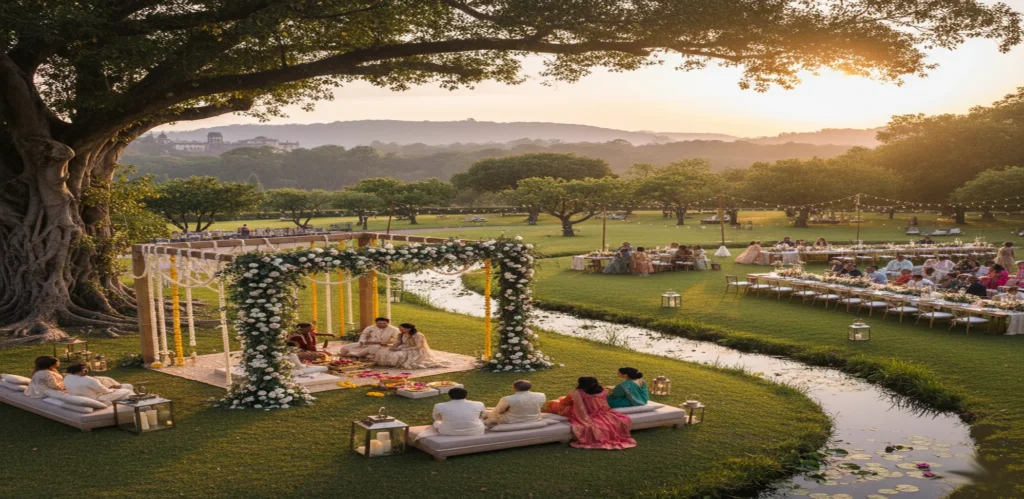
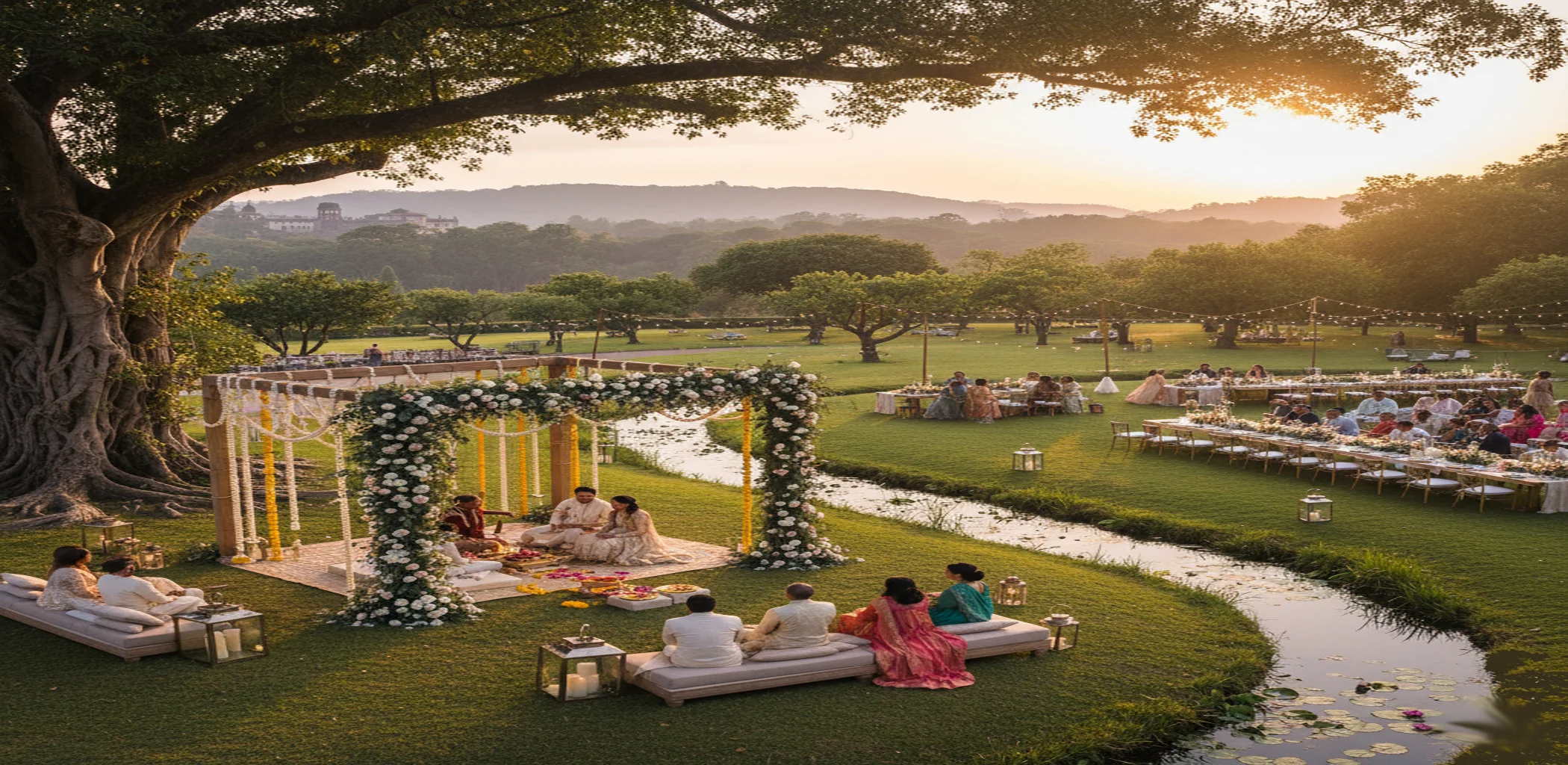
Why nature-infused venues are trending for Indian weddings
Cultural & contextual drivers
- Many couples in India are shifting away from the traditional closed banquet-hall wedding toward celebrations that feel more expansive, natural, relaxed and experiential. According to one industry survey: searches for outdoor weddings in India grew by ~22% year-on-year, and searches for “wedding background nature” rose by ~100%.
- Nature offers built-in décor: lush greenery, open sky, natural light, breeze, trees, water bodies — which reduces the need for heavy artificial décor and gives a more premium, stylised aesthetic. As one decorator-trend piece says: “Nature plays a vital role … Outdoor venues are especially popular for events like the mehendi, sangeet and the main wedding ceremony.”
- The appeal of authenticity, sustainability and experience: Couples increasingly value an environment that feels meaningful (under a banyan tree, by a riverside, garden lawn) rather than just impressive. For example, forest/woodland weddings in India are being described as “the new wedding frontier” because they offer calm, beauty and depth that a hotel ballroom cannot.
- Destination and multi-day weddings are becoming common, and open-air, nature-infused venues (palaces with lawns, tea estates, beachfront resorts, forest lodges) fit the “event meets retreat” model beautifully.
- These venues often support the luxury & experiential focus of modern Indian weddings while enabling guest comfort, photography opportunities, scenic backdrops, memorable guest journeys.
What “open-air & nature-infused venue” means in the Indian wedding context
In Indian weddings (which often include multiple functions over days, large guest lists, rituals, food, décor), this trend means choosing a venue with one or more of the following:
- Outdoor lawn, garden, forest clearing, beachside or hillside setting for ceremony or reception.
- Natural elements (trees, water bodies, rock formations, hills, vineyards) as part of the venue’s character.
- Minimal reliance on artificial lighting or full indoor spaces; décor that complements rather than competes with nature.
- Blending luxury hospitality (service, catering, guest amenities, accommodation) with the outdoor setting.
- Flexibility to host multiple functions (mehendi/sangeet/wedding/reception) in varying outdoor zones.
- Consideration of weather, guest comfort (shade, breeze, bugs, flooring), transport/logistics, and switching between indoor and outdoor as required.
Key components & practical ideas
Here are the major components of an outdoor nature-infused wedding venue and how you can execute them in the Indian context — along with things to watch.
1. Venue selection & site characteristics
Ideas & considerations:
- Choose a venue with an established lawn or garden (palace lawns, heritage resorts, tea estates, forest lodges, beachfront resorts). For example, one article lists venues like Aahana – The Corbett Wilderness, The Postcard – Velha as part of the forest-wedding trend.
- Confirm practical logistics: site access for guests, ground/grass quality (for outdoor furniture/catering), event power/water/lighting, ease of switching to alternate indoor space in case of weather.
- Time/day planning: For outdoor settings, consider time of day (sunset, late afternoon) for better lighting/guest comfort rather than peak midday sun.
- Environmental context: If you’re in forest, beach, hillside: consider weather patterns, insect-control, sound system logistics, guest transport.
- Accommodation & guest journey: Nature venues often require more careful transport/logistics (shuttle from main hotel, paths lighting, guest comfort).
- Sustainability credentials: many nature-venues emphasise eco-practices (waste-management, plastic-free décor, minimal power/load) which align well with the trend. For example, one décor trends article: “Sustainable & Local Wedding Decor … works best for outdoor weddings – garden venues, farmhouse setups.”
2. Ceremony & mandap setup
Ideas & considerations:
- Use the natural backdrop: tree canopy, water body, mountains, garden archways. Let the venue’s natural features be part of the focus.
- Mandap or ritual space: choose open mandap style, perhaps under a large tree, on a lawn, near a pool or beach. One décor-trend piece lists “open mandaps” as rising: “Open mandap styling is taking center stage in 2025 … tropical-themed wedding setups … destination weddings in India are booming especially in locations like Goa, Kerala, Alibaug.”
- Decoration should complement Nature: e.g., bamboo/jute frames, minimal drape, natural flowers, potted plants, terraces with greenery rather than heavy synthetic décor that competes with nature.
- Ceremony timing: sunrise, late afternoon, golden hour for photography; ensure sound/acoustics accounted for in open space.
- Guest seating: In lawn settings, level ground, comfortable chairs, shade (umbrellas or drapes) may be necessary; pathways should be easy to walk.
3. Reception, dining & lounge zones
Ideas & considerations:
- Outdoor dining: Long tables in garden/lawn or terrace, under fairy lights or canopies of lights, incorporating natural surroundings.
- Lounge zones under trees, fire-pit seating for evening functions, pool-edge receptions.
- Décor integration: For example, lanterns hung in trees, clusters of potted plants, string-lights, minimal rugs, vintage wooden furniture.
- Food & service logistics: In outdoor settings especially in nature, ensure caterers have power, safe storage, insect-control, and keep service efficient.
- Ambient lighting & mood: Lighting becomes critical in outdoor settings after dusk — ensure elegant lighting (LED, uplighting of trees, spotlights for mandap) while staying in sync with natural aesthetic.
- Guest comfort: Provide shaded areas, fans/heaters (depending on climate), plan for weather contingency (rain-cover, fallback indoor).
4. Décor & integration with nature
Ideas & considerations:
- Embrace the landscape: use the natural backdrop rather than hide it — e.g., keep large trees, reservoirs, hills visible instead of covering everything.
- Natural materials & minimalism: Use jute, cane, wood, linen, local flowers; avoid heavy plastics/fabrics. A décor trends article emphasises: “Instead of imported blooms and synthetic props … couples are opting for locally-sourced flowers … combined with natural elements like bamboo structures, jute drapes … This type of décor works best for outdoor weddings – garden venues, farmhouse setups.”
- Transitional zones: Entrance → ceremony → lounge → dining should all feel connected but flow through nature.
- Weather-friendly décor: Outdoor venues have more exposure: choose furniture and décor elements that can resist wind/rain; avoid heavy materials if strong breeze area.
- Sustainability angle: Outdoor venues often facilitate more sustainable weddings (less air-conditioning, less heavy lighting). A blog says: “Host your wedding in open-air spaces such as gardens, beaches, or heritage sites to reduce the need for extensive artificial lighting and air conditioning.”
5. Guest experience & events flow
Ideas & considerations:
- Multi-day experience in nature: Especially for destination weddings or boutique retreats, integrate nature elements into guest itinerary — e.g., welcome brunch on lawn, pool-side mehendi, forest walk excursion, beach bonfire.
- Photography opportunities: Nature-venues offer stunning backdrops for pre-wedding, candid shots, drone shots; good for memorable imagery. One article: “Forest weddings … fresh-air, bird-song, misty mornings, wedding under forest canopy.”
- Sound & entertainment: Outdoor settings allow creative entertainment — live acoustic sets, string-quartet under trees, pool-side DJ, fire-dancers near bonfire, outdoor cinema for guests.
- Guest comfort & movement: Lay out clear signage, walkways, night lighting for safe movement; ensure restrooms appropriate for outdoor functions; consider insect/temperature comfort.
- Weather contingency: Have a plan for rain/humidity/strong sun — canopy, alternate indoor space, fans/heaters, insect-control.
- Unique guest touches: Guest bonfire areas, stargazing zones, nature-walk stations, tree-plant take-aways, custom welcome drinks inspired by the setting.
6. Sustainability & nature-respectful execution
Ideas & considerations:
- Outdoor venue gives natural advantage; but ensure vendor coordination for eco-friendly practices: waste segregation, minimal single-use plastic, local flowers, biodegradable décor, LED lighting etc.
- Choose native vegetation for décor; minimize excessive imports. Use potted plants that can be reused or gifted.
- Align food/catering with nature theme: local produce, minimal transport, maybe open-air buffet.
- Vagaries of nature: Respect the landscape — for example avoid damaging lawn grass, restrict movement in delicate zones, inform guests about environmental sensitivity.
- Many venues now market themselves as “eco-luxury” with nature-first credentials (e.g., water/energy-conservation). For example, a blog mentions wedding resorts in Bangalore with outdoor venues and sustainable practices such as solar panels, rainwater harvesting.
Indian‐Specific Insights & Trends for 2025
- The “Forest Weddings Are 2025’s Hot New Venue Trend!” article states:
“Move over beaches and ballrooms — forests are officially the new wedding frontier in India! … More and more couples want intimate meaningful weddings and natural backdrops are winning over man-made grandeur.”
- The “Wedding Venue Styling Trends 2025 – India” blog lists:
“Open Mandaps … tropical-themed wedding setups … destination weddings in India are booming, especially in locations like Goa, Kerala, Alibaug, and South Indian resorts.”
- The “Editor’s Pick: The 14 Biggest Wedding Trends of 2025” article notes:
“Outdoor venues closer to nature … About 65-70% of couples for 2025 bookings are preferring to hold their ceremonies in natural surroundings. Noormahal palace offers beautifully curated outdoor spaces like the Dera and the Amphitheatre to cater to this rising demand.”
These highlight that in India, nature-infused venues are becoming mainstream rather than niche — across palaces, forests, beach resorts, tea estates, vineyards.
Benefits & Why This Works
- Visual & Emotional Impact: Nature settings provide dramatic, timeless backdrops (trees, sky, water, hills) that elevate the wedding experience and photographs.
- Guest Experience: Compared to indoor halls, outdoor venues feel more relaxed, expansive, experiential. Guests often feel more connected to place and event.
- Luxury with Authenticity: Nature venues combined with high-end hospitality give luxury without feeling artificial — a blend of curated services in a natural environment.
- Reduced Décor Load: Natural surroundings reduce need for heavy décor; you can let nature shine and invest in fewer but high-impact décor pieces.
- Sustainability Appeal: Outdoor settings align with eco-trends and sustainability values — fewer air-conditioning/lighting needs, more natural ambient lighting, local materials.
- Multi-Day Venue Efficiency: Outdoor resorts/estates are well-suited for 2-3 day weddings (mehendi, sangeet, wedding, brunch) all in one location — improves guest logistics and experience.
- Photographic Appeal: Scenery which lends itself to drone shots, sunset imagery, star-lit nights — popular in social-media era.
- Trend Forward: Aligns with what couples are searching for in 2025 — nature, authenticity, meaningfulness rather than just spectacle.
Challenges, Trade-Offs & Things to Watch
- Weather & Seasonality: Open-air venues are dependent on weather (rain, wind, heat, cold). Have contingency planning (tents, indoor back-up, heating/cooling).
- Logistics & Infrastructure: Power, lighting, sound, seating on lawn, guest comfort (shade, fans, heaters, insect control) require extra planning and cost.
- Guest Comfort & Accessibility: Outdoor terrain can be tricky for older/senior guests; paths, lighting, suitable flooring must be ensured.
- Décor & Flow Complexity: While nature does much of the aesthetic, you still need to ensure the décor flows and integrates well — e.g., ceremony space, guest seating, dining, lounge zones all must be coherent.
- Transport & Accommodation: Many nature venues are off-beat or out-of-town; transport for guests, accommodations, and travel logistics need careful handling.
- Sound & Acoustics: Outdoor ceremonies may face sound issues (wind, ambient noise, no walls to reflect sound). Professional sound planning is a must.
- Permits & Venue Restrictions: Forest/fire-zones may have restrictions on décor, open‐flame, drones; beach venues may need permits; heritage venues might have rules about tents/structures.
- Cost Management: Sometimes outdoor plus luxury hospitality plus transport/accommodation add up. While décor load may reduce, overall cost may still be high due to logistics.
- Sustainability vs Glamour Balance: Some nature venues may push heavy lighting/structures that overshadow nature. It’s important to maintain the balance of “nature-first” and high finish, not “nature decor + heavy artificial build”.
Practical Blueprint / Checklist for Planning an Open-Air & Nature-Infused Indian Wedding
Here’s how you could plan such a wedding step by step:
12-9 months out
- Define your vision: “Outdoor nature-infused” — specify type of setting (forest, beach, tea-estate, palace lawn, vineyard).
- Select venue accordingly; check availability for your preferred date, ensure outdoor lawn/ceremony area, guest accommodation, weather buffers.
- Budget: include venue cost, outdoor logistic premium (power, lighting, sound, furniture, transport) vs indoor.
- Vendor short-list: pick planner/decorator with experience in outdoor/nature weddings; check previous work in similar venues.
- Guest list & accommodation: since nature venue may involve travel/accommodation, estimate guest travel/accommodation logistics early.
9-6 months out
- Site walk-through: Inspect ceremony lawn, arrival path, guest dining area, lounge, restroom access, power/wiring grid, backup spaces, shade/shelter options.
- Décor & theme: Decide how you will integrate natural elements and what décor you need so that you don’t fight against nature. Choose materials optimized for outdoor (wood, cane, jute, potted plants, natural flowers). Use décor-trend guidance: bamboo frames, jute drapes, open mandaps.
- Ceremony timing: Select ceremony time considering sun path/heat/photography light/guest comfort (e.g., late afternoon or just before sunset).
- Guest transport/accommodation logistics: Organise shuttles if required, signage, guest directions, list of remote guests plus local accommodation.
- Catering planning: Outdoor catering logistics (buffet layout, power, fly-screens, insect control, walkability) need extra attention.
6-3 months out
- Final décor & logistics: Confirm vendor build up time, tent/cover arrangements (in case of rain), lighting plan (ambient, uplights, fairy-lights in trees).
- Guest comfort planning: Arrange shade/umbrellas/fan/heaters, consider guest footwear (grass/ground may be uneven), accessibility for elderly.
- Sound & entertainment: Outdoor sound system plan: ceremony area, dining lounge, after-party — ensure acoustics are tested, backup power generator.
- Photography/videography: Site pre-shoot or recce for drone angles, sunset shots, mandap against natural backdrop.
- Weather contingency plan: Confirm plan for rain/storm/strong wind; indoor backup or high canopy.
- Communication with guests: Dress code suggestions (for outdoor lawn), footwear advice, travel/accommodation instructions.
1-2 weeks out
- Final site check: Conduct full mock-walk with decorator/planner to check guest flow, seating arrangement, lighting in evening, shade for morning.
- Final guest list & seating: Outdoor seats often require more spacing; consider comfort vs density.
- Final catering/timing/flow: Confirm that outdoor dining layout works, that food holding units are protected, that restrooms accessible.
- Décor installation schedule: Know when décor begins (often early morning or previous evening) so there’s minimal disruption.
- Guest arrival/transport: Confirm conduits for guest transport, parking, shuttle, signage.
- Safety & comfort: Insect control, terrain lighting, emergency access, medical/generic first-aid, guest hydration stations.
Wedding day & after
- Set-up early: Ensure décor, lighting, sound, seating is ready before guests begin arriving; ideally allow some “breathing time” for vendor teams.
- Ceremony: With open-air mandap, have plan for guest range of comfort (sun shade, fans) and for officiant audio.
- Dining & evening: As dusk falls, lighting should kick in; ensure transition from ceremony to dining and entertainment zones is smooth.
- Guest flow & comfort: Encourage lounge zones under trees, perhaps fire-pit seating for evening, ensure guests are comfortable moving between areas.
- Post-event: Ensure décor/props cleaned up with minimal damage to lawn/grounds; feedback from guests about outdoor experience.
- After-wedding: Use nature venue to its advantage for post-wedding brunch, nature walk with guests, photo-shoot opportunities.
Future directions & what to expect for 2025 and beyond (in Indian weddings)
- Increase in forest & vineyard weddings: more couples choosing vine-covered estates, tea estates, private forest lodges for weddings.
- More venues offering nature-first luxury weddings: estates with full outdoor infrastructure, luxury hospitality + natural backdrop, bespoke services.
- Growth in under-water/sky-view/rooftop gardens amidst nature: not just lawns but unique nature settings (hillsides, lakeside decks, beach cliffs).
- Greater integration of wellness & nature into weddings: spa mornings, yoga by lake, nature hike before wedding, wellness brunch for guests.
- Enhanced focus on sustainable outdoor weddings: Natural décor, less heavy lighting, local florals, minimal impact — consistent with eco-luxury trend.
- More multi-function outdoor flows: pre-wedding, wedding, post-wedding brunch all outdoors but in different settings (garden, beach, terrace) to create a “wedding journey in nature”.
- More technology + nature merges: drone cinematography, outdoor screens, silent-disco under trees, LED installations integrated with nature backdrop.
- Use of heritage/outdoor venues closer to urban centres: for ease of logistics while still delivering nature-infused feel (e.g., estates near Delhi/NCR, Mumbai, Bengaluru) — bridging destination wedding and local convenience.
Final thoughts
Choosing an open-air & nature-infused venue for an Indian wedding is not just a stylistic choice—it’s a strategic one. It leverages beauty, guest experience, luxury and sustainability in one seamless package. For couples wanting something meaningful, elegant, memorable — especially in 2025 where nature + authenticity + luxury are aligned — this kind of venue ticks many boxes.
In your work (whether planning content for your wedding-services marketplace, building vendor partnerships or advising couples), this trend offers strong levers: vendors who specialise in outdoor/nature weddings, décor modules for garden/palace/forest settings, guest-comfort add-ons (shade, insect control, lighting), and storytelling around the venue’s natural backdrop.
Click Here For More Details on Indian Weddings