
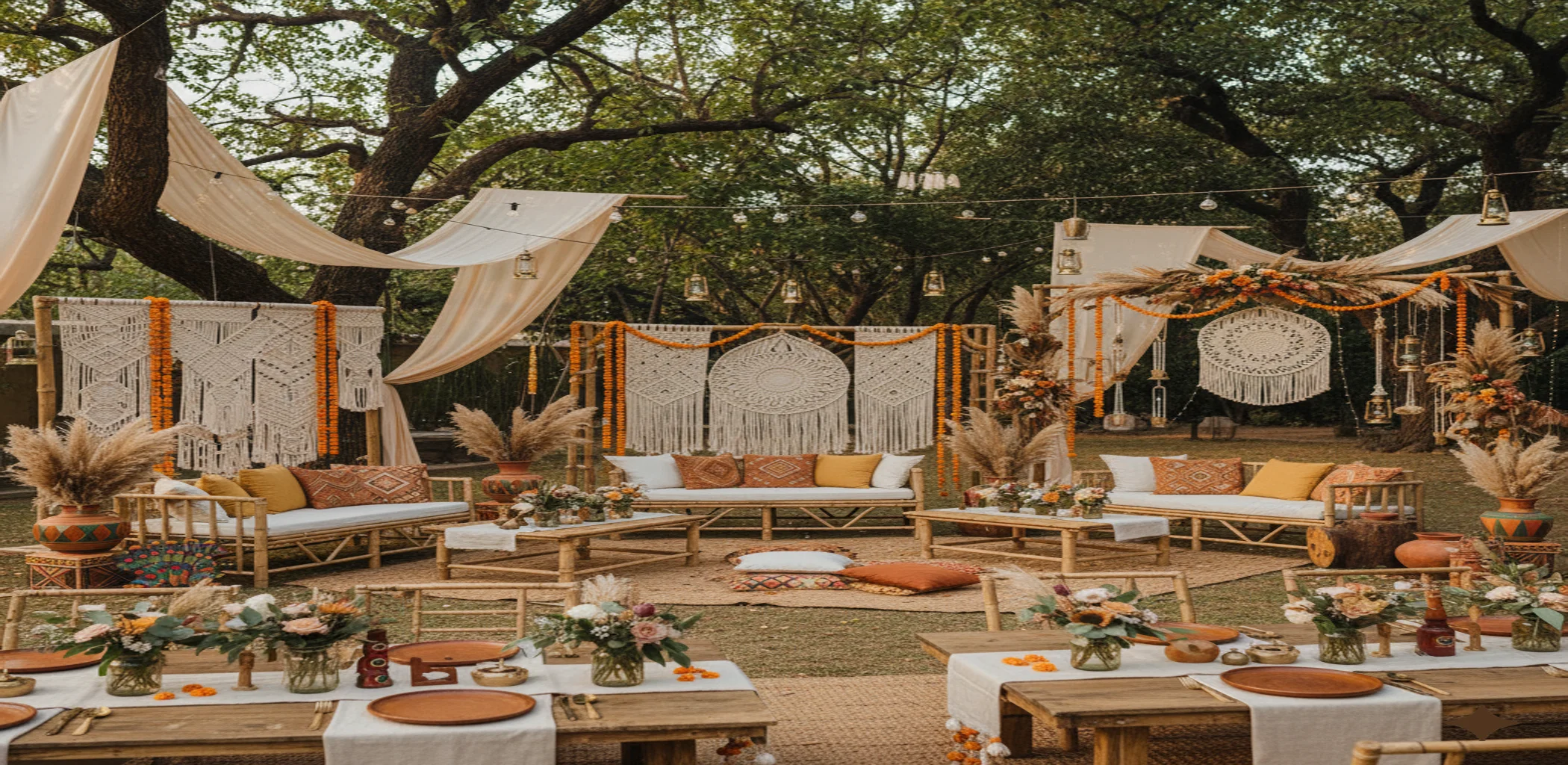
Celebrating Rustic Earthy Tones, Bamboo Seating, Macramé Decor, and Folk Art Elements
In recent years, Indian weddings have embraced a refreshing departure from traditional opulence, opting for a more grounded and earthy aesthetic. The Boho Chic and Village Revival trend has emerged as a celebration of rustic charm, simplicity, and cultural heritage. This trend integrates earthy tones, natural materials, and folk art elements to create a wedding atmosphere that feels both intimate and culturally rich.
Earthy Tones: The Palette of Nature
The foundation of Boho Chic and Village Revival wedding decor lies in a palette inspired by nature. Shades of terracotta, ochre, mustard yellow, deep greens, and browns dominate the color scheme, evoking the warmth and richness of rural landscapes. These earthy tones are complemented by accents of white, cream, and beige, ensuring a balanced and harmonious aesthetic.
This color palette is evident in various aspects of the wedding decor:
- Floral Arrangements: Utilizing seasonal and locally sourced flowers in muted tones, such as marigolds, jasmine, and lotus, to create arrangements that blend seamlessly with the natural surroundings.
- Table Settings: Incorporating tableware and linens in earthy hues, often paired with handcrafted pottery and wooden utensils, to enhance the rustic charm.
- Attire: Brides and grooms may choose outfits in subdued tones, adorned with minimalistic embroidery or block prints, reflecting the simplicity and elegance of rural fashion.
Bamboo Seating: Embracing Sustainability
Bamboo, a versatile and sustainable material, plays a pivotal role in the Boho Chic and Village Revival wedding decor. Its natural texture and strength make it an ideal choice for seating arrangements and structural elements. Bamboo chairs, lounges, and tables are commonly used in outdoor settings, providing comfort while maintaining an eco-friendly approach.
The use of bamboo extends beyond furniture:
- Entrance Arches: Bamboo is often employed to construct entrance arches or gateways, adorned with flowers and fabric, setting the tone for the rustic theme.
- Chandeliers and Lighting Fixtures: Bamboo can be crafted into chandeliers or lanterns, offering a warm and inviting glow to evening celebrations.
- Photo Booths and Backdrops: Bamboo structures serve as the framework for photo booths or stage backdrops, decorated with drapes, florals, and fairy lights.
Macramé Decor: Weaving Tradition with Modernity
Macramé, the art of knotting cords to create decorative patterns, has seen a resurgence in wedding decor. This craft, with its roots in ancient civilizations, adds a touch of bohemian flair to the rustic theme. Macramé elements are woven into various aspects of the wedding:
- Backdrops and Curtains: Large macramé panels serve as stunning backdrops for the ceremony or reception, creating a textured and visually appealing focal point.
- Table Runners and Chair Backs: Delicate macramé runners adorn dining tables, while chair backs are decorated with small macramé hangings, adding intricate detail.
- Hanging Planters: Macramé plant hangers suspend greenery and flowers, bringing nature into the decor and enhancing the earthy ambiance.
- Wedding Arches: Macramé is used to embellish wedding arches, intertwining with florals and greenery to create a harmonious and natural setting.
Folk Art Elements: Celebrating Cultural Heritage
The Village Revival aspect of this wedding trend emphasizes the importance of cultural heritage and traditional craftsmanship. Folk art elements from various regions of India are incorporated into the decor, paying homage to rural artistry and customs:
- Warli and Madhubani Paintings: These traditional tribal artworks are displayed on walls, furniture, and signage, narrating stories and adding visual interest.
- Terracotta Figurines: Handcrafted terracotta figures representing rural life, deities, or animals are used as centerpieces or decorative accents.
- Handwoven Textiles: Fabrics such as khadi, ikat, and block-printed cotton are utilized for drapes, cushions, and table runners, showcasing indigenous weaving techniques.
- Earthenware Pots and Lamps: Clay pots, diyas (oil lamps), and lanterns are strategically placed to provide soft lighting and enhance the rustic atmosphere.
- Traditional Utensils and Tools: Incorporating items like brass vessels, wooden ladles, and stone grinders as decor pieces adds authenticity and a sense of nostalgia.
Integrating Boho Chic and Village Revival in Wedding Ceremonies
The fusion of Boho Chic and Village Revival elements creates a wedding experience that is both aesthetically pleasing and deeply rooted in cultural traditions. Here are some ways to integrate these themes into various aspects of the wedding:
- Ceremony Setup: The wedding mandap (altar) can be constructed using bamboo poles, draped with natural fabrics like linen or cotton. Macramé hangings and floral arrangements enhance the rustic charm. Folk art paintings can adorn the walls or be used as backdrops.
- Reception Area: Seating arrangements with bamboo chairs and low wooden tables create a relaxed atmosphere. Centerpieces featuring terracotta pots, candles, and wildflowers add to the earthy vibe. String lights and lanterns provide ambient lighting.
- Mehendi and Sangeet Functions: These pre-wedding celebrations can be held outdoors, with floor seating on rugs and cushions. Decorate with macramé hangings, bamboo structures, and folk art elements to maintain the rustic theme.
- Food and Beverage Stations: Serve traditional dishes in earthenware pots or wooden platters. Use terracotta cups for beverages and provide guests with handwoven napkins, reinforcing the connection to rural traditions.
Sustainable Practices in Boho Chic and Village Revival Weddings
The Boho Chic and Village Revival trend inherently promotes sustainability through the use of natural and locally sourced materials. Additional sustainable practices include:
- Eco-friendly Invitations: Opting for digital invitations or using recycled paper embedded with seeds that guests can plant.
- Minimalistic Decor: Focusing on quality over quantity, using fewer but meaningful decor items that can be reused or repurposed.
- Local Sourcing: Purchasing decor items and materials from local artisans and markets, supporting the community and reducing carbon footprint.
- Waste Management: Implementing waste segregation and composting organic waste generated during the wedding.
Conclusion
The Boho Chic and Village Revival wedding trend offers a beautiful blend of rustic charm, cultural heritage, and sustainable practices. By incorporating earthy tones, bamboo seating, macramé decor, and folk art elements, couples can create a wedding atmosphere that is both intimate and reflective of rural traditions. This trend not only celebrates the beauty of nature and craftsmanship but also fosters a deeper connection to cultural roots, making the wedding experience truly memorable and meaningful.