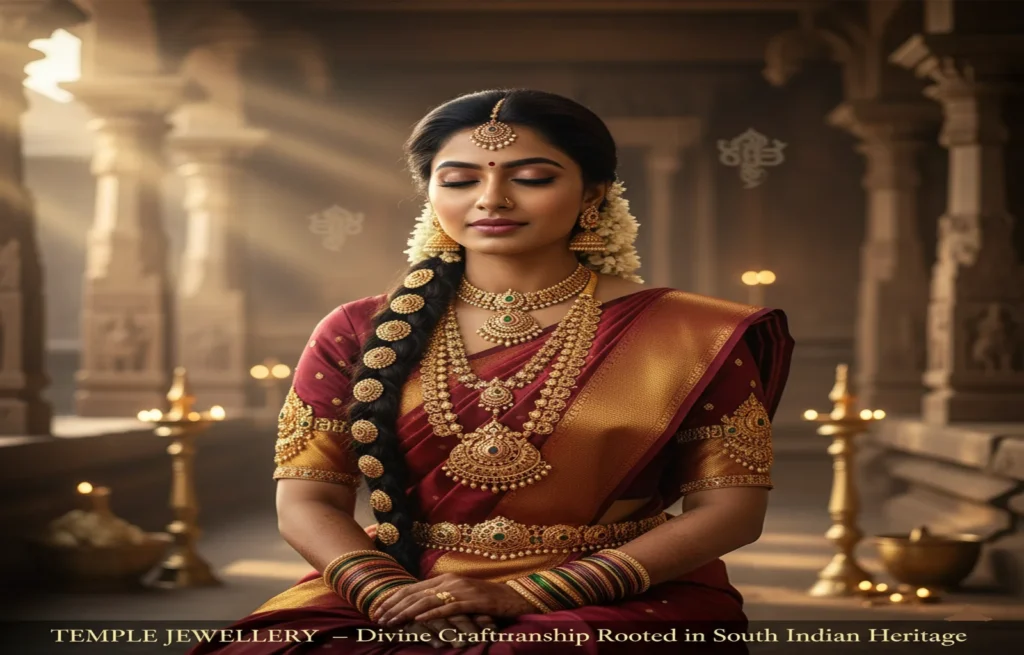
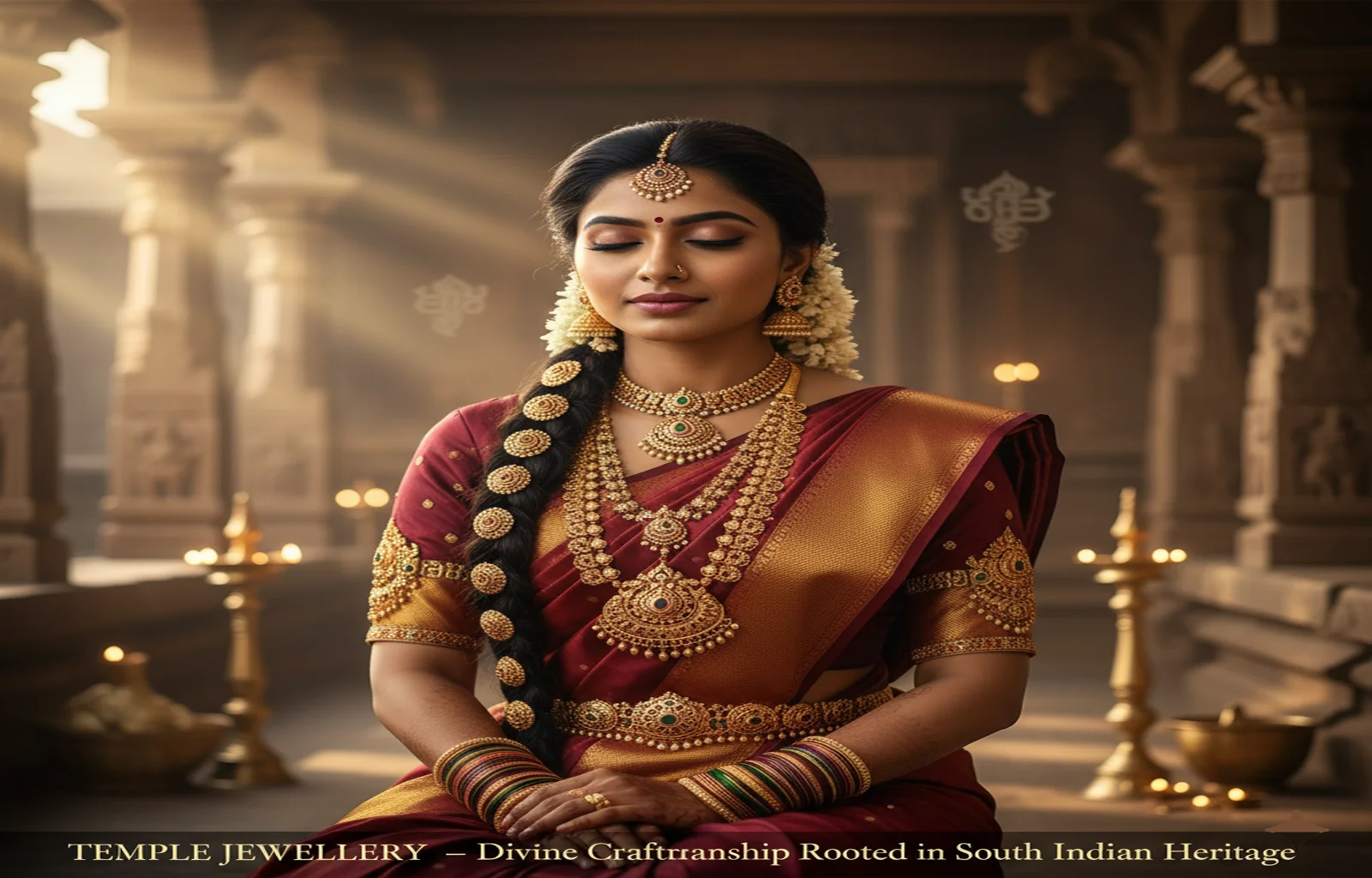
Temple jewellery stands as one of the most sacred and culturally resonant forms of Indian adornment. Originating from the ancient temples of South India, this jewellery style transcends ornamentation to become a powerful expression of devotion, heritage, and divine symbolism. Deeply inspired by Dravidian temple architecture, sacred iconography, and ritual traditions, Temple Jewellery occupies a revered place in Indian bridal culture—particularly for weddings that are steeped in spirituality and tradition.
Crafted primarily in antique-finished gold and enriched with symbolic motifs, precious gemstones, and pearls, Temple Jewellery evokes a sense of timeless sanctity. For brides who seek a wedding aesthetic that honours ancestry, ritual purity, and cultural depth, temple jewellery offers an unmatched blend of grace and gravitas.
Historical Origins and Sacred Lineage
The roots of Temple Jewellery can be traced back over a thousand years to the Chola, Pandya, and Vijayanagara dynasties of South India. Initially created as adornments for temple deities, these ornaments were crafted to embellish idols during daily rituals and grand processions. Over time, the same designs were adapted for royal patrons, classical dancers, and eventually brides, who sought to embody divine elegance on their wedding day.
Each piece of temple jewellery mirrors the architectural and sculptural language of South Indian temples—ornate, symmetrical, and rich with symbolic storytelling. Wearing temple jewellery is therefore not merely a stylistic choice, but a continuation of sacred traditions that connect the wearer to centuries of devotional art and ritual practice.
Materials and Craftsmanship: An Ode to Artisanal Devotion
Authentic temple jewellery is traditionally crafted from high-karat gold or gold alloys finished with an antique patina. This aged finish lends the jewellery a stately appearance, reminiscent of ancient temple icons and heirloom treasures. The craftsmanship is entirely hand-executed, often by artisans whose families have practised this art form for generations.
One of the defining characteristics of temple jewellery is its elaborate relief work. Motifs are sculpted in high detail, giving the jewellery a three-dimensional quality that resembles miniature temple sculptures. Precious and semi-precious stones—most commonly rubies and emeralds—are set into the designs, adding vibrant colour and symbolic significance. Pearls are frequently incorporated to soften the overall look, introducing an element of purity and elegance.
Iconic Motifs and Their Symbolism
The spiritual depth of temple jewellery is reflected in its motifs, each chosen for its religious and philosophical meaning:
- Deities and Divine Figures: Goddess Lakshmi, Lord Vishnu, and other revered deities are central to many designs, symbolising prosperity, protection, and marital harmony.
- Lotus Motifs: Representing purity, creation, and spiritual awakening, the lotus is one of the most recurring elements in temple jewellery.
- Peacocks: Sacred to Indian mythology, peacocks symbolise beauty, grace, and divine watchfulness.
- Yalis and Mythical Creatures: Often seen in temple architecture, these figures represent strength and guardianship.
These motifs transform the jewellery into sacred talismans, believed to bestow blessings upon the bride.
Components of a Traditional Temple Jewellery Set
A complete temple jewellery bridal ensemble is thoughtfully curated to create a balanced and majestic appearance. It typically includes:
- Kasumala or Haram: Long necklaces featuring repeating deity motifs or coin-like pendants.
- Choker or Addigai: A close-fitting necklace that anchors the bridal look.
- Jhumkas: Heavily embellished earrings that frame the face with traditional elegance.
- Vanki (Armlets): Ornamental arm bands worn on the upper arm, a hallmark of South Indian bridal attire.
- Maang Tikka or Nethi Chutti: Forehead ornaments that complement traditional bridal hairstyles.
- Oddiyanam (Waist Belt): A ceremonial gold belt that accentuates the saree drape and signifies prosperity.
Together, these pieces create a cohesive aesthetic rooted in ritual and tradition.
Perfect Pairing with Silk Sarees
Temple jewellery is most commonly paired with traditional South Indian silk sarees such as Kanjeevaram, Banarasi, and Mysore silk. The rich textures, bold borders, and lustrous weaves of these sarees provide the perfect backdrop for the antique gold finish and vibrant gemstones of temple jewellery.
The harmony between silk and gold is not merely visual but cultural—both are considered auspicious materials in Hindu weddings. Whether the saree is in classic hues like red, maroon, green, or gold, temple jewellery enhances its ceremonial richness without overwhelming the overall ensemble.
Spiritual Significance in Weddings
One of the most compelling aspects of temple jewellery is its spiritual resonance. Many brides choose these pieces for temple weddings or traditional ceremonies conducted according to Vedic rituals. The presence of deity motifs and sacred symbols is believed to invoke divine blessings, making the jewellery an extension of the wedding’s sanctity.
In this context, temple jewellery serves a dual purpose: it adorns the bride while simultaneously acting as a conduit of spiritual energy. This unique intersection of beauty and belief makes it particularly meaningful for brides who prioritise cultural authenticity and religious significance.
Contemporary Revival and Enduring Appeal
In recent years, temple jewellery has experienced a resurgence, embraced not only by traditional brides but also by designers and stylists who reinterpret it for modern contexts. While staying true to its core motifs, contemporary adaptations feature lighter constructions and versatile pieces that can be worn beyond the wedding day.
Despite these modern interpretations, the soul of temple jewellery remains unchanged. Its enduring appeal lies in its ability to connect the present with the past, offering a sense of continuity in an ever-evolving world.
Conclusion: Adornment Blessed by Tradition
Temple Jewellery is far more than an accessory—it is a sacred art form shaped by devotion, history, and cultural reverence. Inspired by South Indian temple art and crafted with unparalleled attention to detail, these pieces embody divine energy and timeless elegance. For brides who seek a wedding aesthetic rooted in heritage, spirituality, and grace, temple jewellery offers an adornment that is as meaningful as it is magnificent.
In choosing temple jewellery, a bride does not merely wear gold and gemstones; she carries forward a legacy of faith, artistry, and tradition that has adorned deities, queens, and brides for centuries.
Click Here To Know More About Indian Weddings