
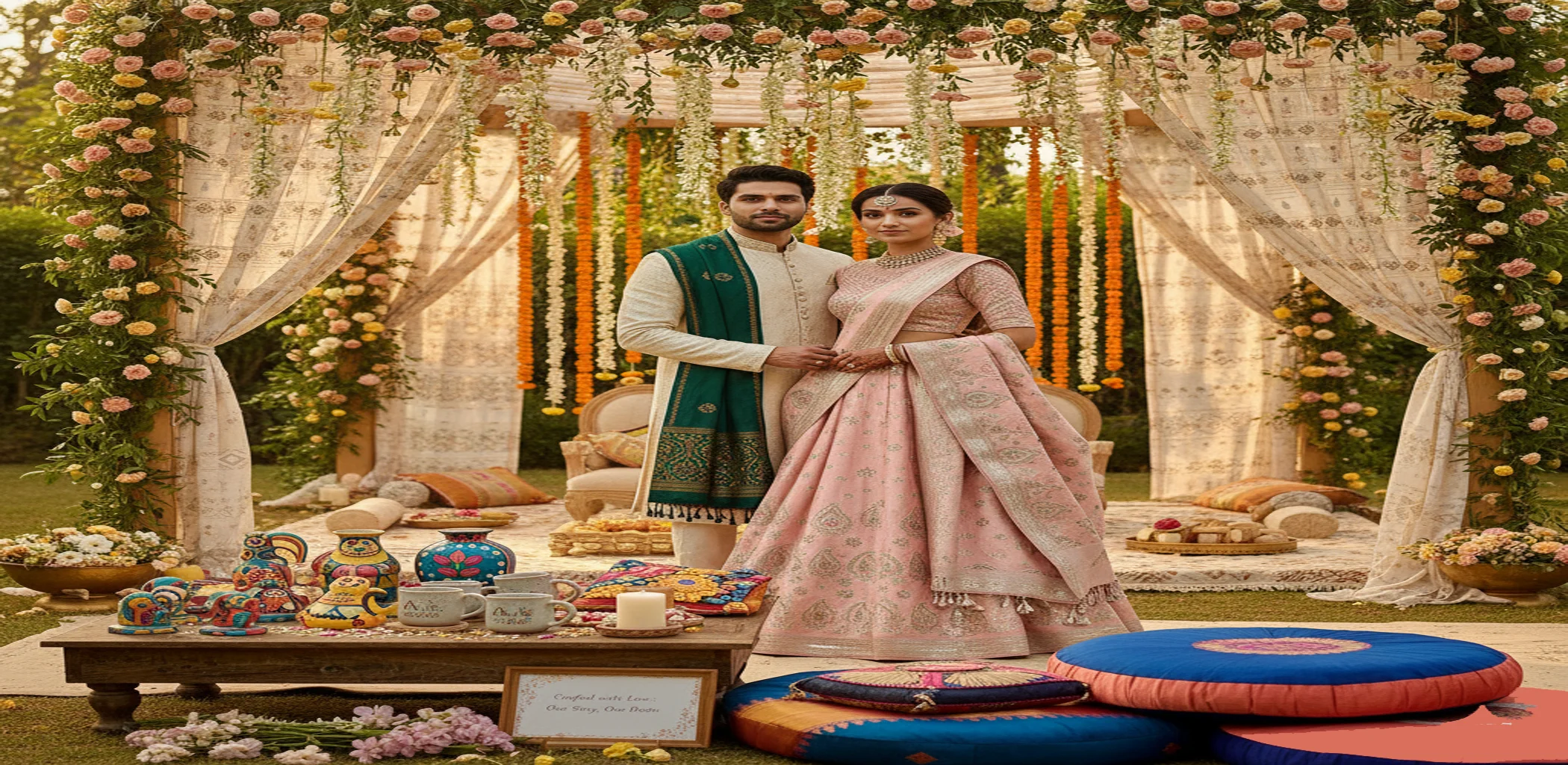
In 2025, Indian weddings are witnessing a renaissance of artisanal craftsmanship and local cultural integration. Couples are increasingly prioritizing unique, handcrafted elements that reflect regional heritage and celebrate local artisans. This movement goes beyond aesthetics—it embodies sustainability, cultural pride, and a desire for personal storytelling through wedding design. From bespoke attire to handwoven decor, every component of the wedding experience is being thoughtfully curated to highlight craftsmanship and authenticity.
Regional Textiles: Weaving Tradition Into Modern Weddings
Indian weddings have always celebrated vibrant fabrics, but 2025 sees a resurgence in regional textiles as focal points of design:
- Banarasi Silk from Varanasi: Renowned for its intricate zari work and luminous texture, Banarasi silk is a popular choice for bridal lehengas, groom sherwanis, and ceremonial drapes. Designers are modernizing these traditional fabrics with pastel tones, metallic highlights, and contemporary cuts.
- Kanjeevaram from Tamil Nadu: With its rich colors and temple-inspired borders, Kanjeevaram silk continues to dominate traditional South Indian ceremonies. Modern brides are blending it with unconventional color palettes or pairing it with lehengas for fusion styles.
- Phulkari from Punjab: Embroidered floral motifs on dupattas, stoles, and table runners infuse Punjabi vibrancy into weddings. These handcrafted elements add texture and cultural authenticity to both attire and decor.
- Chanderi and Maheshwari from Madhya Pradesh and Madhya Maharashtra: Lightweight and breathable, these fabrics are ideal for summer weddings and garden events. Their delicate patterns lend an understated elegance, ideal for modern minimalist aesthetics.
By highlighting local textiles, couples not only elevate their wedding aesthetics but also support regional artisans and preserve centuries-old craft traditions.
Handcrafted Favors: Personalized Touches
Wedding favors have evolved from generic souvenirs to meaningful, handcrafted pieces that guests cherish:
- Miniature Hand-Painted Figurines: Crafted by local artisans, these figurines represent regional folklore or motifs specific to the couple’s journey.
- Custom Pottery and Ceramics: Couples commission local potters to create personalized mugs, bowls, or vases engraved with the wedding date or initials.
- Textile-Based Favors: Hand-embroidered handkerchiefs, stoles, or small pouches crafted from regional fabrics serve as keepsakes, blending utility with tradition.
- Organic and Eco-Friendly Gifts: Seed bombs, handmade soaps, and artisanal candles are gaining popularity for their sustainable appeal. These gifts reflect a conscious effort to reduce environmental impact while promoting local craftsmanship.
Such favors transform the guest experience into an intimate and immersive celebration, linking every attendee to the cultural narrative of the wedding.
Local Artisans in Decor: Crafting Authentic Spaces
The integration of local artisans into wedding decor brings depth, texture, and uniqueness:
- Floral Artisans: Beyond conventional bouquets, local florists craft intricate floral installations, garlands, and thematic centerpieces that reflect indigenous flowers and styles.
- Woodwork and Carving: Artisans specializing in traditional wood carving create mandaps, stage backdrops, and furniture with motifs specific to regional folklore.
- Metalwork and Brass Accents: Hand-hammered brass lamps, candle holders, and trays add an earthy, regal aesthetic, blending contemporary elegance with artisan skill.
- Ceramic and Terracotta Decor: These elements are used in centerpieces, table settings, and decorative installations, highlighting rustic textures while promoting local craft industries.
This collaborative approach transforms weddings into showcases of local talent, creating spaces that are visually stunning and culturally rich.
Culinary Craft: Regional Flavors and Handmade Edibles
Culinary artisans are gaining prominence as couples seek authentic and locally sourced flavors:
- Traditional Mithai: Artisanal sweet makers craft region-specific delicacies like Mysore Pak, Sandesh, and Peda, often customized with wedding themes.
- Bespoke Savory Items: Chefs collaborate with local artisans to create handcrafted appetizers, breads, and regional delicacies, presented with aesthetic precision.
- Edible Decor: From chocolate sculptures to sugar flowers, culinary artisans integrate decor elements into the food itself, creating visually stunning, Instagram-worthy setups.
Culinary craftsmanship not only enhances the taste experience but also reflects the local heritage, turning meals into narratives of culture and creativity.
Collaborative Workshops: Engaging Guests With Local Art
Couples are increasingly involving guests in artisan-led workshops, making weddings experiential:
- Handloom Weaving Workshops: Guests learn to weave small textiles or scarves, connecting them to regional craft traditions.
- Pottery and Ceramics Sessions: Attendees shape personalized pieces, which double as keepsakes.
- Traditional Embroidery Experiences: Guests participate in creating miniature embroidered motifs, contributing to the wedding decor or favors.
These immersive experiences foster interaction, cultural appreciation, and a sense of community, elevating the wedding beyond a mere ceremony to a cultural celebration.
Sustainability and Conscious Luxury
The artisanal and local craft movement aligns with eco-conscious wedding practices:
- Reducing Mass Production: Prioritizing handmade items reduces reliance on factory-made decor and favors, lowering the environmental footprint.
- Ethical Sourcing: Couples seek artisans who are fairly compensated, promoting sustainable livelihoods.
- Eco-Friendly Materials: Organic dyes, recycled fabrics, and biodegradable packaging are integrated into attire and decor, reinforcing the commitment to sustainability.
Sustainable luxury ensures that the wedding leaves a positive legacy, supporting both the environment and local communities.
Fashion Integration: Artisanal Attire
Regional crafts are influencing bridal and groom fashion beyond textiles:
- Hand Embroidery on Fusion Outfits: Artisans create intricate motifs on lehengas, sarees, sherwanis, and jackets, blending traditional skill with modern silhouettes.
- Artisanal Jewelry: Handcrafted jewelry using local metals, beads, and enamel work adds authenticity and uniqueness to bridal ensembles.
- Custom Accessories: Belts, clutches, and footwear featuring local embroidery or beadwork complement the overall look, ensuring a cohesive artisanal theme.
By integrating artisanship into fashion, couples create wearable art that celebrates culture while reflecting contemporary style.
Case Studies: Successful Artisanal Weddings
- Rajasthan Palace Wedding: A wedding in Udaipur utilized local block-printed fabrics for decor, handcrafted marble centerpieces, and a curated menu of regional dishes, highlighting Rajasthan’s rich artisan legacy.
- Goan Beach Celebration: Themed around eco-friendly art, the wedding featured driftwood installations, terracotta tableware, and local floral arrangements, creating a rustic, yet luxurious experience.
- South Indian Temple Wedding: The ceremony included Kanjeevaram silk attire, brass lamp decor, and hand-carved wooden mandaps, providing a culturally immersive experience for guests.
These examples demonstrate how artisanship enhances authenticity, elegance, and storytelling in weddings.
Conclusion
The 2025 trend of integrating artisanal and local crafts into weddings represents a paradigm shift toward authenticity, sustainability, and cultural pride. By prioritizing handcrafted textiles, decor, favors, and culinary experiences, couples are crafting weddings that are deeply personal and culturally resonant. Collaborating with local artisans not only supports heritage crafts but also transforms weddings into immersive, memorable celebrations. This approach ensures that each wedding is a unique reflection of the couple’s journey, their values, and the rich tapestry of Indian craft traditions.