
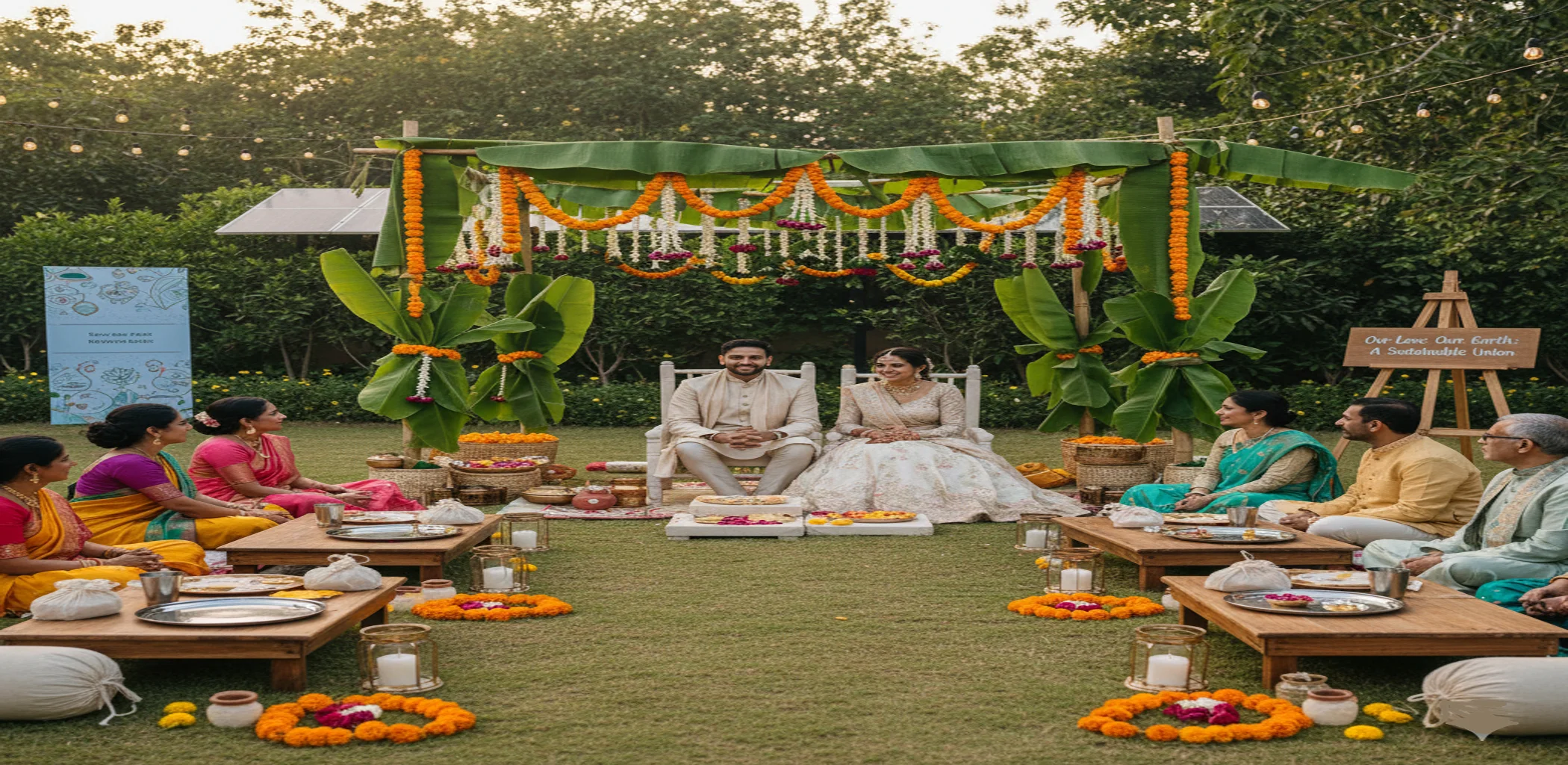
Why the eco-wedding wave is growing in India
Cultural & contextual drivers
- The Indian wedding industry is enormous and has significant environmental impact. According to industry commentary, urban Indian couples are increasingly aware and choosing “green” alternatives: e-invites, local flowers, no single-use plastics.
- A key push: younger couples are looking to align their celebration of love with their values — sustainability, authenticity, minimal wastage. For example, one article notes that eco-weddings may soon shift from “exception” to “norm” in urban India.
- There’s also cost-logic: many sustainable practices (renting décor, using local flowers) also reduce waste and may reduce cost.
- From a sustainability-impact viewpoint: some sources estimate that a traditional wedding (globally) can emit many tonnes of CO₂; while Indian wedding-specific numbers are not always given, the implication is large scale.
What “sustainable wedding” means in Indian context
In the Indian wedding setting (often multi-day, large guest lists, significant décor/food/fashion elements), “sustainable” tends to include:
- Using locally-sourced, seasonal materials (flowers, food).
- Minimising single-use plastic / disposable items.
- Choosing reusable, up-cycled or rented décor/furniture.
- Using digital or seed-paper stationery.
- Opting for ethical/slow-fashion bridal wear rather than one-time use.
- Managing waste (food leftovers, floral waste, plastic waste) responsibly via donation, composting, rentals, recycling.
- Selecting venues that facilitate greener operations (energy-efficient, less artificial lighting, minimal external transport).
- Choosing eco-friendly guest favours, gifts, and ways to involve guests meaningfully.
Key areas & practical ideas
Below are the major components of a wedding where sustainability steps can be applied — along with ideas, Indian-specific notes, and things to watch.
1. Invitations & stationery
- Digital invitations (e-cards, video invites, WhatsApp/QR codes) reduce paper use.
- For physical invites: seed-paper invites (paper embedded with seeds so that the guest can plant it) or recycled/bio-degradable paper.
- Minimise packaging: avoid plastic wrappings, metallic foils that complicate recycling.
- Incorporate eco-messaging (i.e., mention on invite that your wedding is “plastic-free” or “zero-waste”; many guests will appreciate knowing).
- Bonus: Use your wedding stationery to set the tone of your sustainable theme (design, colours, materials).
2. Venue & guest logistics
- Prefer open-air, natural settings (garden/waterfront/heritage site) which require less artificial lighting, less HVAC or heavy décor.
- Choose venues that have built-in sustainability features: solar panels, rainwater harvesting, waste segregation, existing greenery.
- Minimise guest travel / transport emissions: select a venue centrally located relative to majority of guests; consider group transport/shuttles rather than many individual cars. (While this is more discussed globally, it applies in India too.)
- Use existing décor elements of the venue rather than importing heavy props.
- If using destination or resort weddings, factor in carbon impact of travel along with venue operations. Some couples now even offset via tree-planting/donations.
3. Décor & florals
- Select locally grown, seasonal flowers rather than imported/exotic blooms that travel long distances or require heavy refrigeration. For instance, marigold (“genda”) is repeatedly cited in India as eco-friendly choice.
- Avoid using floral foam, heavy plastics, single-use props. Use natural materials: jute, bamboo, wood, cane, earthen pots.
- Rent décor items (chairs, furniture, photo-booth props) rather than buying for one-time use. Decor that can be reused or repurposed reduces waste.
- After the wedding: ensure décor/flower waste is composted or repurposed (flowers donated to temples or composted) rather than thrown.
- Consider potted plants (which guests can take home) instead of cut-flowers that wilt.
- Use LED lighting instead of halogens, and minimize electricity consumption.
4. Catering & food
- Emphasise menus based on locally-sourced, seasonal ingredients — reducing “food miles” and supporting local farmers.
- Incorporate plant-based/vegetarian/vegan options — meat has higher carbon/water/land footprint. Indian weddings are beginning to adopt vegan menus too.
- Use reusable cutlery, crockery, glassware — avoid single-use plastics, disposables. Banana-leaf mats (especially in South India) can be a cultural and eco-friendly alternative.
- Collaborate with caterers who handle leftover food responsibly: donation to local NGOs, composting, avoiding over-preparation.
- Keep portion sizes realistic and plan well to avoid large amounts of food waste (especially in buffets). Also encourage guests to take leftovers home or donate.
- Choose suppliers who follow environmental practices (minimal packaging, local produce, minimal freezing).
- Optionally, for destination weddings, explore menus with indigenous grains (millets, native vegetables) for both taste and sustainability.
5. Attire, jewellery & fashion
- Bridal wear/groom wear: opt for up-cycled outfits, rental outfits, re-use of heirlooms rather than brand-new clothes for one day.
- Choose fabrics that are organic, handloom, slow-fashion: cotton khadi, hemp, bamboo silk, handwoven textiles, natural dyes. This supports artisans, reduces chemical/pollution footprint.
- Jewellery: pick recycled metals, ethically-sourced stones or lab-grown diamonds, rather than newly mined heavy mining jewellery. (Though less Indian-specific data here, but aligned with global sustainable wedding advice.)
- Encourage guests to pick versatile outfits that can be reused again (rather than “wedding-only” outfits) — this reduces waste in guest wardrobes.
- Accessories & shoe rental: many rental services exist now for bridal/groom accessories.
6. Guest-favours, gifts & takeaways
- Instead of mass-produced trinkets, choose meaningful, sustainable gifts: saplings/plantable seeds, organic teas/spices, handmade local crafts, eco-friendly candles/soaps.
- Packaging: avoid plastic-wrap, excessive foil, non-recyclable materials. Use reusable boxes/jars or seed paper packaging.
- Consider charitable guest-favours: donation on behalf of guests, or gifts that support local artisans/fair trade, so the impact goes beyond the wedding day.
- After the event: décor pieces, plants, or potted items can serve as take-aways for guests rather than disposable items.
7. Waste-management & end-of-event clean-up
- Plan for waste segregation at the venue: separate wet food waste, dry recyclable, non-recyclables. Employ waste-pickers/volunteers if needed.
- Compostable items (cut-lery, plates) or reusable serviceware reduce the landfill burden.
- Floral waste and plant-based décor should ideally be composted or given to nurseries/restoration.
- In India, many venues and wedding planners now include “green wedding” packages that incorporate waste-management logistics.
- For destination weddings: think about guest travel, venue travel, shipping of props — plan to minimise shipping or opt for local sourcing.
8. Communication & guest engagement
- Let guests know ahead of time that the wedding is “eco-friendly” — this sets expectations: e.g., dress code (no new plastic shoes), no disposable bottles, car-pooling, plant-favours, digital invites.
- Encourage guests to be part of the sustainability story: for example, “Please RSVP by digital card”, “Signature tree-planting ceremony”, “Take home a potted plant”.
- Use signage at the wedding: “Please deposit plastic bottles here”, “This décor is made of recycled wood”, etc — it’s educational and sets tone.
- Capture and share your sustainable choices (via social media) — this helps amplify the trend and gives guests a sense of being part of something meaningful.
Some Indian-specific examples & insights
- A wedding planner quoted in an article said: “We used bamboo, jute ropes, cane furniture … water bottles were glass” for a green wedding in India.
- Reports indicate Indian luxury weddings are adopting compostable décor, electric vehicle baraats and tribal-artisan gift hampers as status symbols of sustainability.
- One article about Indian weddings points out that couples are opting for digital invites, local and seasonal menus, reusable décor at urban Indian weddings.
- Many Indian wedding-specific pieces emphasise the “four R’s” (Reduce, Reuse, Recycle, Refuse) for décor etc.
Key benefits & “why” beyond the obvious
- Environmental impact reduction: Less waste, lower transport and food-miles, less plastic pollution, reduced carbon footprint.
- Cost-efficiency: By renting décor/outfits, sourcing locally, minimising wastage you can often cut costs (or divert budget into more meaningful guest experiences).
- Authenticity & uniqueness: Green weddings often result in more personalised details (local craftsmanship, heirloom pieces, regionally-inspired menus) which guests find more memorable.
- Brand-reflection & values: For many couples, their wedding is the first big event of their marital life together — making a sustainability statement aligns with their values and may have social ripple effects.
- Guest satisfaction & experience: Thoughtful elements (e.g., potted plants take-away, bespoke local food) can be more memorable for guests than generic luxury.
- Legacy: Using décor/outfits in multiple functions, donating leftover food or planting trees means the wedding continues to deliver value beyond the day.
Challenges & things to watch out for
- Guest expectations & scale: Many traditional Indian weddings have large guest lists, multi-day events, elaborate décor — scaling sustainability into large-scale operations needs thoughtful planning.
- Vendor limitations: Not all vendors are equipped for green practices (compostable cutlery, waste-management, local sourcing). Research is required.
- Budget vs perception: Some sustainable options may appear more “luxurious” or “niche”, but if not communicated well, guests may interpret them as cost-cutting rather than conscious choice.
- Logistics: Especially for destination weddings, logistics of transporting décor, guests, food etc can eat into sustainability gains if not planned wisely.
- Trade-offs: Sometimes choosing “local” vs what a couple originally had in mind might mean giving up an exotic element (or accepting a different aesthetic) — but many designers say the aesthetic can still be elegant.
- Awareness among guests: If guests are unprepared (for example, told to avoid plastic bottles, or expected to participate in tree-planting) they may feel constrained — good communication is key.
- Post-event use & waste: Ensure décor and materials are truly reusable/compostable and not simply “greenwashed” major expense with same waste.
A sample blue-print / “checklist” for a sustainable Indian wedding
Here’s a hypothetical checklist you could adapt for an Indian wedding — from “early planning” to “after the event”:
Early planning (12-9 months out)
- Define your sustainability goals: e.g., reduce paper usage by 80 %, avoid single-use plastics, source >70% items locally, donate leftover food.
- Choose venue: shortlist venues with green credentials (waste management, energy efficiency, local sourcing) or natural backdrop requiring minimal décor.
- Guest list: consider carefully — smaller guest list equals smaller footprint (though in Indian weddings this may be tough).
- Budget allocation: earmark budget for “sustainable elements” (eco stationery, plant-take-aways, rental décor, ethical fashion) and allocate accordingly.
Invitations & communication (9-6 months)
- Design and send digital invites; if physical, use seed-paper or recycled.
- In the invite/website: mention your eco-initiative — e.g., “Please bring refillable bottle”, “Car-pool option available”, “Take home a potted plant”.
- Set dress code suggestions (optional): reuse outfits, avoid new plastic shoes/clutches.
- Provide transport info/parking/shuttles so guests can plan car-pooling.
Décor & florals (6-3 months)
- Meet with decorator: set brief emphasising local flowers, minimal mono-block décor, reusable props (wood, bamboo, jute).
- Choose potted plants for décor where possible (which can double as take-away gifts).
- Decide rentals vs purchase: furniture, signage, photo-booths, lights.
- Plan for post-wedding reuse/donation/compost of décor items and flowers.
Catering & menu (6-2 months)
- Meet caterer: emphasise local, seasonal ingredients; incorporate vegetarian/vegan options; minimise imported items.
- Choose serviceware: steel/glass/porcelain, banana-leaf mats, avoid plastics.
- Agree on food-waste plan: leftover donation, composting, portion planning.
- Drink station: water refill stations instead of bottled water; avoid plastic straws.
Attire & guest fashion (3-1 months)
- Bride/groom: explore rental/heritage reuse/up-cycled outfit options. Choose organic/handloom fabrics if buying new.
- Jewellery: consider ethical/recycled options.
- Guest info: casually communicate reuse/outfit expectations (optional). Possibly partner with rental service for guests’ outfits.
Favours & gifts (1 month)
- Decide guest-favours: potted plants, saplings, organic teas/spices, handmade craft items.
- Packaging: eco-friendly, minimal.
- Return gift for parents and close relatives: can also be meaningful (charity donation, artisan crafts).
Wedding day & operations
- Signage: indicate sustainability (e.g., “Please deposit glass bottles here”, “This décor is reusable”).
- Waste bins: clearly marked compartments for wet, dry, recyclable.
- Lighting & power: use LED, natural light where possible.
- Guest transport: shuttle/carpool options, possibly an incentive.
- Décor reuse: plan set-up so that ceremony décor becomes reception décor (reducing extra items).
- Photography: capture sustainability story (can be part of your narrative for guests and social media).
Post-wedding (1-2 weeks after)
- Ensure décor items (plants, furniture, signboards) are reused/donated.
- Flowers: compost or donate.
- Leftover food: ensure proper donation of excess within health/safety norms.
- Feedback & share: Send thank-you notes mentioning your sustainable efforts (helps engage guests and spreads the message).
- Consider sharing your “green wedding” story on blog/social media to inspire others.
Future directions & what we may expect in 2025 and beyond (in Indian weddings)
- Greater adoption of zero-waste wedding packages by venues/planners (including composting, reusable décor, full-service waste management) — already emerging.
- More couples choosing fully plant-based menus or “green vegetarian majority” menus rather than traditional heavy meat-based feasts.
- Use of carbon-offsetting for travel/venue through tree plantations or renewable energy credits especially for destination weddings.
- Rise in ethical fashion wedding capsules: bridal wear collections highlighting organic/handloom fabrics, rental + reuse options.
- Increased use of digital & immersive guest experiences to reduce physical footprint (e-invites, live-streaming for guests instead of travel).
- More local-artisan collaborations: décor, favours, textiles sourced from regional craft communities, thereby combining sustainability + cultural authenticity.
- Reinvention of older traditions: e.g., mandaps made of wood/jute rather than decorative metal plastics, flower garlands that are compostable, festive décor that can be reused for multiple functions/shows.
- Greater transparency: couples may share “impact score” or “waste-generated vs reused” to show accountability (especially among socially-media aware generations).
Why this makes a difference: the big picture
- When thousands of weddings adopt sustainable practices, the cumulative impact is meaningful (less plastic in landfills, reduced food waste, lower carbon footprint, support for local economies).
- It shifts the wedding industry itself: vendors, venues, caterers start modifying practices to meet demand, creating a supply chain of sustainability.
- It sets a precedent for guests: the wedding becomes a model event. Guests may reuse favours, note the décor, discuss the concept — rippling effect.
- It aligns personal celebration with broader planetary/ethical values — making something joyful not at odds with responsibility.
- From a branding/social status viewpoint: as articles note, being “green” is often perceived positively in urban India among younger affluent couples: luxury married with conscience.
Final thoughts
- A sustainable wedding doesn’t mean sacrificing elegance or tradition — it means re-thinking how things are done: choosing local over imported, renting rather than buying, focusing on meaningful rather than showy.
- In the Indian context, many traditional elements (flowers, open-air mandaps, local foods, hand-loom textiles) already align with sustainability — so the shift can feel like a return to roots instead of a big overhaul.
- The challenge lies in intentionality: making choices with awareness, planning ahead (not last minute), and working with vendors who share the vision.
- Even if you cannot make everything eco-friendly, every step counts: e.g., switching to e-invites, using reusable cutlery, donating leftover food are tangible wins.
- Ultimately, a wedding is a milestone — making it sustainable means your celebration leaves positive footprints rather than just ephemeral sparkle.