Why “Bold & Personalized Décor” is gaining momentum in Indian weddings
Context & drivers
- Indian weddings are increasingly treated as experiential events rather than just ceremonial functions. Guests expect WOW moments, Instagram-worthy backdrops, immersive zones.
- Couples want their wedding to reflect their story, personality, heritage and values, not just follow a standard banquet-hall pattern. Hence décor moves from “nice” to “meaningful + impactful”.
- With competition among venues/vendors, décor becomes a major differentiator — bold personalisation helps set a wedding apart.
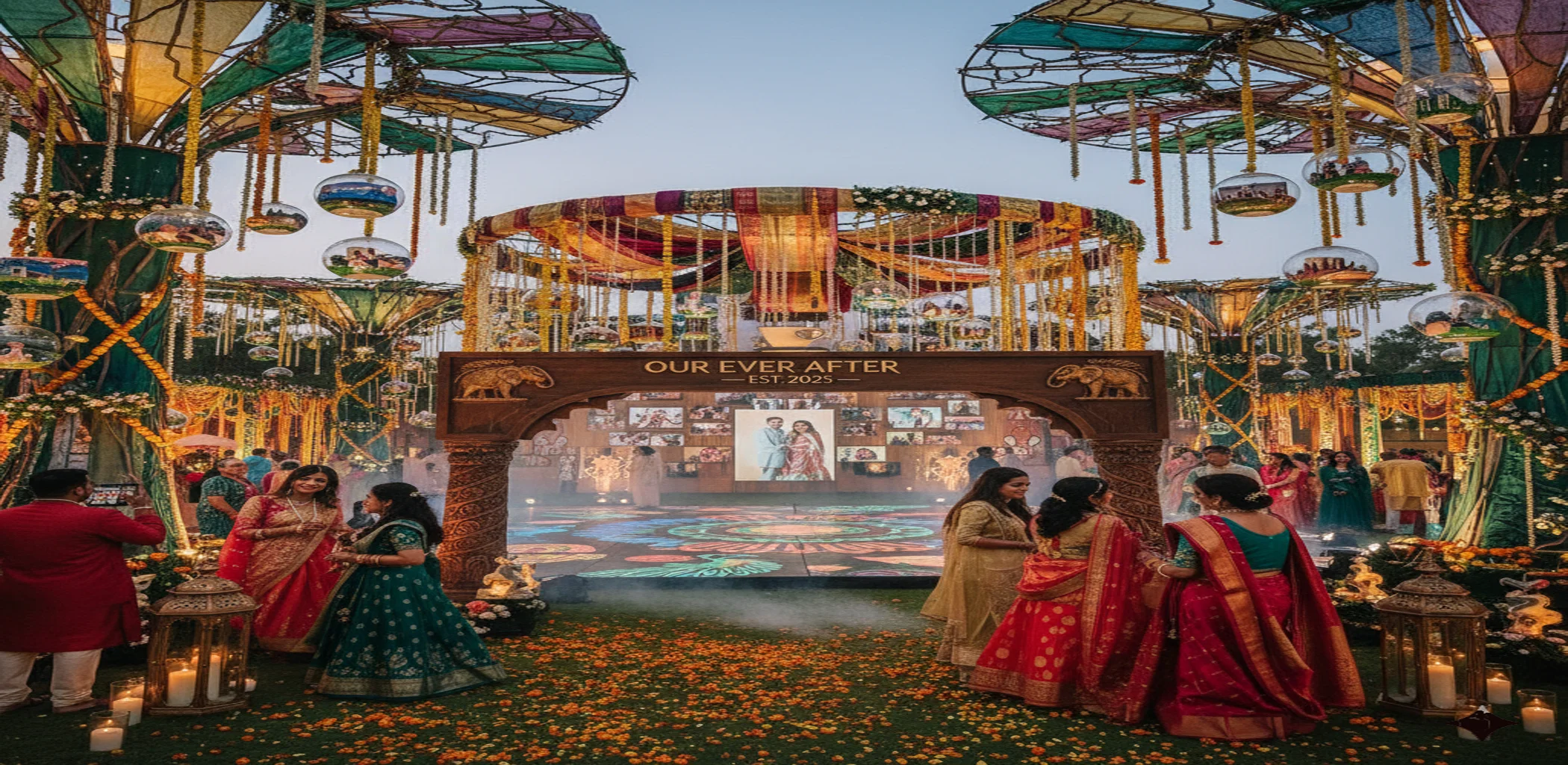
- In 2025, décor is not just about stage + flowers + linens — it’s about immersive themes, installations, interactive zones, regional craft, mixed media. For Indian weddings where scale, colour, ritual all matter, this trend suits the context. For example, one decor-trend article notes “oversized installations … floating/hanging décor … immersive zones” as key.
- Also, social media and photography matter: décor that looks good in stills, video, live feeds is preferred. So bold visuals, large scale, striking themes help.
What this means for décor & themes
In an Indian wedding context, bold & personalised décor means:
- Themed environments (rather than generic hall décor) where colours, textures, architecture, props, lighting all serve a narrative.
- Large-scale installations: oversized florals, ceiling-hanging elements, moons/spheres, custom shapes, easily visible from many angles.
- Personalised details: monograms, couple’s story elements, region-specific motifs, cultural or family references built into design.
- Interactive zones: guest-photo booths, immersive lounges, thematic walk-ins, décor you can engage with.
- Use of regional art, craft, bespoke fabrics, custom backdrops, local artisan work to make décor unique to couple rather than off-the-shelf.
- Mix of materials & textures: beyond flowers, include metal, mirror, acrylic, LED, wood, fabric installations, multimedia elements.
- Dramatic lighting and staging: LED walls, projection mapping, hanging décor, suspended elements, bold colour-palettes or monochrome with one accent.
- Décor that works with rituals and flows: stage, mandap, entrance, lounge, dining, photo-zones all designed as part of one coherent theme.
Key areas & practical ideas
Below are major components where bold & personalised décor plays out — with Indian-specific nuances, practical ideas, and things to watch.
1. Theme definition & narrative
- Start with story-telling: what is your story? Where do you come from? What culture/region inspires you? What mood (elegant/royal, dramatic/glam, quirky/fun)? This becomes your décor theme.
- Examples of themes trending in India 2025:
- South Indian Temple Fusion (temple architecture, banana-leaf accents, floral chandeliers)
- Artistic Regional Narratives: e.g., Warli murals, terracotta installations, Bandhani fabrics, craft-led décor.
- Mirror & Crystal Fantasy: high-glam décor with mirrored panels, crystal elements, LED lighting.
- Celestial / Starry Night themes: moon-shaped mandaps, metallic stars, navy drapes, galaxy lighting.
- Immersive Fairytale/Forest/Enchanted themes: immersive zones with hanging décor, floral canopies, large installations.
- The theme should permeate all décor elements: entrance, mandap/stage, dining, lounge, photo zone, signage, guest gifts.
- Create a “mood-board” with assets (colour palette, material swatches, props) and share with décor vendor/planner early.
2. Grand Installations & Signature Pieces
- Oversized florals: large floral arches, ceiling-hung floral chandeliers, walls of blooms, sprawling aisle décor.
- Statement mandap/stage: Rather than a standard mandap, couples are opting for bold structures: floating water mandaps, transparent acrylic structures, suspended floral canopies, thematic shapes.
- Hanging/suspended décor: Use of vertical space — hanging flowers, terrariums, chandeliers, geometric suspended elements, fabric swags from ceiling.
- Interactive décor zones: e.g., guest walls, photo-installations, live painting corners, lounge pods, 360° stations.
- Use of mirror/metal/LED: Reflective surfaces, metallic accents, projection mapping on backdrops, LED tunnel entrances, custom neon signage.
- Biophilic & immersive décor: Incorporating nature and immersive lighting for dramatic effect — floral ceilings, greenery walls, textures of wood/stone.
3. Colour, texture & material play
- Bold colour palettes: saturated jewel tones, prints, modern accents are used increasingly. Traditional Indian weddings often relied on red/gold; now you see vibrant fuchsia, cobalt, emerald, pastel-soaked luxuries. For example, “maximalist florals” in 2025 décor trend list.
- Mixing textures: silk drapes, mirror/glass, wood mouldings, metal frames, fabric waves, floral installations. Texture contrasts help elevate décor.
- Regional material usage: e.g., terracotta, clay, cane, jute, handloom fabrics in décor. Use local crafts for authenticity and bold aesthetic.
- Lighting as material: LED strips, fairy lights, colour-wash uplighting, projection mapping become integral to décor rather than add-ons.
- Use of negative space and staging: Because décor is bold, proper scale and space planning matter — ensure installations don’t overwhelm guest flow, block rituals or photograph poorly.
4. Personalisation & meaningful details
- The décor should tell the couple’s story: e.g., their travel theme, regional roots, childhood memories, shared passions. • For example, Warli art narrative capturing couple’s journey.
- Custom signage: welcome boards, guest names, table cards, choreographed décor props with couple’s initials or story motifs.
- Guest-centric décor: create décor zones where guests can participate (signature drink wall, photo booth with custom props, interactive lounge).
- Décor that reflects culture and heritage: Use of folk art, traditional crafts, heirlooms turned décor props, regional motifs. • Example: “Artistic Regional Narratives” theme.
- Use of monograms, bespoke installations: e.g., couple’s silhouette cut-out adorned with florals, custom illuminated initials, naming the lounge after their pet/legend etc.
5. Venue & spatial integration
- Venue choice directly influences décor possibilities: high ceilings allow hanging décor; gardens allow floral canopies; heritage halls allow mirror/jaali work.
- Décor must consider guest flow & rituals: entrance, baraat arrival, mandap ceremony, lounge, dining, photo zones, exit — each zone needs transitional décor.
- Scale appropriately: bold décor works best when the venue has size and sight-lines; for smaller venues, one focal installation may replace multiple smaller ones.
- Lighting & time of day: Day weddings vs night weddings have different décor effects; bold décor may rely more on lighting and effects for evening.
- Budget & logistics: Large installations, suspended décor and structural frames cost time & labour; metal/LED/tech components escalate cost. Good planning is essential for seamless execution.
6. Sustainable conscious & purposeful décor
- Even in bold décor trend, sustainability is gaining: use of locally-sourced materials, reusable décor items, biodegradables. • Example: “think biodegradable mandap setups … floating and hanging décor” in 2025 décor trend list.
- Up-cycling props, using potted plants vs cut flowers, modular furniture, rental décor pieces.
- Encourage vendors who integrate sustainability into their bold installations (e.g., LED lighting with low consumption, minimal waste materials).
- Thoughtful décor means balancing spectacle with responsibility: impactful visuals + meaningful material choices.
Indian-specific examples & insights
- From the “Top Wedding Decor Themes for Indian Weddings in 2025” article: “South Indian Temple Fusion” theme uses banana-leaf canopies, banana leaves drapes, floral chandeliers, brings a bold spiritual visual.
- The “Top Wedding Decor Trends in India for 2025” article lists: “Statement Mandaps … oversized floral installations … interactive décor zones … floating and hanging décor”.
- The “Venue Styling Trends 2025 India” blog emphasises natural textures, earthy/rustic materials but still bold in form: wooden mandaps, terracotta centrepieces, dried botanicals.
- On floral installations: “Floral installations beyond the traditional mandap … cascading floral walls, suspended floral centrepieces” cited in Wedding Affair blog.
These show how Indian weddings are embracing bold personalised décor in a way that marries tradition + modern design + experiential zones.
Benefits & “why it works”
- Memorability & visual impact: Bold décor creates striking visuals, memorable photo-moments and sets the event apart.
- Reflection of personality: Personalised décor makes the wedding feel like the couple, not just a generic template. This emotional resonance matters a lot in Indian weddings which span family, heritage and cultural legacies.
- Guest engagement: Interactive zones and immersive décor invite guests to experience not just attend — key when guest lists are large and attention wanes.
- Story-telling: Each décor element becomes part of the narrative — heritage, culture, the couple’s journey — which adds depth beyond “pretty”.
- Photography appeal & social media: In the age of live-feeds, reels and Instagram, décor with bold scale, dramatic lighting and unique installations amplify shareability.
- Differentiation in the marketplace: For venues, planners, décor vendors — offering bold, personalised décor differentiates them in a competitive Indian wedding-market.
- Blend of tradition and novelty: Bold décor allows couples to bring fresh aesthetics while still anchoring in cultural motifs — e.g., a Warli mural mandap, or mirror-crystal juxtapositions with brass lamps.
- Guest comfort & flow: When done well, décor can enhance rather than obstruct guest experience — e.g., lounge zones, photo-zones, comfortable flow between rituals and dining.
Challenges & things to watch
- Over-whelm / Loss of Focus: Bold décor can dominate and distract from rituals and intimate moments. The décor must support the ceremony rather than overshadow it.
- Budget & cost escalation: Large installations, custom lighting, hanging structures, projection mapping add cost significantly. Proper negotiation and vendor clarity needed.
- Logistics and venue compatibility: Some venues (especially heritage or open-air) may not support heavy installations or hanging décor; structural/electrical/ceiling height issues may arise.
- Guest sight-lines & flow: Oversized props should not block guest views, create congested zones, or impede movement. Especially for Indian weddings where rituals involve movement and guest proximity.
- Cohesiveness: Many décor zones (entrance, mandap, lounge, dining, photo-walls) need a coherent theme; otherwise the décor can feel disjointed.
- Cultural sensitivity: If using regional motifs/craft, must be done authentically (not superficially) — guests/family may notice if a craft element feels tokenistic.
- Timing & change-over: For multi-function Indian weddings (mehendi, sangeet, wedding, reception) décor has to be adaptable — cannot have full installation for one day and dismantle without cost/time leak.
- Sustainability vs spectacle: Bold décor often uses heavy materials, heavy lighting — sustainability should not be ignored if that is one of your values.
Practical blueprint / “how to implement”
Here’s a structured plan you could adapt for designing bold, personalised décor for an Indian wedding.
Early Planning (12-9 months out)
- Define your décor vision: theme, story, guest experience, how bold you want it to be.
- Select venue with décor-capabilities in mind (ceiling height, infrastructure, power, backdrop options).
- Allocate décor budget as a line item separate from ritual/food/vendor. Decide % for signature installations, lounge zones, photo-areas.
- Build mood-board: colors, textures, materials, props, lighting references, regional craft elements.
- Choose décor vendor/planner who has experience executing large-scale installations, interactive zones, custom fabrication.
Conceptualization & design (9-6 months)
- Map out zones: entrance, mandap/stage, guest-arrival area, lounge, dining, photo-booth, entertainment zone, exit.
- For each zone decide: focal installation (e.g., floral ceiling), guest interaction element (photo-wall), ambient lighting scheme, material palette, props.
- Material sourcing: local crafts, artisans, custom fabrication, rentals. Decide which props will be fabricated vs rented.
- Lighting plan: How light will highlight installations, create mood, integrate with photography/video.
- Flow check: Ensure décor doesn’t hamper rituals, guest movement, catering logistics, photography access.
Execution (6-3 months)
- Finalize detailed drawings / renders of installations. Decide structural support, safety, installation time.
- Source materials and props: custom signage, hanging décor, mirror panels, floral walls, etc.
- Confirm vendor timeline: Set-up time, assemblies, blocking, rehearsal. Ensure on-site access hours, power supply, lighting tests.
- Guest experience elements: photo-booth props, interactive zones, custom guest signage, seating/ lounge furniture arranged to match décor.
- Rehearse: Especially mandap and stage, to verify sight-lines and photographic backgrounds.
On Wedding Day
- Ensure décor installation team completes set-up well before guests arrive. Power/lighting test done.
- Monitor guest flow and décor impact: Entrance arrives themes, photo-wall works, guest lounge comfortable.
- Lighting and ambiance: Adjust ambient lighting to time of day — evening functions need more dramatic lighting.
- Photo-capture: Coordinate with photographer/videographer to fully leverage décor backgrounds/ installations for shots.
- Guest engagement: Encourage guests to use interactive décor zones, photo-walls, lounge areas.
- Multi-function transitions: If the same venue is used for multiple functions (sangeet, wedding, reception) ensure décor shifts are smooth and minimal downtime.
Post-Event
- Dismantle & reuse/repurpose décor pieces where possible. If you’ve used high-quality installations, consider turning some into home décor or gifts for couple.
- Share décor story: Provide guests a little note/about-the-theme sign explaining the décor/story so they appreciate the thought behind it.
- Thank-you touches: e-mail guests some behind-the-scenes décor shots, highlight installations and moments.
- Vendor feedback: Evaluate what worked well in décor flow and guest engagement for future events.
Future directions & what we may expect in 2025-and-beyond
- Continued growth of immersive themes: entire venue becomes an experience — from entrance tunnel to lounge to ceremony all under one narrative. (e.g., “enchanted forest”, “royal nawabi court”, “ethereal white fantasy”).
- More interactive décor installations: guest-activated lighting, motion-sensor décor responses, interactive photo/install zones that integrate tech and design.
- Deeper use of regional craft and authenticity: hand-painted panels, artisan-fabric drapes, folk-art murals, craft installation as décor rather than generic props.
- Use of sustainable luxury décor: bold visuals + eco materials — e.g., large installations from jute, recycled wood, potted plants instead of cut flowers, biodegradable fabrics.
- Hybrid décor: combining physical décor + digital/AR elements — projection mapping on floral walls, virtual décor overlays for live-stream, LED integrations.
- More “day-to-night” transformation décor: Many Indian weddings have multi-day functions — décor that transforms across events (drama in sangeet, serenity in wedding, glam in reception) but remains coherent.
- Personalisation at micro level: Guest-specific décor tokens (seating setups personalised, lounge pods for each guest group, custom props with guest names) will increase, especially in smaller guest-list weddings.
- “Storyboards” for décor: Using timeline story installations — e.g., couple’s journey in décor panels, interactive guest timeline, “walk through our story” entrance arch.
Final thoughts
Bold, personalised décor and themes are becoming a cornerstone of Indian weddings (especially in urban, destination and luxury segments) in 2025. They mark a shift from “just a nice backdrop” to “an immersive experience that tells a story, celebrates individuality, and engages guests”.
The décor is no longer an after-thought — it’s built into the wedding’s narrative, guest flow, visuals and memory making. For you, especially given your work in wedding/resume/marketplace and your interest in differentiated, personalised services, this trend offers rich opportunity: décor vendors, themed-wedding packages, immersive guest-experience modules could tie into your ecosystem.