1. The Backbone of Hospitality Excellence
Manpower management forms the heart and soul of the hospitality industry. A hotel’s reputation depends largely on the efficiency, attitude, and professionalism of its staff—from the concierge who greets guests at the entrance to the housekeeping team that maintains spotless rooms. In an era defined by fierce competition, fluctuating customer expectations, and rapid digital transformation, managing human resources strategically has become crucial to achieving operational excellence, guest satisfaction, and financial success.
Hotels, whether boutique or multinational chains, must treat manpower not merely as a workforce but as brand ambassadors and service architects. Best practices in manpower management therefore go far beyond staffing numbers—they encompass planning, recruitment, training, scheduling, engagement, welfare, and retention strategies that align employees’ goals with organizational vision.
2. Strategic Workforce Planning: Laying the Foundation
Effective manpower management begins with a sound workforce plan. Hotels experience fluctuating demand due to seasonality, events, and tourism trends, making workforce forecasting vital.
Key Best Practices:
- Demand Forecasting: Analyze historical occupancy rates, event calendars, and booking trends to forecast manpower needs for each department.
- Workforce Optimization Models: Use predictive analytics and AI-driven tools to align staffing levels with guest traffic, minimizing idle labor costs.
- Multi-Skilling Strategy: Cross-train employees so that they can switch roles when necessary, ensuring operational continuity during peak or lean periods.
- Succession Planning: Identify high-potential employees early and prepare them for supervisory or managerial roles to prevent leadership gaps.
- Data-Driven Decision Making: Integrate HR analytics with PMS (Property Management Systems) to monitor performance and labor productivity ratios in real time.
A hotel that plans its manpower systematically avoids both understaffing (which leads to guest dissatisfaction) and overstaffing (which affects profitability).
3. Recruitment and Selection: Attracting the Right Talent
The hospitality business thrives on personality, attitude, and service orientation—qualities that can’t always be taught. Hence, recruitment in hotels must focus on cultural fit, communication skills, and a genuine passion for service.
Best Practices:
- Employer Branding: Promote the hotel as a “great place to work” by showcasing employee stories, career growth opportunities, and work-life balance on digital platforms.
- Talent Pipelines: Partner with hotel management institutes, hospitality schools, and online job platforms like HiringHole.com to create continuous talent inflow.
- Structured Assessments: Conduct behavior-based interviews, role plays, and psychometric tests to evaluate candidates’ emotional intelligence and crisis-handling ability.
- Diversity and Inclusion: Encourage diversity across gender, nationality, and background to foster creativity and inclusivity in guest interactions.
- Internal Referrals: Introduce employee referral programs that reward current staff for bringing in high-performing candidates who fit the company culture.
Hotels that recruit for attitude and train for skill often achieve superior guest satisfaction scores and long-term loyalty.
4. Onboarding and Orientation: The First Impression
The onboarding experience determines how quickly a new employee adapts to the hotel’s service culture and operational rhythm. A well-designed induction program introduces not just policies and processes but also the brand’s ethos and customer service philosophy.
Best Practices:
- Structured Orientation: Combine classroom sessions with on-floor shadowing and mentoring.
- Cultural Immersion: Explain brand values, service standards, and guest expectations to instill pride and belonging.
- Mentorship Programs: Assign a senior mentor to guide each newcomer through the first 90 days.
- Technology Introduction: Familiarize new hires with POS systems, PMS software, CRM tools, and internal communication platforms.
- Feedback Mechanism: Collect feedback from new employees on their onboarding experience to continuously refine the process.
Hotels that make onboarding engaging experience faster productivity and higher retention.
5. Training and Development: Building Competence and Confidence
Continuous learning is the hallmark of a successful hotel workforce. Training enhances not only technical proficiency but also interpersonal skills essential for delivering memorable guest experiences.
Best Practices:
- Learning Pathways: Develop department-specific learning modules—front office, F&B, housekeeping, engineering, and spa.
- E-Learning Integration: Use digital platforms and microlearning modules accessible on mobile devices for ongoing education.
- Soft Skill Development: Focus on communication, etiquette, cultural awareness, and emotional intelligence.
- Managerial Development: Provide leadership training to prepare supervisors for higher responsibilities.
- On-the-Job Training: Reinforce theoretical learning with real-world applications under expert supervision.
- Certification Programs: Partner with global hospitality training organizations for recognized certifications.
Training must be measured through performance metrics such as guest satisfaction scores, error reduction, and productivity improvements.
6. Scheduling and Time Management: Balancing Workloads
Efficient scheduling ensures optimal service coverage while maintaining employee satisfaction. Mismanaged shifts lead to burnout and absenteeism.
Best Practices:
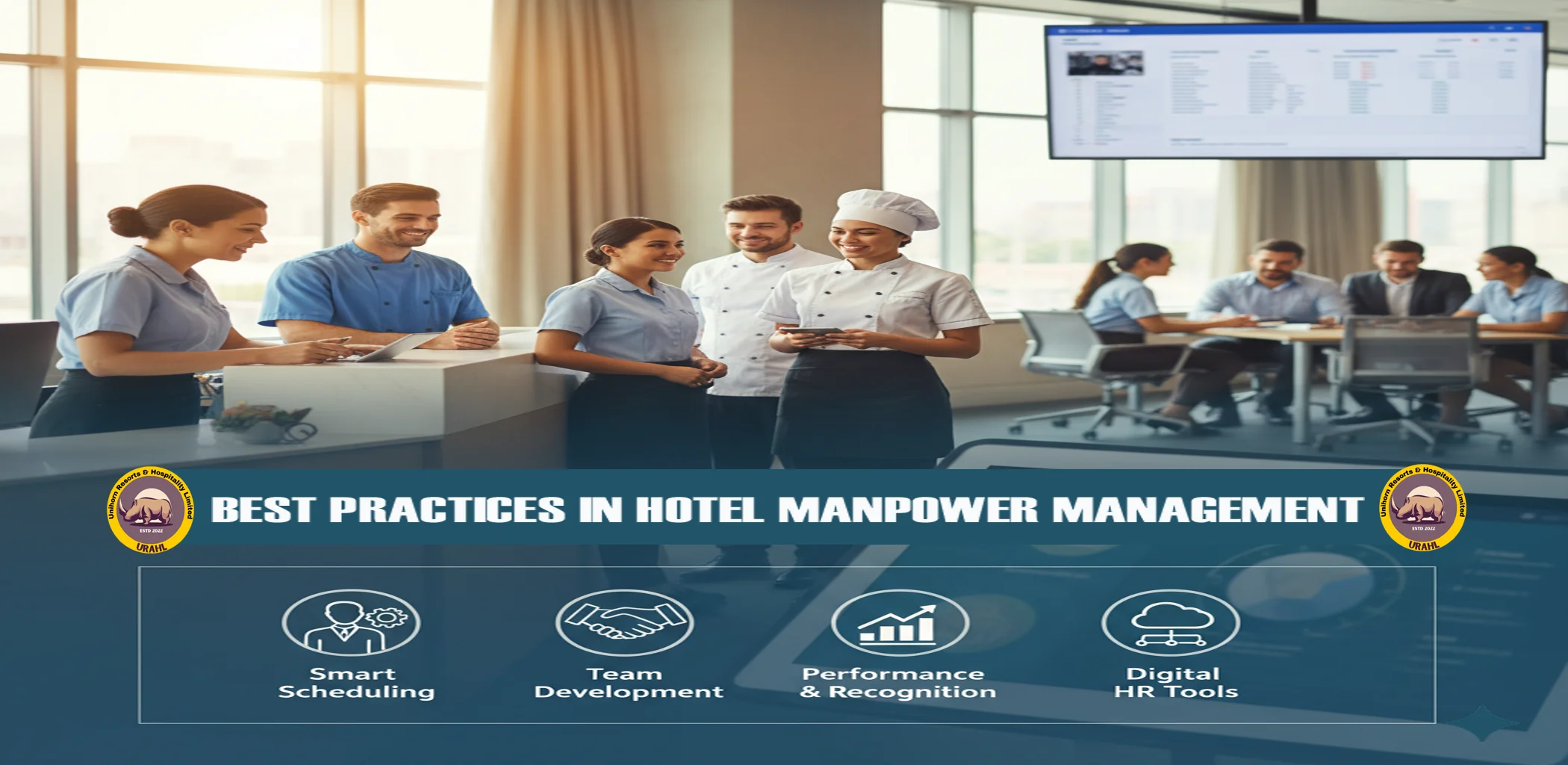
- Smart Rostering Software: Use AI-powered scheduling systems that align shifts with occupancy forecasts.
- Fair Scheduling Policies: Rotate shifts equitably and respect weekly offs to prevent fatigue.
- Peak Hour Reinforcements: Deploy floaters or reserve staff for busy hours and events.
- Overtime Control: Monitor overtime to prevent labor law violations and manage costs.
- Shift Flexibility: Allow flexible scheduling options for employees with personal constraints to promote loyalty.
Balanced scheduling improves morale and maintains consistent service quality.
7. Performance Management: Recognizing and Rewarding Excellence
Performance management in hotels should be both quantitative and qualitative—measuring not only KPIs like sales or housekeeping turnaround time but also guest feedback and teamwork spirit.
Best Practices:
- Balanced Scorecard Approach: Evaluate employees on key dimensions—efficiency, quality, guest satisfaction, and behavior.
- Continuous Feedback: Replace annual appraisals with quarterly performance reviews and monthly coaching sessions.
- Recognition Programs: Celebrate exceptional service through “Employee of the Month” or instant recognition awards.
- Career Mapping: Link performance outcomes with promotion opportunities.
- Transparent Evaluation: Use objective metrics supported by data to eliminate favoritism.
Recognition reinforces positive behavior and drives excellence across departments.
8. Employee Engagement: Creating a Motivated Workforce
Employee engagement goes beyond job satisfaction—it’s about emotional commitment. Engaged employees deliver superior guest experiences, innovate solutions, and stay longer.
Best Practices:
- Two-Way Communication: Maintain open channels through town halls, suggestion boxes, and digital forums.
- Empowerment: Allow employees to make quick guest-related decisions without lengthy approvals.
- Team Building Activities: Organize inter-departmental events, sports days, and cultural fests to foster camaraderie.
- Feedback Culture: Encourage employees to voice concerns and act promptly on genuine issues.
- CSR Involvement: Include employees in corporate social responsibility initiatives to enhance purpose and belonging.
A culture of recognition, growth, and inclusivity transforms staff into brand advocates.
9. Health, Safety, and Welfare: Caring for the Caregivers
A hotel’s commitment to staff well-being directly affects service quality. Safe and healthy workplaces reduce absenteeism and enhance morale.
Best Practices:
- Health Screenings: Conduct regular medical check-ups for kitchen and housekeeping staff.
- Safety Training: Teach fire safety, emergency evacuation, and food hygiene practices.
- Mental Health Support: Provide counseling services and stress management workshops.
- Ergonomic Workspaces: Design staff areas that minimize fatigue and promote comfort.
- Staff Accommodation: Offer clean, well-ventilated, and secure living quarters for employees staying on-site.
Hotels known for employee welfare attract and retain top talent even in competitive labor markets.
10. Communication and Coordination: Seamless Operational Flow
Hotels function as a network of interdependent departments. Miscommunication can disrupt the guest experience, while effective coordination enhances efficiency.
Best Practices:
- Daily Briefings: Conduct departmental huddles to share updates, VIP arrivals, and operational priorities.
- Digital Dashboards: Implement internal apps or dashboards where staff can update task completion in real time.
- Interdepartmental Collaboration: Encourage cross-department problem-solving to minimize bottlenecks.
- Language Training: For multicultural teams, provide language support to avoid misunderstandings.
- Feedback Loops: Establish a system for frontline employees to report guest feedback directly to management.
Transparent communication ensures that everyone works toward a common service goal.
11. Technology in Manpower Management: The Digital Shift
Digital transformation has revolutionized how hotels manage manpower. HR tech tools improve efficiency, transparency, and analytics-driven decision-making.
Key Innovations:
- HRMS (Human Resource Management Systems): Automate payroll, attendance, and performance tracking.
- AI Recruitment: Use algorithms to shortlist candidates based on skill match and behavior patterns.
- Learning Management Systems (LMS): Deliver microlearning content and track progress digitally.
- Employee Apps: Enable self-service for leaves, scheduling, and feedback.
- Predictive Analytics: Forecast attrition risks and identify training needs based on data trends.
Adopting HR technology enhances agility, reduces administrative workload, and strengthens workforce intelligence.
12. Cross-Functional and Multi-Skilled Teams: The Future of Hospitality Workforce
Modern hotels increasingly prefer multi-skilled employees capable of performing diverse tasks—especially in boutique or resource-optimized operations.
Best Practices:
- Job Rotation: Allow employees to experience multiple departments to build versatility.
- Upskilling Programs: Provide continuous skill enhancement aligned with emerging service standards.
- Empowerment Frameworks: Train employees to handle guest complaints, POS systems, and safety protocols.
- Team-Based Accountability: Promote collaborative performance measurement rather than silo-based evaluation.
Such flexibility enhances service speed, reduces dependency, and fosters career growth.
13. Retention and Motivation: Sustaining the Talent Pool
High attrition rates remain a challenge in hospitality. Retention strategies must combine emotional, professional, and financial motivators.
Best Practices:
- Career Growth Pathways: Offer clear advancement opportunities with transparent criteria.
- Competitive Compensation: Benchmark salaries against industry standards to stay competitive.
- Loyalty Bonuses: Reward long-term employees with incremental perks and recognition.
- Employee Involvement: Include staff in decision-making for policies affecting them.
- Exit Interviews: Analyze turnover reasons to improve retention strategies.
Retention-focused hotels reduce recruitment costs and maintain service consistency.
14. Labor Law Compliance and Ethical Standards
Adherence to labor laws and ethical standards is fundamental to sustainable manpower management.
Best Practices:
- Legal Compliance: Ensure adherence to minimum wage, working hour, and leave regulations.
- Fair Treatment: Prevent discrimination and maintain equal opportunities.
- Transparent Grievance Redressal: Create a structured system to address complaints confidentially.
- Third-Party Audit: Conduct regular HR audits to verify compliance and ethical practices.
Ethical workforce management builds brand credibility and ensures operational continuity.
15. Crisis Management and Workforce Resilience
The COVID-19 pandemic highlighted the importance of workforce resilience. Hotels must prepare for disruptions by building adaptable teams.
Best Practices:
- Contingency Workforce Planning: Maintain standby staff pools or flexible contracts for emergencies.
- Remote Coordination Tools: Use digital communication tools during lockdowns or travel restrictions.
- Health Preparedness Training: Train staff for hygiene protocols and guest safety measures.
- Emotional Support Systems: Provide mental health assistance during crises.
Resilient manpower ensures operational continuity under unpredictable circumstances.
16. Leadership in Manpower Management
Leadership determines how well manpower strategies translate into practice. Hotel leaders must balance empathy with efficiency.
Best Practices:
- Servant Leadership: Put employees first, empowering them to deliver their best.
- Coaching Mindset: Replace authority with mentorship to develop future leaders.
- Transparent Communication: Share hotel performance openly to foster ownership.
- Emotional Intelligence: Lead with empathy, especially in high-pressure environments.
Strong leadership culture fosters trust, accountability, and innovation among employees.
17. Diversity, Equity, and Inclusion in Hotels
A diverse workforce reflects the global nature of hospitality clientele.
Best Practices:
- Inclusive Hiring: Recruit across genders, abilities, and backgrounds.
- Accessibility Programs: Make facilities inclusive for differently-abled employees.
- Cultural Sensitivity Training: Build awareness of global customs to enhance guest experiences.
- Equal Pay Policy: Maintain fairness and transparency in compensation.
Inclusive workplaces generate creative solutions and attract global talent.
18. Measuring Manpower Effectiveness: Metrics that Matter
Quantifying manpower efficiency is vital for continuous improvement.
Key Metrics:
- Staff-to-room ratio
- Employee turnover rate
- Training hours per employee
- Guest satisfaction and complaint index
- Cost per hire
- Revenue per employee
Best Practice: Combine data-driven KPIs with qualitative guest feedback to assess overall manpower impact on performance.
19. Sustainability and Corporate Social Responsibility (CSR)
Sustainable manpower management contributes to environmental and social goals.
Best Practices:
- Local Hiring: Prioritize local communities to reduce migration and boost regional employment.
- Skill Development Programs: Partner with NGOs and skilling centers for community upliftment.
- Green HR Policies: Encourage eco-friendly staff behaviors—paperless HR, uniform recycling, and public transport incentives.
Hotels aligning manpower practices with sustainability demonstrate holistic responsibility.
20. The URAHL Approach to Hotel Manpower Excellence
URAHL’s integrated hospitality ecosystem—through its platforms like HiringHole.com, HotelCareHub.com, and HotelMergers—exemplifies next-generation manpower management.
- HiringHole.com bridges hotels and job seekers with AI-powered matchmaking and competency verification.
- HotelCareHub.com provides outsourcing and skill-based support services for hospitality operations.
- HotelMergers ensures workforce integration during acquisitions and transitions.
URAHL’s 360° manpower strategy emphasizes digital transformation, certified training, welfare compliance, and global staffing partnerships—creating a resilient and future-ready workforce.
21. Conclusion: The Human Touch in the Age of Automation
Even as technology reshapes hospitality, the human touch remains irreplaceable. The warmth of a greeting, the intuition to anticipate guest needs, and the creativity in solving problems—all stem from human excellence. Best practices in hotel manpower management thus blend data-driven efficiency with emotional intelligence, creating a workforce that is not just productive but passionate.
In the final analysis, successful hotels view their manpower not as a cost center but as a strategic asset—a living embodiment of the brand promise. The future of hospitality will belong to organizations that combine human empathy with intelligent systems, nurturing people who, in turn, create unforgettable guest experiences.