If you’re planning a wedding in India in 2025 and want it to exude timeless opulence fused with heritage charm, the Royal Rajasthani Grandeur theme is a classic-yet-evolving choice. Let’s unpack how this aesthetic has become a major trend, what it includes, how to execute it (especially tailored for the Indian wedding workflow), and what to watch out for.
Royal Rajasthani Grandeur: A Regal Revival
Indian weddings have long been a canvas for opulence and cultural expression, and the Royal Rajasthani Grandeur theme has emerged as a timeless favorite. This style draws inspiration from the majestic palaces and vibrant traditions of Rajasthan, infusing wedding decor with a sense of royalty and heritage.
Peacock Hues: Symbolism and Splendor
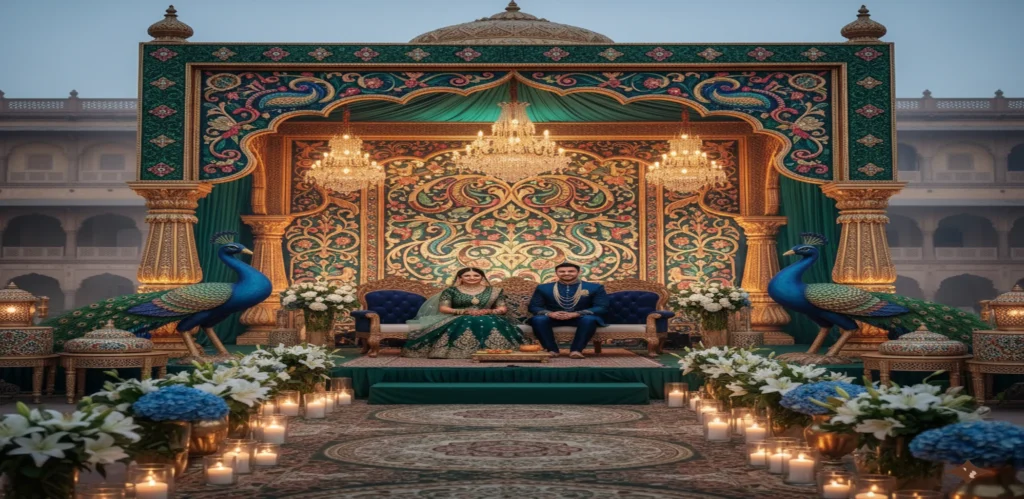
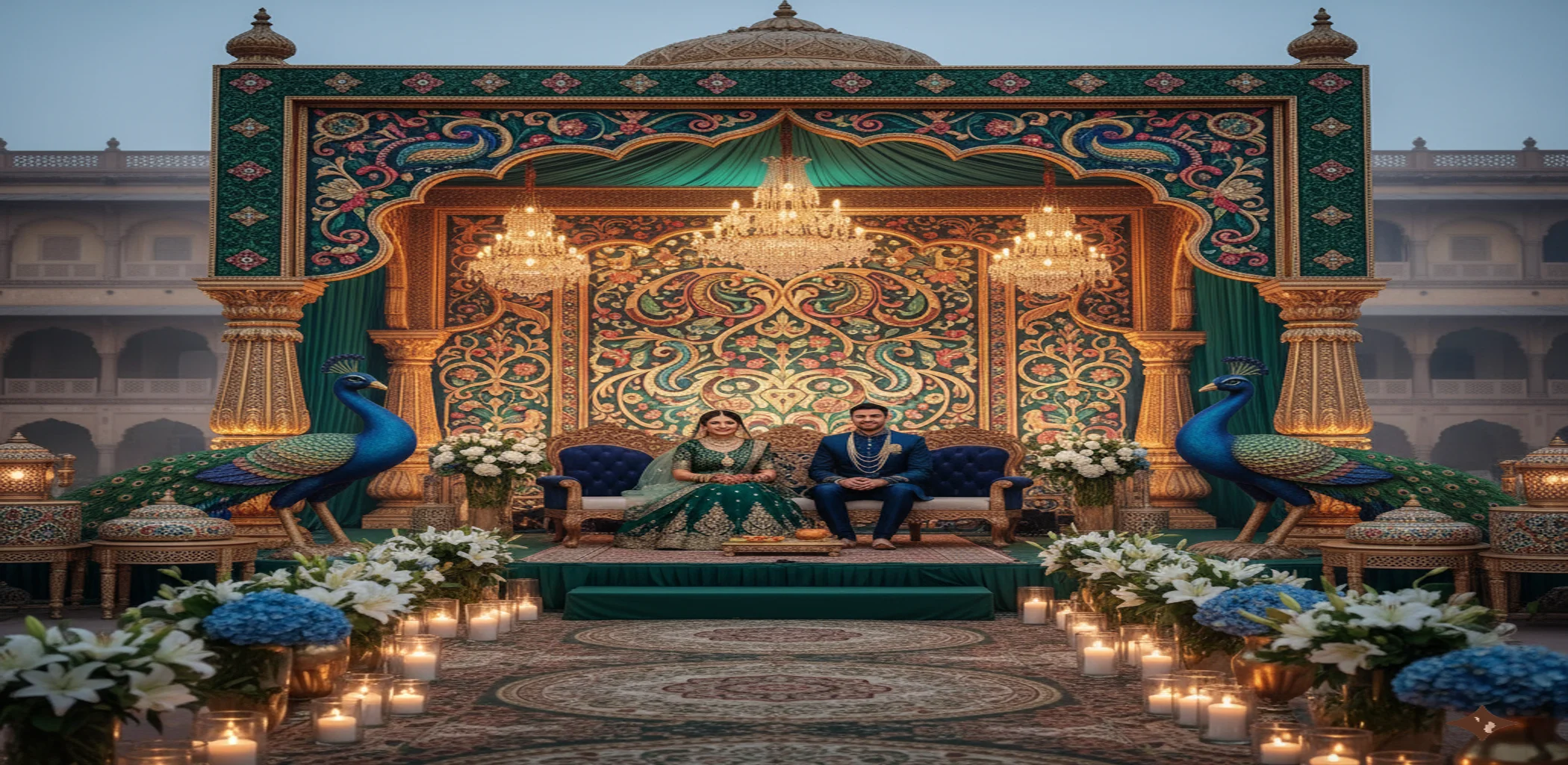
The peacock, India’s national bird, is a central motif in Rajasthani wedding decor. Its vibrant plumage, featuring shades of emerald green, royal blue, and gold, symbolizes beauty, grace, and the eternal bond of marriage. These colors are prominently featured in stage backdrops, floral arrangements, and attire, creating a rich and harmonious visual experience.
Meenakari-Inspired Motifs: Crafting Heritage
Meenakari, the art of enameling metal, is a hallmark of Rajasthani craftsmanship. Incorporating meenakari-inspired motifs into wedding decor—such as intricate designs on stage panels, jewelry boxes, and return gifts—adds a layer of cultural depth and authenticity. These elements not only enhance the aesthetic appeal but also serve as cherished keepsakes that reflect the couple’s heritage.
Regal Textiles: Drapes and Upholstery
The use of luxurious textiles like velvet, silk, and brocade in rich jewel tones is characteristic of Rajasthani wedding decor. These materials are employed in drapes, cushions, and upholstery, contributing to an atmosphere of grandeur. The interplay of textures and colors evokes the opulence of royal courts, enveloping guests in a regal ambiance.
Architectural Elements: Forts and Palaces
Rajasthani architecture, with its ornate arches, jharokhas (overhanging enclosed balcony), and intricate carvings, serves as a muse for wedding decor. Replicating these architectural features in mandaps (wedding pavilions), entrance gates, and photo booths brings a touch of royal heritage to the celebration. These structures not only provide a majestic backdrop but also offer guests a glimpse into Rajasthan’s rich architectural legacy.
Lighting: Chandeliers and Lanterns
Lighting plays a pivotal role in setting the mood for Rajasthani-themed weddings. Opulent chandeliers, traditional lanterns, and diyas (oil lamps) are strategically placed to illuminate the venue, casting a warm, golden glow reminiscent of royal palaces. The interplay of light and shadow enhances the grandeur of the decor, creating an enchanting atmosphere.
Floral Arrangements: Marigolds and Jasmine
Flowers are integral to Indian weddings, and in the Rajasthani theme, marigolds and jasmine are predominant. Marigolds, with their vibrant orange hue, are used in garlands, torans (door hangings), and rangolis (decorative patterns on the floor), symbolizing auspiciousness and joy. Jasmine, known for its delicate fragrance, is employed in garlands and hair accessories, adding an aromatic touch to the celebration.
Cultural Performances: Folk Music and Dance
To enrich the wedding experience, incorporating Rajasthani folk music and dance forms like Ghoomar and Kalbeliya can transport guests to the heart of Rajasthan. Live performances by traditional musicians and dancers add authenticity and vibrancy, making the celebration a multisensory experience.
Cuisine: Royal Feasts
No Rajasthani wedding is complete without a lavish spread of traditional cuisine. Dishes like Dal Baati Churma, Gatte ki Sabzi, and Laal Maas are served in a regal manner, often in brass or silverware, reflecting the opulence of royal feasts. The culinary offerings not only satiate the palate but also tell a story of Rajasthan’s rich gastronomic heritage.
Personalized Touches: Custom Decor Items
Incorporating personalized elements such as monogrammed cushions, custom-made return gifts, and bespoke signage adds a unique touch to the wedding decor. These items, crafted with attention to detail, reflect the couple’s personal style and add a layer of intimacy to the grand theme.
The Royal Rajasthani Grandeur theme offers a rich tapestry of colors, textures, and traditions that transform an Indian wedding into a regal celebration. By blending traditional elements with modern sensibilities, couples can create a wedding experience that is both timeless and uniquely their own.
Why Rajasthani Grandeur Remains a Go-To Theme
- Rajasthan’s palaces, forts, and royal architecture offer built-in theatre, richness and visual drama—ideal for weddings seeking grandeur and décor that makes statements. A recent trend article calls the “Royal Rajasthani” theme one of the most popular decor themes for Indian weddings in 2025.
- Elements like peacock motifs, oxidised mirror work, meenakari colours, mirror-mosaic panels (the “sheesh mahal” look), gilt detailing, royal textiles (banarasi, brocade), and heritage props all feed into the luxury-heritage narrative. For example: “Mirror work and reflections… inspired by Rajasthan’s Sheesh Mahal” is highlighted in a 2025 décor trend piece.
- The appeal of combining heritage artistry with modern wedding demands (photography, guest experience, glam, social media) gives this theme both depth and relevance. One article on Jaipur weddings says couples at heritage venues are merging the grandeur of royal architecture with modern styling.
- Colour palettes associated with Rajasthan—deep jewel tones like sapphire/peacock blue, emerald green, rich maroons, gold accents—are visually arresting and photograph well. An insight piece says for destination weddings in Udaipur (Rajasthan) 2025, “Bold jewel tones… emerald green, ruby red, sapphire blue, gold accents for a royal touch” are trending.
In short: this theme gives you heritage + spectacle + luxury. For many Indian weddings—especially destination, boutiques, or affluent weddings—it remains a top choice.
What Does “Royal Rajasthani Grandeur” Encompass in Wedding Design?
Here are the major components that make up this theme, with ideas for how each can be executed.
1. Colour & Material Palette
- Jewel tones: Peacock blue, sapphire, emerald, ruby, maroon, deep indigo.
- Metallic accents: Gold, antique gold, brass, copper.
- Textures: Brocade, banarasi silk, velvet, mirror-mosaic panels, meenakari metalwork, intricate woodwork, carved jharokhas.
- Motifs: Peacocks, elephants, royal thrones, jali screens, Rajasthan folk-art motifs (Kund & Phool), ornate framing.
- Example: The WeddingVogue piece lists “rich colours: maroon, gold, peacock blue” as key attributes of the Royal Rajasthani décor theme.
2. Venue & Architectural Backdrop
- Ideal venues: heritage palaces (e.g., in Jaipur, Udaipur, Jodhpur), havelis, forts, grand banquet halls with high ceilings and ornate architecture.
- Use the venue’s heritage features as part of design: carved arches, jharokha balconies, courtyards, chandeliers, mirror-inlaid walls.
- For example: A blog on Jaipur weddings 2025 mentions heritage venues like Rambagh Palace, Fairmont Jaipur along with the concept of merging royal architecture with styling.
3. Stage / Mandap / Ceremony Centrepiece
- Mandap styled as royal pavilion: heavy pillars, carved arches, gilt frames, regal throne seating.
- Backdrops decorated with mirror-mosaic panels (inspired by Rajasthani “thikri” mirror work). For example: Folklore article mentions thikri mirror mosaic technique for 2025 décor.
- Elevated stage with dramatic lighting, maybe reflecting the peek-of-peacock motif, rich drapes or silk hangings in royal blue/emerald.
- Use of elephant statues, royal vintage props, majestic seating for bride & groom that echoes a royal couple.
- Example: WeddingAffair article lists props like bead hangings, embroidered umbrellas, puppets (Kathputli) as part of the Rajasthani décor language.
4. Décor Elements & Guest Zones
- Entrance archways styled like fort gates, jharokhas, or royal palace portals with tassels, mirror work, hanging lanterns, marigold + roses.
- Lounge zones with carved jali screens, brass lamps, mirror-work cushions, banarasi drapes, peacock-feather accents.
- Dining zones: Banquet spaces layered with silk table runners, gold cutlery, ornate centerpieces with royal motifs + flowers in jewel tones.
- Photo-zones: Peacocks, palanquins, heritage thrones, ethnic umbrellas, mirror fountains. A strong visual focus.
- Hanging décor & lighting: Chandeliers, lanterns, decorative umbrella installations, perhaps using the vertical space to add grandeur.
- Materials mix: Combine traditional craftsmanship (mirror mosaic panels, meenakari metalwork) with modern installation techniques (LED uplighting, projection mapping) to keep the royal feel yet contemporary.
5. Textiles, Furnishings, Props
- Fabrics: Banarasi silk, velvet cushions, brocade drapes, mirror-work panels, embroidered throws, gota-patti elements (Rajasthan’s Gota patti work). For instance: Gota patti embroidery is a traditional Rajasthani technique.
- Props: Vintage brass/metal urns, royal thrones, carved wood furniture, palanquin (palki) frames, decorated elephants (statues or motifs), umbrella décor, kathputli puppets.
- Tableware and serving ware: Antique brass platters, folk motif chargers, mirror-edged glassware.
- Textural layering: Use of bead-hangings, mirror mosaic panels, carved jali frames, draped silk, tassels, brocade.
Why This Theme Works so Well for Indian Weddings in 2025
- Photogenic & Dramatic: The richness of textures, colours, props and heritage architecture provides stunning visuals for photography & videography.
- Cultural Depth + Luxury Feeling: It connects heritage roots (Rajasthan’s royal past) with modern wedding expectations of luxury, aesthetics and branding.
- Scalability: Whether guest list of 100 or 500, you can scale décor while maintaining the “grand” feel because of the natural richness of motifs, fabrics and architecture.
- Branding Potential: For couples who want their wedding to “look and feel” like a royal event, this theme offers immediate visual cues—palace venue, peacock motifs, mirror-work panels — that communicate upscale and special.
- Versatility Across Functions: You can adapt the royal Rajasthani theme across multiple functions: Mehandi day with more vibrant folk-craft props; wedding day with full regal luxury; reception night with refined opulence.
- Resonates with Destination / Heritage Venues: Many couples in India are opting for destination/heritage venues, and this theme naturally fits such settings (e.g., Jaipur, Udaipur, Jodhpur palaces) so there’s synergy.
How to Implement – Practical Blueprint for Your Wedding
Here’s a step-by-step approach for integrating Royal Rajasthani décor for a wedding.
12-9 months out
- Choose your venue: Ideal heritage palace/haveli/fort with architecture that suits royal theme (arched windows, courtyards, jali screens, mirror work).
- Define your overall décor vision: Pick your colour palette (e.g., peacock blue + gold, emerald + antique gold, ruby + cream), pick motifs (peacock, elephant, jali screen, mirror mosaic), decide scale (guest count, number of functions).
- Book décor/vendor team with experience in heritage / royal style weddings. Ask for past portfolio of Rajasthani-theme décor, mirror work, palace lighting.
- Allocate budget: Royal décor tends to use premium fabrics, mirror panels, props, so ensure décor budget reflects ambition.
- Guest-flow planning: Since such venues often have large spaces/courtyards, plan how each zone (entrance, ceremony, lounge, dining) will be styled.
9-6 months out
- Detail décor zones:
- Entrance gate: Fort-style arch, mirror-mosaic panels, peacock motif, brass lanterns.
- Mandap/stage: Carved pillars, mirror mosaic backdrop, royal throne, draped silk in jewel tones, decorative umbrella or canopy.
- Lounge & dining: Silk drapes, mirror work cushions, antique brass props, royal furniture, peacock feather accents, carved wood side-tables.
- Material & sourcing: Source fabrics (silks, brocades, velvet), props (elephant statues, mirror panels), artisans for mirror mosaic (“thikri”) or meenakari metalwork.
- Décor timeline: Identify when setup will happen (heritage venue often has limited hours), check structural permissions (hanging panels, lighting rigs).
- Lighting & effects: Royal theme benefits from dramatic lighting – uplighting arches, warm gold wash, accent lighting on mirror panels, peacock-feather-inspired LED pattern.
- Coordination with other vendors: Make sure catering, seating, photography plan align with the decor zones (e.g., dining layout where fabric drapes don’t block guest view, photo-zone near mirror panels).
- Guest attire suggestions: In invite or website suggest the dress code aligning with theme (e.g., “Regal Attire, Jewel Tones & Traditional Silhouettes Preferred”) to enhance cohesion.
6-3 months out
- Final material samples: fabrics, mirror panels, prop finishes, furniture. Ensure colours match your palette. Test how they look under lighting.
- Site walk-through: Visit venue with décor team to check anchor points for hanging décor, pathways for guest arrival, furniture placement, power/wiring.
- Mandap rehearsal: Especially in palace venue, ensure bride/groom seating is visible to all, décor elevation is appropriate, photo angles work.
- Guest comfort planning: Royal décor may involve heavy fabrics; ensure venue ventilation, seating comfort, proper flooring if courtyard.
- Backup/contingency: Especially if outdoor function – check for rain/heat, alternative indoor space, cover for furniture/fabrics.
1–2 weeks before
- Décor load in the venue: Day/time schedule for décor installation, check décor completion before catering/other vendors arrive.
- Final lighting test: Check how jewel-tones and metallics appear under ambient lighting; adjust colour-wash, uplighting, spotlights, background shimmer.
- Rehearse guest arrival flow: From entrance arch/gate to lounge to mandap to dining – ensure décor zones connect seamlessly, attention to signage/way-finding.
- Final quality check: Fabric stretch, mirror panels polished, props aligned, furniture clean, seating layout matched with décor.
- Photography/videography briefing: Highlight key décor focal points (mirror panels, peacock arch, throne stage) so they are captured.
- Guest dress reminder: Encourage guests to coordinate with the theme palette if you want cohesive visuals.
Wedding Day & After
- Monitor décor integrity: Especially for multi-day wedding, check fabric drapes, mirror panel stability, upholstery comfort after first function.
- Guest engagement: Use décor as photo-zones, interactive colors (e.g., peacock feather caricature props, mirror selfie panels) to enhance guest experience.
- Post-event wrap-up: Ensure dismantling plan for heavy props, mirror panels; coordinate with décor vendor for reuse/return if needed.
- Thank-you note/album: Use décor visuals (mirror mosaic, royal throne stage, peacock motifs) in thank-you cards or digital album so the theme resonates even post-wedding.
Benefits & Why This Theme Works
- Immediate visual identity: Guests instantly feel royalty, heritage, grandeur. The theme communicates “special event” effortlessly.
- Rich guest experience: From the fabrics to the props to the motifs, guests feel immersed in the design rather than looking at generic décor.
- Strong photo/video appeal: Jewel tones, mirror work, heritage architecture, royal furniture all photograph well in Indian wedding cinematography.
- Flexibility across budget/scale: You can scale props/fabrics appropriately—the design language is strong even if you use fewer installations, as long as materials and colour speak the theme.
- Heritage telling: For Indian couples (especially from North/West India) whose families value tradition, this theme resonates deeply with cultural identity and craftsmanship.
- Destination-friendly: If you are in Rajasthan or expecting destination guests, this theme aligns naturally with local aesthetics and venue architecture.
Challenges, Trade-Offs & Things to Watch
- High cost potential: Mirror-mosaic panels, silk drapes, heavy props, heritage furniture—all tend to be premium items. Must budget carefully.
- Venue compatibility: Not all venues support heavy décor, mirror panels, hanging installations. Heritage palaces may have restrictions (no drilling, weight limits).
- Colour saturation risk: Jewel tones + metallics can overwhelm if overdone. You’ll want breathing zones, softer contrasts to avoid visual fatigue.
- Guest comfort: Heavy fabrics, bright lighting, dense visuals can cause guest fatigue; ensure comfortable seating, climate control, visible sight-lines.
- Décor timeline logistics: Installation, rigging mirror panels, lighting, heavy drapes—all require time and proper coordination. Leverage a vendor with experience for heritage/royal themes.
- Authenticity vs cliché: The theme can slip into stereotype if not well-executed (e.g., overuse of plastic props, generic “royal look”). Ensure materials, craftsmanship & design speak authentic Rajasthani heritage—not only “royal look” but rooted.
- Sustainability: With heavy decorations and metallics, there is a risk of waste or one-time use. If sustainability is important, look for reusable props, local craft, eco upgrades.
Future Directions & What to Expect in 2025 +
- More heritage-craft integration: Mirror mosaic (thikri), meenakari metalwork, jali-screen installations, traditional Rajasthani folk-props will become more explicit. For instance, an article on folk art décor for 2025 lists Thikri mirror mosaic as a key trend.
- Colour reinterpretation: Beyond usual blue-gold-maroon combinations, you may see reinterpretations—peacock-emerald + champagne metallic; sapphire + rose-gold; terracotta + teal inspired by Rajasthan’s architecture. (See Jaipur weddings trend article).
- Mix of modern + heritage: The “royal with a twist” idea where heritage forms meet modern finishes—e.g., mirror panels with LED lighting, projection mapping on jali screens, metallic frames with folk motifs. The VenueLook list mentions “Royal meets modern themes” combining mughal jharokhas with geometric arches.
- Sustainable royal luxury: Couples will increasingly demand the grandeur but also want eco-credentials — e.g., re-use of props, local craft, less plastic, biodegradable materials. For Jaipur weddings trend: “Eco-luxury … a necessity.”
- Regional authenticity: Rather than generic “royal theme”, more weddings will pull in specific regional Rajasthani elements: Shekhawati fresco motifs, Kundan/Meenakari props, puppet (Kathputli) décor, bead hangings, embroidered umbrellas. For example: “bead hangings”, “Kathputli” are cited for Rajasthani décor ideas.
Final Thoughts
Choosing a Royal Rajasthani Grandeur theme means committing to heritage-rich luxury. It’s not only about heavy décor—it’s about telling a story of royalty, culture, craftsmanship and celebration. For Indian weddings in 2025, couples increasingly look for experiences not just events—and this theme delivers that in spades.
If you are planning or advising weddings (be it as planner, vendor, marketplace) this trend opens up rich opportunities: décor packages centred on mirror-mosaic panels, corporate/heritage prop vendors, colour-consultation services for royal palettes, craft-sourcing of Rajasthani artisans, etc.
Click Here For More Details on Indian Weddings