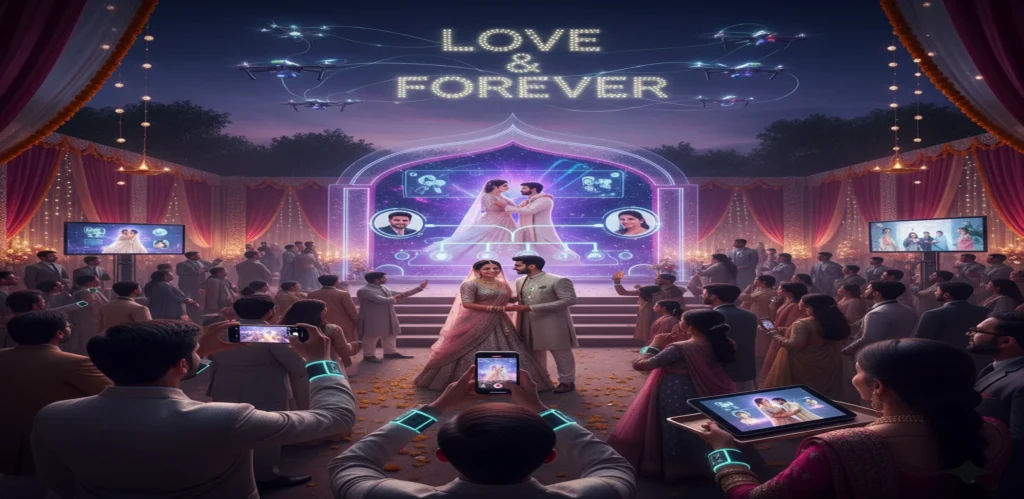
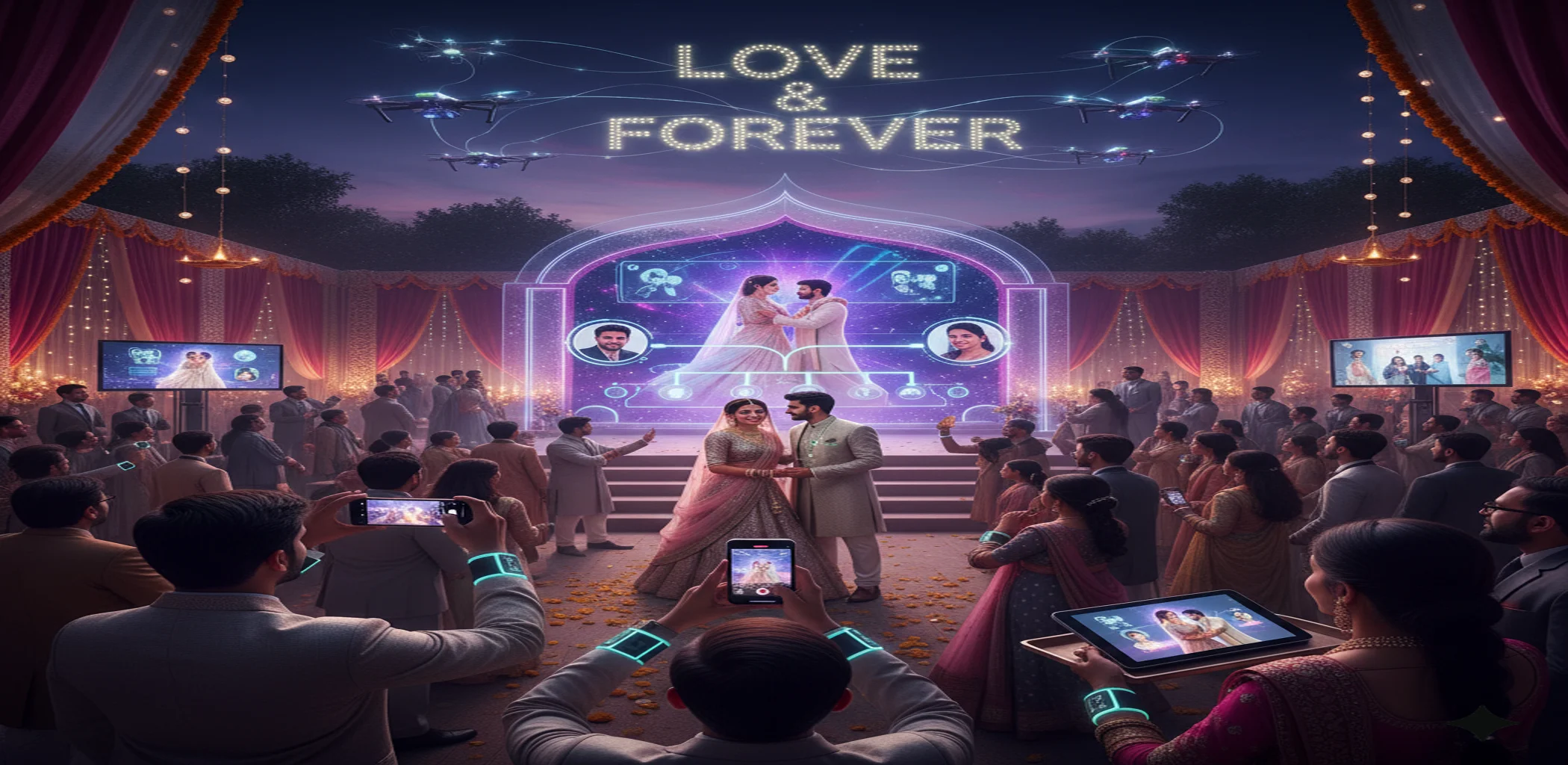
Why the tech-wedding wave is growing in India
Cultural & contextual drivers
- Weddings in India are massive, multi-day, multi-location, multi-hundred-guest affairs. The scale offers a major canvas for tech innovation.
- Younger urban couples (millennials and Gen Z) are growing up digital-first: they expect seamless experiences, instant sharing, interactive moments rather than purely ceremonial rituals.
- The diaspora factor: Indian couples often have guests abroad or spread across cities; tech makes inclusion and reach far easier (via livestreams, AR/VR).
- The desire for “experience over things”: Many couples want their wedding to feel unique, immersive, personalised. Technology gives them tools to make it happen.
- Practical/logistical impetus: Managing guest lists, RSVPs, seating charts, travel for remote guests, vendor coordination—all benefit from digital tools. According to one study, in Indian weddings 36% used LED screens, 29% used digital invites, 28% used drone photography.
- The flip side of luxury: As couples invest heavily in weddings, they seek “wow” elements that guests remember. Tech installations — AR invites, holograms, drones — deliver that “wow”.
What “tech-infused wedding” means in Indian context
In the Indian wedding setting, where rituals, guest-flow, décor, sumptuous food and multiple functions are already layered, “tech-infused” tends to mean:
- Digital or hybrid invites + RSVP/tracking.
- Guest-interaction platforms: live streaming, social media, photo-sharing, digital guestbooks.
- Decor/venue tech: projection-mapping, LED walls, interactive installations, drones, AR/VR corners.
- Planning tools: AI-assisted planning, vendor management dashboards, seating charts, budget tracking.
- Photography/videography tech: drones, 360° videos, live feeds to remote guests, real-time social sharing.
- Access & logistics tech: smart check-in (QR codes/Biometrics), smart wristbands, digital menus.
- Post-event tech: digital photo albums, personalised highlight videos, data-driven feedback from guests.
Key areas & practical ideas
Below are the major components of a wedding where tech plays a role — along with ideas, Indian-specific notes, and things to watch.
1. Invitations & guest management
- Digital invites: In 2025, urban Indian weddings are increasingly going for e-invites — animated, video-based, WhatsApp-friendly.
- AR-enabled invites: Invites that, when scanned with the phone camera, “come alive” with animations, video of the couple, glimpses of the venue.
- QR-code / NFC invitations: Guests scan QR codes to get to wedding websites, RSVP, pick meal choices, view itinerary.
- Guest-management dashboards: Tools for tracking RSVPs, collecting dietary preferences, tracking RSVP deadlines, automatically reminding guests.
- Multilingual and personalised guest flows: Especially for India with its linguistic/spatial spread, tech allows invites and guest portals in Hindi, Tamil, Gujarati etc.
- Smart check-in at venue: Rather than manual check-in, QR or biometric check-in speeds up guest arrival, reduces queueing and adds novelty.
2. Photography / Videography / Live-Streaming
- Live-streaming ceremonies: For guests abroad or unable to attend, weddings are streaming the main event, even with interactive features or multiple camera feeds.
- Drone cinematography: Aerial shots capturing venue, procession (baraat) and wider scale — making the visuals more aspirational.
- 360° cameras / VR replays: Guests (especially remote ones) or after-party viewers can view the ceremony through VR, or 360-video of key moments.
- Instant photo-sharing platforms: Guests upload photos via apps or QR codes; couples can get a rich, multi-angle album in real-time.
- AI-generated highlight reels: Tools that digest footage and produce short cinematic videos quickly.
3. Decor & venue technology
- Projection-mapping: Transforming walls, ceilings, mandaps with dynamic visuals — e.g., couple’s journey, star-sky, changing patterns.
- LED walls and immersive lighting: Rather than static décor, the entire ambience is tech-driven so the mood shifts across functions.
- AR/VR zones: At destination weddings or multi-day setups, create a VR corner where guests can replay the ceremony or explore venue in 3D.
- Smart furniture & installations: Furniture (chairs, lounges) with embedded screens, USB charging, modular LED integration.
- Interactive photo-booths and digital guest-walls: With AR filters, digital props, instant uploads to social media.
4. Planning, logistics & guest experience
- AI-planning assistants: Platforms that help couples plan budget, seating, vendor coordination, timelines, mood-boards automatically.
- Vendor dashboards: Real-time tracking of vendor arrival, payments, coordination, scheduling — reduces chaotic WhatsApp chains.
- Smart guest wristbands/cards: These may act as entry-pass, digital wallet, photo-sharing key, even schedule tracker for guests.
- Digital seating charts & menus: Guests scan QR codes for menu, choose meals; seating charts are displayed digitally; makes adaptation easier.
- Hybrid guest participation: Remote guests inject messages via live-chat, video call into ceremonies, or vote on song picks. Tech enables inclusive celebration.
5. Guest Engagement & Entertainment
- Custom apps/portals: Guests access wedding website/mobile app with itinerary, live feed links, map directions, gift registry, chat with other guests.
- Interactive entertainment: Silent discos (guests wear headphones and choose channels), robot-bartenders, AI-DJ systems that respond to guest mood/inputs.
- Holograms and AR storytelling: The couple’s story, grandparents who cannot attend, virtual messages projected via holograms.
- Data & guest analytics: Post-event feedback via QR codes, apps; heat-map movement tracking for reception layout optimization.
6. Post-Wedding & Memory-Making
- Digital albums & highlight videos: Instead of just physical albums, couples get online galleries, shareable reels, VR experiences.
- Social media integration: Custom hashtag walls at venue, live Instagram stories from photo-booth, automatic upload of guest-captured moments.
- Guest follow-up experience: Thank-you emails with embedded videos of the wedding, digital keepsakes downloadable (e.g., 360° panorama of mandap).
- Data-driven feedback: Use app/portal to capture guest ratings of food, music, ambience for future events. Helps wedding planners refine offerings.
Indian-specific examples & insights
- One blog says: “Technology is revolutionising Indian wedding trends 2025: Virtual reality (VR) lets global guests experience ceremonies in real-time, while AI-powered planners handle everything from budget tracking to vendor coordination.”
- A research release: For Indian weddings: 36% used LED screens, 29% digital invitations, 28% incorporated drone photography.
- An Indian wedding-tech blog: “Robot bartenders… digital guestbook… projection mapping… live streaming… biometric guest check-in… virtual bridal fashion fittings.”
- For invitations: “Digital invitations with AR elements” are trending in India in 2025.
Key benefits & “why” beyond the obvious
- Inclusion: Remote guests (family abroad, elders unable to travel) can still participate meaningfully via livestreams/VR.
- Memorability & “wow-factor”: Tech installations create experiences guests remember — not just “nice décor”, but interactive, immersive.
- Efficiency & ease: Digital invites, dashboards, guest tracking reduce logistic friction and human error (lost RSVPs, late seating etc).
- Personalisation: AI + data allow custom experiences — music that shifts per guest preferences, décor that matches couple’s story, guest apps with their custom feeds.
- Scalability across functions: For multi-day weddings in India, many functions (sangeet, mehendi, reception) benefit from tech to weave consistent branding/story across.
- Branding & social media appeal: Many weddings now see social media reach, influencer presence etc. Tech-friendly elements enhance shareability.
- Future-proofing & vendor differentiation: For venues/planners, offering tech-packages differentiates them in a crowded wedding market.
Challenges & things to watch out for
- Passion vs gimmick: Tech should serve story and emotion, not overshadow the ritual/meaning. Too much “gadgetry” could feel hollow.
- Budget and cost-benefit: High-end tech (holograms, VR booths, drones) adds cost; couples must decide ROI vs guest expectation.
- Guest digital-divide: In India, guests vary in digital comfort (older relatives, rural connections) — so tech needs to remain inclusive, not alienating.
- Connectivity & logistics: Streaming/VR/drones require robust connectivity (especially in remote venues in India). Backup needed.
- Vendor ecosystem & training: Not all vendors are equipped for advanced tech setups; planning and rehearsal needed.
- Data/Privacy: Digital tools collect guest data (photos, uploads, check-in info). Couples/planners should respect privacy and data protection.
- Over-reliance on tech: Power failures, network issues can derail; traditional backup flows must exist.
- Authenticity & cultural tone: Tech should complement cultural rituals, not replace or trivialise them. In Indian weddings, rituals hold deep meaning; tech must align respectfully.
A sample blueprint / “checklist” for a tech-infused Indian wedding
Here’s a hypothetical checklist you could adapt for an Indian wedding — from invitations through post-event.
Early planning (12–9 months out)
- Decide your tech-philosophy: e.g., “Hybrid: physical + digital invites”, “Every function has live stream”, “Drone coverage for Sangeet & Wedding”.
- Choose venue after tech-check: Does the venue support good internet, drones, projection walls?
- Choose vendor with tech-experience: Photographer/video team who do drones + 360°, DJ who can integrate AI/interactive set-up.
- Decide budget allocation: Set aside % for “tech innovation” (e-invite, live streaming, photo-sharing portal, VR-booth, interactive wristbands).
Invitations & communication (9–6 months)
- Finalise digital invite format: video/AR/QR with multilingual support.
- Build wedding website/app: itinerary, RSVP link, accommodation/travel info, guest portal.
- If physical invites: include QR/NFC code linking to website; keep invite minimal but tech-enabled.
- Guest portal: request guest photo upload, dietary preferences, accommodation choices.
- Decide live-streaming set-up: which events will be streamed, remote guest liaison, platform, test-run.
Decor & venue tech (6–3 months)
- Map venue: Identify where LED walls, projection mapping, interactive zones can go.
- Coordinate vistas: e.g., drone path for baraat arrival; aerial shot for mandap; ensure venue permits drones.
- Guest engagement zones: VR corner, photo-booth with AR filters, interactive guest-wall displays.
- Night function tech: LED dance floor, smart wristbands with lighting effect, silent disco headphone stations.
- Plan connectivity/back-up: strong WiFi, power backup for tech equipment, rehearsal of visuals.
Guest experience & logistics (3–1 months)
- Smart guest-passes/wristbands: map features (check-in, photo upload, seat location via app).
- Transport/travel tech: guest-shuttle tracking via app, QR check-in at transport.
- Digital menus and seating: QR scan menus for each guest, seating charts displayed digitally.
- Remote guest coordination: Provide access links, chat function, remote games/interactions.
- Entertainment tech: AI-DJ playlist feed, AR projections during sangeet, live social media feed.
Wedding day & operations
- On-site tech team: person handling livestream, drone safety, projection mapping changes, tech glitches.
- Guest photo-upload station: QR code at entrance linking to gallery; instant share options.
- Digital guest-book: tablets for guests to record video/voice wishes; integrate with main album.
- Real-time feeds: LED wall showing hashtag social feed; live updates to remote guests.
- Drone coverage: capture arrival, posy, group shots from aerial vantage.
- Interactive décor: projection synced to couple’s story or event time-line.
Post-wedding & follow-up
- Deliver digital albums: online gallery + mobile-friendly highlight reel + 360° VR clips.
- Thank-you digital package: personalised video or webpage with wedding highlights, guest names, interactive photos.
- Guest feedback: send QR link to guest app for rating food, music, seating, overall experience. Use data for future.
- Archive & reuse: Use tech assets (footage, photos) to create anniversary video; possibly part of couple’s brand/story.
- Data-clean-up: Remove guest personal data as needed, respect privacy commitments.
Future directions & what we may expect in 2025‐and‐beyond for Indian weddings
- More immersive VR/AR experiences: Guests may don VR headsets to experience rituals from multiple angles, or use AR filters during functions.
- Holographic & mixed-reality guest-inclusion: E.g., family who cannot travel appear as hologram at venue.
- Greater vernacular tech integration: Platforms/apps that speak local languages, for rural/semi-urban guests, vendors.
- AI-driven vendor matchmaking and planning assistants: AI tools that suggest vendors, décor themes, budget optimisation based on couple’s profile.
- Data-driven guest analytics: Using guest movement tracking (WiFi/phones) to optimise seating, buffet layout, guest-flow for future events.
- Sustainable tech married to wedding tech: Tech that reduces footprint (digital invites, LED energy-efficient décor, remote attendance) combined with immersive experiences.
- Hybrid physical-digital weddings as norm: Remote guests become integral; weddings built with “onsite + remote” flows in mind.
- Blockchain / tokenisation in wedding gifting: While less common yet, possibility of digital gifting, NFT-type keepsakes for guests.
- Smart wearables for guests: Wristbands tracking guest preferences (food, music), enabling personalised experience.
Final thoughts
- A tech-infused Indian wedding doesn’t mean abandoning tradition — it means enhancing tradition through smart use of technology. The rituals remain, but the experience around them becomes richer, more inclusive, more memorable.
- For Indian weddings (with their grandeur, multi-function nature, large guest-lists and cultural depth) technology is not just an optional “extra” — it’s increasingly becoming a standard differentiator.
- The ideal is balance: keep the emotional, familial, cultural core of the wedding intact; use tech to streamline logistics, elevate guest experience, invite remote participation, create shareable memories.
- For you (given your interests in hiring, planning websites etc.), this tech trend offers opportunities: e-invites platforms, guest-management dashboards, vendor/venue tech integration, livestreaming services — all fertile ground.
- As with any trend, cost, vendor readiness, guest digital-comfort, connectivity constraints need to be managed. But the payoff (in guest experience, memory-making, differentiation) can be significant.
Click Here For More Details on Indian Weddings