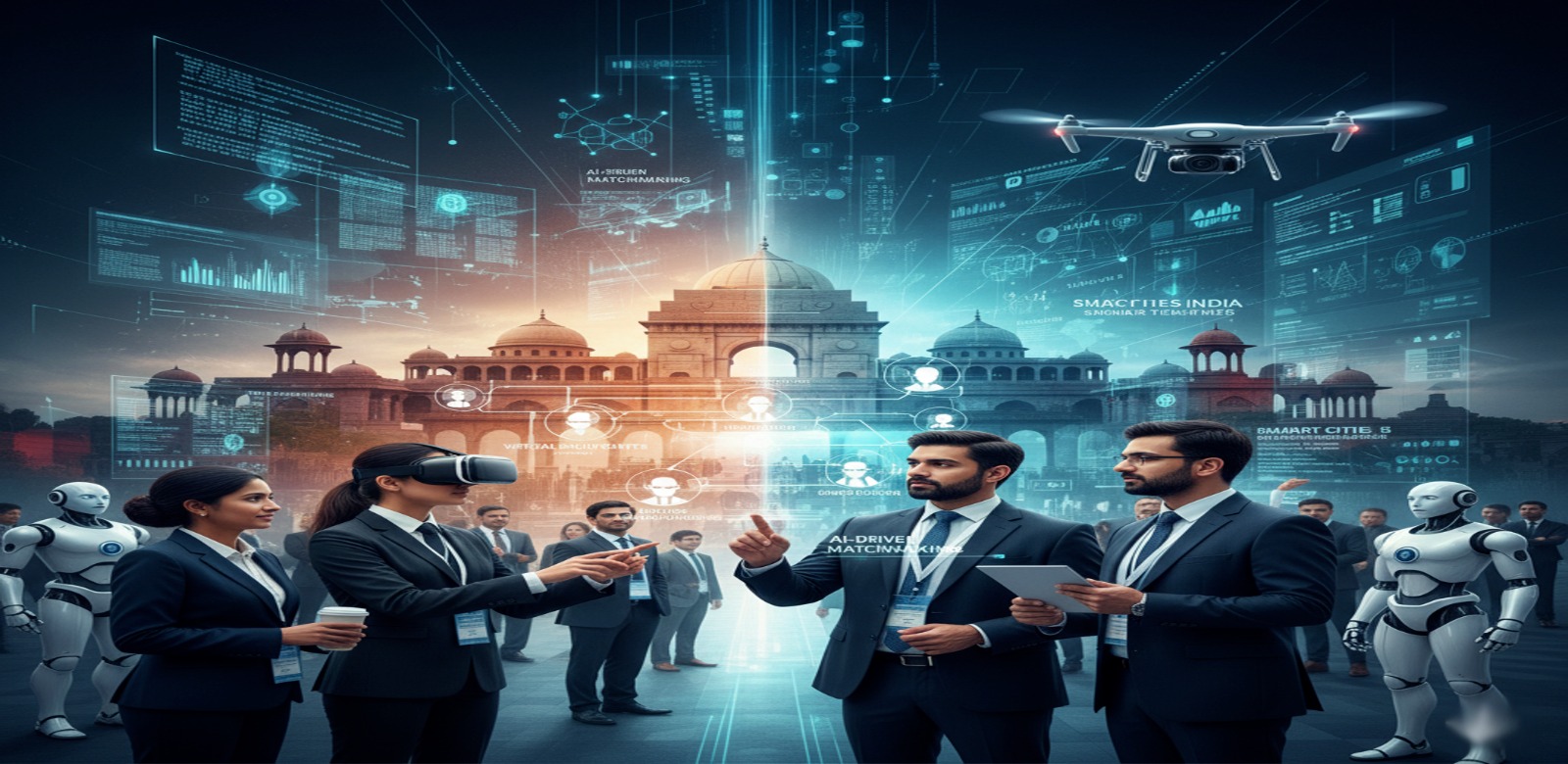
India’s MICE (Meetings, Incentives, Conferences, Exhibitions) sector has traditionally been rooted in large-scale physical gatherings, heavily dependent on infrastructure capacities, logistics, and interpersonal networking. Over the past few years, several driving forces have catalysed rapid change: globalization, digitalization, evolving attendee expectations (seeking more immersive and personalized experiences), cost pressures, environmental sustainability, and disruptions such as the COVID-19 pandemic.
Emerging technologies are rapidly transforming how MICE events are conceived, planned, executed, and followed up. From AI-driven matchmaking to virtual/augmented reality, from advanced analytics to blockchain, these technologies are re-shaping attendee experience, operational efficiency, commercial models, and strategic value. India, with its large tech talent pool, increasing broadband/internet penetration, rising urban middle class, and strong government policies supporting digital infrastructure and smart cities, is becoming a fertile ground for MICE innovation.
This article explores in depth the major technologies reshaping MICE in India, how each one contributes (both in terms of opportunity and implementation), what the current status is, challenges, case examples where available, and what the future likely looks like for the next 5-10 years.
Key Emerging Technologies in India’s MICE Sector
URAHL has a detailed list of the 25 major emerging technologies that are changing the MICE landscape in India, followed by how each contributes.
- Artificial Intelligence (AI) & Machine Learning (ML)
- Virtual Reality (VR), Augmented Reality (AR), Mixed Reality (MR), Extended Reality (XR)
- Hybrid & Virtual Event Platforms
- Internet of Things (IoT) and Smart Venues
- 5G / High-Speed / Low-Latency Connectivity
- Blockchain & Distributed Ledger Technologies
- Data Analytics, Predictive Analytics, Big Data
- Cloud Computing & Edge Computing
- Digital Twin / Simulation Technologies
- Spatial Computing / XR / Holography
- Mobile Applications, Event Apps, Chatbots
- Facial Recognition, Biometric Systems & Contactless Technology
- Sustainability Technologies (Green tech, Carbon Tracking, Energy Efficiency)
- Wearables & Sensor-Based Technologies
- Virtual Networking / Matchmaking Tools
- Gamification & Immersive Engagement Technologies
- Live Streaming, Multilingual / Translation Tools
- Hybrid Exhibition Booths & 3D Virtual Exhibits
- Augmented & Virtual Product Demonstrations
- VR/AR-Based Training and Simulation for Staff
- Robotics & Automation (Service Robots, Drones)
- Edge AI & Real-Time Monitoring
- Security & Privacy Technologies
- Blockchain for Ticketing, Payments, Contracts
- Metaverse / Virtual Worlds / Persistent Virtual Spaces
How Each Technology Contributes in the Indian MICE Context
1. Artificial Intelligence (AI) & Machine Learning (ML)
Contribution:
AI/ML are transforming many back-end and front-end processes. For instance, in registration and profiling: analyzing past attendee data to predict preferences, segmenting audiences, enabling personalized agendas. In matchmaking: recommending whom an attendee should meet, optimizing schedules to avoid conflicts, helping exhibitors find qualified leads. For content: sentiment analysis on social media or feedback, to adjust programming. For operations: predictive maintenance of venue equipment, forecasting attendance, optimizing resource allocation (staff, F&B, seating).
Implementation in India:
Event apps and platforms in metros like Delhi, Mumbai, Bangalore increasingly incorporate AI-based networking features. Indian startups are building ML systems that map attendee interests and behavior, then suggest sessions, booths, or people to connect. AI chatbots are used for attendee support (e.g. queries about schedule, directions).
Challenges:
Quality of data is a constraint. Many associations or event organisers lack structured, clean historical data. Privacy and compliance (India’s evolving personal data protection laws) are still being finalized, so data use needs to be cautious. Also, talent shortages in specialized AI work for events still exist outside major cities.
2. Virtual Reality (VR), Augmented Reality (AR), Mixed Reality (MR), Extended Reality (XR)
Contribution:
These immersive technologies allow for more engaging attendee experiences. For exhibitions, AR can let attendees scan a product and see 3D animations, case studies, or interactive content. VR can allow remote attendees a virtual walk through trade show booths; MR/XR could enable hybrid attendees to share experiences close to physical attendees. For design: VR helps in planning venue layouts, simulating flow of people, optimizing signage or lighting design before physical build. For entertainment: XR shows, interactive product launches.
Implementation in India:
Some trade shows and product launches in technology, automotive, real-estate sectors are using AR/VR to showcase prototypes. Cities like Bengaluru, Hyderabad, Mumbai are seeing immersive booths. Some events include virtual tours of infrastructure (smart city projects, factories) via VR for foreign delegates who can’t travel.
Challenges:
Cost of high-quality AR/VR content, hardware, headsets; user adoption (some delegates may find the tech cumbersome). Bandwidth and connectivity still variable, especially in non-metro venues. Also, content creation skills are concentrated in a few places.
3. Hybrid & Virtual Event Platforms
Contribution:
These platforms enable events that combine in-person attendance with virtual participation. They dramatically extend reach (geographic, demographic), reduce travel costs, offer flexibility. Virtual attendance allows sessions to be recorded, on-demand, enabling longer shelf life for content. Hybrid platforms often include tools for virtual Q&A, polls, exhibitor booths or virtual lobbies, networking lounges, even virtual trade fairs. They allow organizers to better monetize via sponsorships with virtual visibility, reach attendees who cannot physically attend.
India’s Status:
The India virtual events market was valued at USD 4,318.5 million in 2024 and is expected to reach USD 16,044.7 million by 2030 (CAGR ~24.5%) indicating robust growth. Grand View Research Also reports suggest the virtual events market size was USD 6.70 billion in 2024 with predictions of USD 31.41 billion by 2033. MENAFN Numerous Indian platforms and event technology companies are offering hybrid features, and many conferences now have virtual delegates.
Challenges:
Ensuring seamless integration (audio/video, latency, engagement) so virtual participants feel as engaged as physical ones. Maintaining quality of streaming, dealing with international time zones. Operator complexity increases: double production (physical + virtual). Cost of licensing platforms, hardware. Ensuring sponsors see value in virtual exposure.
4. Internet of Things (IoT) and Smart Venues
Contribution:
IoT can help make event venues “smart”: automated lighting, temperature control, crowd flow sensors, digital signage, touchless interactions (doors, elevators). Resource monitoring (energy, water), environmental comfort (air quality), predictive maintenance. For attendees, IoT can offer convenience: app-controlled room features, locating sessions via beacons, indoor mapping. For organizers, data from IoT sensors helps in real-time decision making: adjusting venue spacing, detecting crowd densities, safety, cleaning schedules.
India Examples:
Smart convention centers in Delhi NCR, Pune, Hyderabad increasingly invest in digital signage, HVAC automation, online navigation tools. Some hotel-venues offer smart room controls via apps. Some exhibitions are using beacons to direct footfall.
Challenges:
Cost of installing IoT infrastructure, ensuring interoperability among devices, ensuring secure network connectivity, dealing with failure or downtime. Data privacy issues (tracking attendees), and maintenance overheads. Power/internet reliability in certain venues remains variable.
5. 5G / High-Speed / Low-Latency Connectivity
Contribution:
High bandwidth, low latency networks are critical for high-quality live streaming, VR/AR experiences, large number of simultaneous connections (Wi-Fi + mobile), virtual/augmented content delivery, IoT sensor networks, remote feeds, holographic or high-definition video conferencing.
India’s Progress:
5G rollout in India has been underway in large urban centres; once more widespread and reliable, it will enable richer virtual/hybrid experiences, smoother streaming sessions, AR/VR usage with minimal lag. Remote film screening, remote sessions with high-res video or holograms will become more feasible.
Challenges:
5G coverage is uneven: more in metros and tier-1/2 cities, less in smaller towns, remote conference locations. Cost of deployment, regulatory approvals. Venues may need to upgrade their internal networks (backhaul, Wi-Fi, fiber connectivity) to leverage 5G fully.
6. Blockchain & Distributed Ledger Technologies
Contribution:
Blockchain offers transparency, security, immutability — useful in ticketing to avoid fraud, verifying registrations, payments, vendor contracts. Smart contracts can automate settlement of payments (exhibitor fees, sponsorships), enforce penalties or performance benchmarks. Tokenization of sponsorships or event assets. Also, provenance of content or digital rights can be maintained, ensuring fair use of digital content.
India’s Potential & Use Cases:
Some Indian platforms are exploring blockchain for secure ticketing, to reduce duplicate or counterfeit tickets for large concerts or exhibitions. There is interest in using blockchain for vendor or exhibitor contract management. Also discussions around digital credentials for attendees (NFTs or verifiable credentials).
Challenges:
Regulatory uncertainty around blockchain and cryptocurrencies in India. Scalability issues and costs of blockchain solutions. User acceptance; many participants unfamiliar with blockchain. Integration with existing payment/gateway infrastructures.
7. Data Analytics, Predictive Analytics, Big Data
Contribution:
Event organizers can use data from past events, attendee behavior, app interactions, social media, and IoT to understand what works: which sessions attract, how footfall moves, which booths are visited, drop-off points, times of day with lower engagement. Predictive analytics helps in demand forecasting, resource allocation (which size of venue, how many staff, food & beverage needs), budgeting. Big data can help in personalization: tailoring content, networking suggestions, marketing to potential attendees. Analytics are also used for ROI measurement and sponsor reporting.
India Examples:
Platforms that provide dashboards showing attendee metrics; event companies using feedback surveys, social media analytics. Also analysis of virtual events metrics: average watch times, dropout rates. Some convention centres offering analytics services to event organisers.
Challenges:
Data collection and privacy (as noted earlier). Quality and consistency of data. Analytical talent and tools. Cost of setting up systems to collect, store, analyze large volumes of data. Difficulty in integrating data from multiple sources (app, IoT, social media, payments) into a unified dashboard.
8. Cloud Computing & Edge Computing
Contribution:
Cloud infrastructure allows scalable computing resources, storage, streaming, collaboration tools, and virtual event platform hosting without heavy in-house server investment. Edge computing, on the other hand, helps reduce latency by processing time-sensitive data locally (e.g., for VR/AR yields, live translation, sensor data). This combination ensures robust, reliable performance, reduces downtime risk, and enables more events in remote locations that may lack strong centralized infrastructure.
India Use Cases:
Many event platforms are cloud-based. For example, virtual platforms, registration & ticketing systems, streaming platforms use cloud providers. Some hybrid events in India use CDN (Content Delivery Networks) to ensure smooth streaming to varied geographies.
Challenges:
Internet reliability, ensuring redundant infrastructure, cost of bandwidth. Data sovereignty and compliance with Indian data localization rules. Edge computing infrastructures and local caching need investment. Ensuring security in cloud and edge environments.
9. Digital Twin / Simulation Technologies
Contribution:
Digital twin refers to creating a virtual mirror of the event space, exhibit halls, or even visitor flow. Event planners can simulate layout, staging, signage, crowd movement, safety evacuation plans, lighting, acoustics in advance. This helps optimize floor plans, avoid bottlenecks, improve safety, improve guest experience (wayfinding, aesthetics).
India Status:
Some major global MICE venues and exhibition centres are experimenting with digital twin models for planning large exhibitions. Event design firms are using VR/AR for pre-visualization.
Challenges:
Requires precise data (architectural plans, environmental data). Cost of modeling, software, skilled personnel. Venues in smaller towns may not have digital blueprints.
10. Spatial Computing / XR / Holography
Contribution:
XR and holographic displays allow delivery of keynote speakers in remote locations in hologram form. Spatial computing enhances experiential elements — product launches using holograms, spatial audio, interactive stages. Useful for impressing attendees, differentiating events, and for remote participation in immersive ways.
India Use & Examples:
Some tech product launches have used holograms or holographic projection to display new products. Qualcomm’s XR day in India signals rising interest in spatial computing. The Economic Times Event tech companies are exploring XR for immersive storytelling.
Challenges:
High cost, specialized hardware, challenging logistics. Audience familiarity / comfort with such displays. Ensuring content is high quality and doesn’t degrade viewer experience (e.g., resolution, lighting, viewing angles).
11. Mobile Applications, Event Apps, Chatbots
Contribution:
Event apps act as central hubs: schedules, push notifications, maps, exhibitor info, attendee networking, feedback, live polling, questionnaires. Chatbots / virtual assistants can handle attendee queries, assist with scheduling, directions, FAQs, and support. They improve attendee experience, reduce staff workload, facilitate communication.
India Status:
Many Indian events now have dedicated apps. For large conferences and expos, apps are expected. Chatbots are increasingly used for registrations, customer support. Apps often also integrate virtual elements for hybrid attendees.
Challenges:
App adoption (attendees must download and use). Designing intuitive and responsive UIs. Handling offline mode where internet is weak. Maintenance and support, bug fixes. Ensuring data security on apps.
12. Facial Recognition, Biometric Systems & Contactless Technology
Contribution:
For check-ins, badge pickup, security, crowd management: facial recognition or biometric scanning speeds up entry, reduces bottlenecks, reduces need for staff, improves hygiene. Contactless technologies (QR codes, NFC) for ticketing, payments, interactions (menus, exhibitor info) enhance safety and convenience.
India Examples:
Since the pandemic, contactless check-in and digital ticketing are more common. Some large scale events use biometric or RFID badges for entry to restricted zones.
Challenges:
Privacy, data protection, regulatory compliance. Accuracy of recognition, false positives/negatives. Public comfort with biometric data. Cost of implementation and hardware.
13. Sustainability Technologies (Green Tech, Carbon Tracking, Energy Efficiency)
Contribution:
Sustainability is increasingly a part of event decision criteria. Technologies for efficient lighting (LED, smart lights), HVAC control, solar power, water recycling, waste management reduce environmental footprint. Carbon tracking technologies to measure emissions from travel, power usage, food waste, help organizers report ESG metrics. Virtual/hybrid events also reduce travel-related carbon.
India Context:
India’s event organisers are more frequently adopting sustainable practices. Some venues profile themselves as “green venues.” Carbon tracking or offsetting is starting to be part of proposals. Government policies encouraging sustainability in infrastructure help.
Challenges:
Cost of sustainable infrastructure may be high. Attendee awareness and willingness to pay for sustainable features. Measuring carbon footprints accurately across many variables (travel, lodging, power etc.). Regulatory incentives are still evolving.
14. Wearables & Sensor-Based Technologies
Contribution:
Wearables (wristbands, badges) with sensors or RFID/NFC can be used for attendee access, tracking flow of visitors, triggering interactions (lights, doors), cashless payments, interactive exhibit triggers. Sensor data helps organizers see where people spend time, heat maps of footfall, managing safety (crowd density). Offers gamified participation.
India Use:
Some trade shows use RFID or badge scanning to count footfall, guide sponsors’ ROI. Wearable devices to give attendees seamless access to restricted areas, to collect data for sponsors or organizers.
Challenges:
Hardware cost, hygiene concerns with wearables. Data privacy. Battery life, maintenance. Ensuring devices are robust and integrate with other event tech systems.
15. Virtual Networking / Matchmaking Tools
Contribution:
Networking is core to MICE. Emerging tools employ AI/ML to analyze attendee profiles and interests to recommend connections. Virtual speed-networking, virtual “meeting rooms,” video or chat connects pre-event and during event. This helps attendees maximize value. For sponsors and exhibitors, matchmaking ensures relevant leads.
India Examples:
As noted in Indian event tech blogs, AI-powered networking is becoming a common feature in MICE India. MiceKart Blogs
Challenges:
Creating accurate profiles, balancing privacy with personalization. Ensuring participants engage. Avoiding irrelevant matches. Managing hybrid attendees (some face-to-face, some virtual) so all can network effectively.
16. Gamification & Immersive Engagement Technologies
Contribution:
Gamification (badge earning, leaderboards, scavenger hunts, quiz challenges) encourages attendee engagement, keeps energy levels high, gives incentives to visit more sessions or booths. Immersive technologies (360° video, AR games, interactive visualizations) keep content fresh. Helps in retaining attention span, crowd-pleasing, viral marketing.
India Examples:
Some exhibitions include interactive AR-based games or booth contests. Some event apps use gamified points for attendees engaging with sponsors or sessions.
Challenges:
Maintaining relevance so gamification is meaningful and not gimmicky. Ensuring technology works smoothly. Designing inclusively so people with varied comfort levels or age groups can participate. Cost and development time.
17. Live Streaming, Multilingual / Real-Time Translation Tools
Contribution:
Live streaming allows organizations to reach remote audiences, record sessions for later viewing. Multilingual tools (real-time captioning, translation) widen reach for international attendees or in India’s many languages. Helps inclusion, expands markets, allows sponsors to access more visibility.
India Use:
Many large conferences have sessions streamed; real-time translation (into Hindi, regional languages) sometimes offered, especially in governmental / public policy conferences. Virtual platforms include multilingual captions.
Challenges:
Quality of streaming (bandwidth, latency, video quality). Translation accuracy, especially live. Cost of hiring interpreters or deploying automated translation tools. Cultural sensitivity.
18. Hybrid Exhibition Booths & 3D Virtual Exhibits
Contribution:
Exhibitors can present products both physically and virtually. Virtual booths or 3D rendered exhibits allow remote visitors to navigate, view, inspect, ask questions. Physical visitors might have augmented overlays. This extends reach, allows sponsors or exhibitors to get leads from remote regions. For attendees, virtual booths reduce fatigue (less walking) while offering rich content.
India Examples:
Some expo trade fairs in tech, manufacturing, real-estate offer virtual booths to remote attendees. Real estate firms have used 3D virtual tours of properties. Exhibition organizers are adopting mixed booths.
Challenges:
Creating high-quality 3D assets. Costs of set-up. Virtual booths sometimes get less traffic if not well promoted. Synchronizing virtual and physical attendee experience.
19. AR/VR-Based Training and Simulation for Staff
Contribution:
Event staff training (venue staff, hospitality, technical operators) can be enhanced via VR simulations — dealing with crowd surges, emergency evacuation, guest handling, setup sequences. AR helps overlay instructions in real-world training. This leads to better preparedness, smoother execution, fewer errors, higher service quality.
India Use Cases:
Some hospitality chains use VR training modules for staff induction. Convention centres sometimes train security/staff via simulations. Event tech companies may provide AR overlays for setup instructions.
Challenges:
Cost of creating simulations. Access to VR/AR hardware. Ensuring staff are comfortable with technology. Ensuring training content matches real ground realities (venues often have variations).
20. Robotics & Automation (Service Robots, Drones)
Contribution:
Robots can help in logistics (e.g. delivering materials within large convention centres), service roles (e.g. drink-serving robots, info robots), drones for aerial photography or video streaming, or even surveillance / security. Automation of back-office tasks (registration check-ins, badge printing) reduces labor, errors, speeds operations.
India Examples:
Some large hotels or convention centres in metros are piloting robot guides or concierge robots. Drones have been used for event coverage. Automated kiosks for badge printing/check-in exist.
Challenges:
High initial cost, maintenance, spare parts. Guest and staff acceptance. Safety, regulatory permissions (especially for drones). Ensuring reliability (robots break or need recharging).
21. Edge AI & Real-Time Monitoring
Contribution:
Edge AI refers to on-device or on-site AI processing rather than sending everything to cloud, enabling fast, low-latency decisions. For example, real-time monitoring of crowd density via cameras + AI, security threat detection, live person counting, anomaly detection (e.g. suspicious behavior), environmental monitoring (noise, temperature). Real-time dashboards help event managers intervene quickly.
India Examples:
Large scale events may deploy surveillance systems with AI for crowd control. Some smart venues are experimenting with AI cameras for occupancy heat maps.
Challenges:
Privacy, compliance with law. Cost of camera, processing hardware. Ensuring reliability under variable lighting / network conditions. Ethical concerns over surveillance.
22. Security & Privacy Technologies
Contribution:
As MICE events collect more data (registrations, profiles, payments, biometrics, video etc.), ensuring data protection is essential. Encryption, secure payment gateways, secure streaming, compliance with laws (India’s data protection law for personal data), access control, cybersecurity for virtual platforms. For physical security: CCTV, facial recognition access, threat detection systems.
India’s Perspective:
India is moving toward a personal data protection law. Many event technology vendors are enhancing privacy features. For large events, security is a major concern and technologies are being better integrated.
Challenges:
Regulatory uncertainty in some areas; public concerns; cost of advanced security tools; balancing convenience with strict access controls.
23. Blockchain for Ticketing, Payments, Contracts
Contribution:
Blockchain ensures transparent, tamper-proof ticketing — avoid counters, fraudulent tickets, easy transfer or resale with built-in rules. Smart contracts can enforce performance / penalty clauses (e.g. cancellation, no-show, service level). Payments settlement, royalty/licensing rights for content or sponsors could be automated. This builds trust, especially when many stakeholders are involved.
India Examples:
Some concerts and shows experimenting with blockchain ticketing. Some event tech startups exploring smart contracts for vendor agreements.
Challenges:
Regulatory clarity, costs, user awareness, integration with traditional payment systems, scalability, ensuring low transaction fees.
24. Metaverse / Virtual Worlds / Persistent Virtual Spaces
Contribution:
The Metaverse is about persistent virtual 3D environments where people can gather, network, explore, interact beyond time-limited sessions. For MICE, it means virtual exhibit halls are continuously open, follow-ups can happen, content persists, and immersive branding becomes possible. Delegates may visit virtual booths after the event, interact with avatars, attend virtual office hours. Sponsors get ongoing visibility.
India’s Potential:
Given tech startups in XR, increasing interest in spatial computing (e.g. Qualcomm’s XR Day) shows potential. Attendees (especially tech-savvy ones) may value novelty. Indian diaspora / remote participants could participate more in such spaces.
Challenges:
Development cost; hardware adoption (XR headsets etc.), user comfort; content maintenance; avoiding virtual fatigue; ensuring offline/online engagement balance.
25. Combined Sustainability + Digital Solutions for ESG (Environmental, Social, Governance)
Contribution:
Emerging tech enables tracking of ESG metrics: travel carbon footprint, power usage, waste, recycling. Virtual and hybrid events reduce travel emissions; IoT and venue tech reduce power/water usage. Transparent reporting becomes possible with digital dashboards. Social inclusion (remote participation) increases. Governance via digital contracts, compliance.
India’s Uptake:
Given global pressures and corporate ESG expectations, Indian MICE organisers are increasingly being asked to demonstrate sustainability. Venues advertise green credentials, event organisers offer hybrid/virtual options to reduce impact. Some event proposals include ESG reporting.
Challenges:
Measurement tools still evolving; variable data; cost of implementing green tech; trade-offs (digital infrastructure itself consumes power; virtual tech has carbon impact). Ensuring authenticity (avoiding greenwashing).
Patterns, Synergies, and Key Use Cases in India
Emerging technologies don’t operate in isolation; the biggest impacts come when they are combined coherently. Below are patterns and real-life use cases showing synergies and particular value in the Indian environment.
- Hybrid + High-Bandwidth + Cloud + Analytics: A conference in Delhi or Bangalore runs physically, with dozens of virtual delegates from outside India. They stream keynotes, participate in virtual breakout rooms, use event apps with networking. Analytics from both physical and virtual streams inform which sessions were popular, helping in planning next events.
- Smart Venue + IoT Sensors + Edge AI + Sustainability: A smart convention centre in Hyderabad or Pune uses IoT sensors for crowd flow, noise, air quality. Edge AI monitors occupancy real-time, triggers HVAC and lighting adjustments, reducing power usage. Attendees get comfort; costs cut; ESG metrics improved.
- AR/VR + Virtual Booths + Gamification: Trade shows (e.g., auto, real estate, tech) allow virtual visits of product models via AR/VR, virtual booths for remote visitors, gamified content (visitors get points for exploring booths, attending sessions), increasing engagement and exhibitor ROI.
- Blockchain + Ticketing + Identity: High profile concerts or large exhibitions use blockchain or smart credentials to avoid fake tickets, scalping. Attendees’ credentials linked to digital IDs; sponsors more confident in registration authenticity.
- Metaverse + Persistent Virtual Spaces + Brand Visibility: For recurring conferences, organizers may maintain virtual hubs open year-round where content, sessions, interactions continue; sponsors get continuous exposure; communities stay engaged between physical meetings.
Challenges & Constraints
While the promise of tech in MICE is large, India faces specific challenges that must be addressed for wider, more consistent adoption.
- Infrastructure Gaps: Many mid-tier cities and smaller venues suffer from unreliable connectivity (internet, power). Lack of fiber, weak WiFi, or absence of reliable backups limit adoption of high-bandwidth or IoT-heavy solutions.
- Cost and Investment: Many technologies require upfront capital — hardware, software licensing, staff training, content development. Smaller event organisers may lack funds. ROI may not be immediately evident.
- Digital Literacy and Talent Availability: Skilled personnel for AR/VR content development, AI/ML, cloud/edge architecture, cybersecurity etc., are concentrated in major urban centres. There’s a skills gap in tier-2/3 cities.
- User Comfort and Adoption: Attendees may be unfamiliar with AR/VR, XR, virtual metaverse environments. Some may resist or find it intimidating. Hybrid attendees may feel secondary or less engaged.
- Regulatory and Legal Issues: Data privacy and protection frameworks in India are still evolving; regulations around biometric data, blockchain, cross-border data flows can be unclear. Licensing, regulatory permissions (especially for drones, biometric systems) can also create friction.
- Sustainability Trade-offs: Digital tools themselves consume energy; hardware production has environmental footprint. If sustainability claims are not robust, risk of greenwashing.
- Experience-centric Design vs Technology for Technology’s Sake: There’s a danger of over-engineering or deploying tech just for novelty rather than solving real pain points. The user experience must remain central.
What Event Organisers, Venues, and Stakeholders Must Do
To harness the transformative power of these technologies, stakeholders in India’s MICE ecosystem should consider the following steps:
- Invest in Infrastructure & Connectivity: Venues must upgrade their internet backbone, ensure redundancy, install high-quality AV, IoT network infrastructure, good power backup.
- Partner with Technology Providers & Startups: Collaboration with local tech firms helps adapt global tech for local context. Startups innovate in AR/VR content, event apps, analytics, blockchain, etc.
- Build Data Governance and Privacy Safeguards: Define clear policies, ensure compliance with upcoming laws (as India’s Data Protection Bill evolves), ensure secure handling of attendee information, biometrics, etc.
- Train Teams and Staff: Upskilling event managers, technical staff, production teams in handling immersive tech, virtual platforms, IoT, video streaming, XR, safety protocols.
- Design with Hybrid in Mind: Even physical events should plan hybrid elements: virtual attendance options, streaming benchmarks, digital networking, virtual booths, etc., to expand reach.
- Focus on Attendee Experience: Technology should enhance, not distract. UX design, seamless navigation, intuitive apps, live support, interactive elements should be well-tested and integrated.
- Measure ROI and Analytics Rigorously: Use data before, during, after event: attendance, engagement, sponsor feedback, footfall, virtual vs physical metrics, environmental impact.
- Ensure Sustainability is Embedded: Choose venues with green credentials, minimize waste, incorporate digital alternatives, offset carbon footprint, track sustainability based on measurable data.
- Regulatory Compliance and Legal Counsel: Ensure any biometric / facial recognition, blockchain, virtual credentials comply with law. Ensure digital contracts and ticketing are enforceable.
- Scalability and Modular Technology Choices: Start small with pilot implementations; choose modular technology that can be scaled up; avoid vendor lock-in.
Future Outlook: What to Expect over the Next 5-10 Years
Looking ahead, the following trends and capabilities are likely to become more mainstream or even expected in India’s MICE sector.
- Greater adoption of AI assistants / “event buddies” that guide attendees through the entire experience, from registration to follow-ups, with dynamic recommendations.
- More immersive XR / metaverse environments, perhaps even virtual conference centers that run in parallel with physical ones.
- Holographic presentations and remote speakers delivered via holograms or spatial displays as costs drop.
- More blockchain use not just in ticketing but in digital credentials, loyalty, contracts, perhaps even fractional sponsorships or assets.
- Edge computing + 6G / B5G (beyond 5G) will allow super-low latency for VR/AR, tactile Internet applications, perhaps even remote interactive experiences (e.g., remote control / interaction in booths).
- Increase in sustainable MICE practices being not optional but mandated: carbon neutral / zero waste events, digital certificates, sustainable food sourcing, more local supply chain integration.
- Data privacy / digital identity frameworks becoming more standardized and regulated, leading to secure but richer profiling, more trust in digital credentials.
Case Examples & Emerging Success Stories (India)
While many companies are in pilot mode, some events and venues have already adopted combinations of technologies.
- Delhi NCR, Mumbai, Bangalore: Hybrid industry conferences (IT, Pharma, Finance) that stream keynotes, use dedicated mobile apps with networking, virtual booths, feedback apps, live Q&A, etc.
- Qualcomm XR Day: A developer / tech showcase in India that highlighted spatial computing interest, suggesting XR ecosystems are being taken seriously. The Economic Times
- Event technology blogs / platforms like MiceKart have documented that AI-networking, smart venues, VR/AR exhibits are being trialed in Indian trade shows and conferences. MiceKart Blogs
Impacts
The combination of these technologies is causing significant impacts in several dimensions:
| Dimension | Impact |
| Reach & Accessibility | Hybrid and virtual formats allow remote participants (domestic and international) who otherwise cannot travel. More inclusivity. |
| Cost | Some cost savings via reduced travel, smaller physical footprints; but new tech also adds new cost lines — balancing is key. |
| Sponsor & Exhibitor Value | Better analytics, virtual exposure, extended shelf life of content, global reach improves value proposition. |
| Attendee Experience | More immersive, personalized, interactive, choices of how to participate; less fatigue; more convenience. |
| Sustainability | Reduced carbon emissions via virtual/hybrid, digital materials vs paper, smarter energy/water consumption. |
| Operational Efficiency | Automated registration, chatbots, real-time monitoring, predictive maintenance and scheduling reduce errors and overhead. |
Conclusion
Emerging technologies are not just add-ons; they are rapidly becoming essential enablers for MICE events in India. They are reshaping expectations: what attendees want, how organizers operate, what venues provide, and how value (including commercial, environmental, social) is measured. For India, with its large markets, tech capacity, and growing demand for high-quality events, the MICE industry has an opportunity to leapfrog into globally competitive and differentiated offerings.
However, the transformation is not without its challenges: infrastructural gaps, regulatory and privacy issues, cost concerns, skill shortages, and risk of hype-driven misinvestment. The winners will be those who balance technology adoption with experience design, who pilot before scaling, and who maintain focus on attendee value, sustainability, and operational excellence.
Over the next decade, technologies like AI, XR/AR/VR, 5G, blockchain, digital twins, and metaverse spaces will move from experimental to mainstream, having matured in reliability, cost, and user acceptance. India’s MICE landscape is at an inflection point — those who adapt will shape the future.