
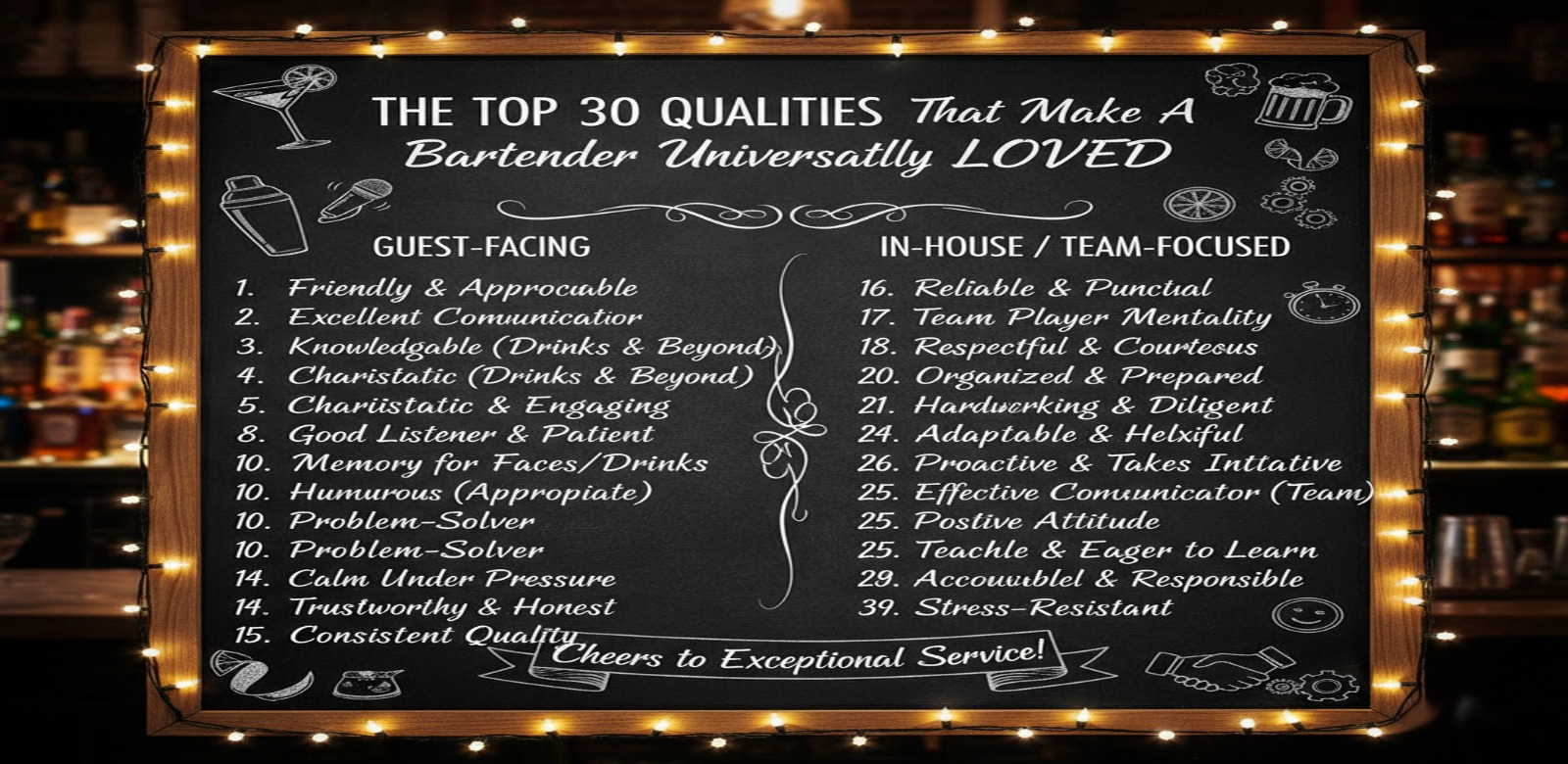
The bartender isn’t merely a service professional — he or she is the heartbeat of a hotel bar, the personification of warmth, discretion, rhythm, and memory that can elevate the entire guest experience. A bartender is far more than a drink maker — they are the storyteller, confidant, and emotional anchor of the hospitality space. They bring people together, personify brand charm, and define the tone of interaction at a bar.
URAHL identifies 30 essential qualities, each deeply explained, that distinguish an extraordinary bartender from a merely good one.
1. Charismatic Personality
A great bartender carries natural charm that draws guests in without trying too hard. Charisma isn’t loud — it’s the effortless ability to make others feel seen, valued, and at ease. A charismatic bartender can lift a dull evening, turn regulars into friends, and make even a first-time guest feel like part of the family. Their body language radiates confidence and warmth, creating an inviting aura around the bar counter.
2. Excellent Communication Skills
A bartender must be articulate, attentive, and adaptive. Clear communication ensures guests get what they want and staff coordination flows smoothly. Whether explaining a new cocktail, cracking a light joke, or discreetly calming a tense situation, words are their most powerful tool. The best bartenders listen as much as they speak, understanding tone, timing, and context — mastering the delicate art of conversation.
3. Deep Product Knowledge
Every exceptional bartender knows their spirits, mixers, garnishes, and the stories behind them. From understanding terroir in whisky to knowing the right glass for a Negroni, knowledge builds authority. Guests appreciate bartenders who can recommend drinks with passion and expertise. It’s not just about recipes — it’s about sharing the culture, history, and craftsmanship of beverages in a way that enhances every sip.
4. Impeccable Memory
A beloved bartender remembers names, favorite drinks, allergies, and anecdotes. Recalling a guest’s “usual” or their last visit date creates powerful emotional connection. It also helps operations — remembering supplier preferences, shift orders, and recipe tweaks keeps service smooth. Memory transforms ordinary service into personal experience, turning customers into loyal patrons and colleagues into efficient collaborators.
5. Empathy and Emotional Intelligence
Bars are emotional spaces — celebrations, heartbreaks, networking, and solitude all meet here. An empathetic bartender reads moods, adjusts energy, and engages with sincerity. Knowing when to talk, when to listen, and when to simply serve with quiet respect defines emotional intelligence. This quality earns trust, fosters loyalty, and makes the bar feel like a safe, comforting haven.
6. Exceptional Work Ethic
The bar is demanding — long hours, fast pace, and constant multitasking. A professional bartender never cuts corners. They arrive early, stay alert, clean meticulously, and maintain order amid chaos. Guests and teammates alike respect consistency and reliability. Work ethic builds reputation — when a bartender’s station is always spotless, their drinks precise, and their attitude steady, admiration follows naturally.
7. Mastery of Mixology and Creativity
Crafting cocktails is an art form. A bartender who innovates beyond standard recipes while respecting tradition commands admiration. They experiment with textures, infusions, and local ingredients to surprise guests. Creative flair in presentation — whether through garnish design or storytelling — transforms a drink into an experience. True mixologists blend chemistry, artistry, and passion with technical precision.
8. Sense of Timing and Pace
A bartender’s rhythm defines the bar’s atmosphere. They must balance speed with grace — serving swiftly during rush hours yet maintaining composure and elegance. Excellent timing also applies to social cues: knowing when to engage a guest in conversation or when to step back. A bartender who moves like music — seamless, coordinated, efficient — embodies professionalism admired by staff and guests alike.
9. Integrity and Honesty
Honesty in handling cash, stock, and recipes builds trust across teams. A bartender must be transparent with measures, billing, and product substitutions. Integrity also extends to being truthful with guests — admitting when something is unavailable or recommending responsibly. This ethical foundation protects both reputation and morale, fostering a respectful environment where fairness is the norm.
10. Attention to Detail
Perfection in hospitality lies in details — the twist of lemon peel, the chill of glassware, the precise measure of bitters. Bartenders admired by both guests and colleagues are those who notice what others overlook. Clean counters, balanced garnishes, and accurate pours show craftsmanship. Attention to detail signals pride in one’s work — the difference between service and artistry.
11. Patience and Composure
Bars can get hectic — loud music, demanding guests, spilled drinks. A truly professional bartender never loses composure. Patience under pressure ensures consistent quality and guest comfort. Calmness also influences the team — it sets the emotional temperature behind the bar. A bartender who smiles through chaos and handles frustration gracefully becomes the pillar everyone relies upon.
12. Excellent Personal Hygiene
Cleanliness defines trust. Guests observe hands, nails, bar tools, and glassware. A bartender who keeps their station spotless and maintains impeccable hygiene reflects respect for both the product and the patron. Beyond appearance, hygiene is part of health and safety — ensuring compliance and comfort simultaneously. Cleanliness communicates professionalism more powerfully than words.
13. Multitasking Ability
At peak hours, a bartender juggles multiple drink orders, conversations, and cash transactions simultaneously. Being able to prioritize tasks while maintaining accuracy and warmth separates a good bartender from a great one. Efficient multitasking reflects cognitive agility, coordination, and focus — essential for seamless operations and a relaxed yet dynamic bar experience.
14. A Great Listener
A loved bartender is often a silent therapist. Guests share stories, confessions, and ideas over drinks. Listening without judgment — while maintaining confidentiality — builds genuine connections. This quality earns respect not only from guests but from colleagues who value their discretion. In hospitality, listening is more powerful than speaking; it builds empathy and long-term loyalty.
15. Positive Attitude and Humor
Bars thrive on energy. A bartender’s positive spirit is contagious — their humor lightens the room, easing tension and lifting moods. Even after a long shift, maintaining a cheerful disposition reflects emotional maturity. Guests remember laughter more than labels; a bartender with warmth and humor can make an evening unforgettable and keep morale high among staff.
16. Team Spirit and Collaboration
No bartender succeeds alone. Seamless coordination with servers, chefs, and stewards ensures flawless guest experiences. A collaborative bartender assists others during rush hours, respects hierarchy, and shares knowledge freely. Team players earn admiration from colleagues and management alike. A united bar crew radiates harmony that guests instinctively sense and appreciate.
17. Adaptability and Quick Thinking
Bars are unpredictable — last-minute rushes, unavailable ingredients, or broken equipment. A great bartender adapts instantly, improvising solutions without compromising quality. Their creativity under pressure turns potential disasters into opportunities to impress. Adaptability also means adjusting to diverse guest personalities — from quiet connoisseurs to lively groups — with equal ease.
18. Respect for Diversity and Inclusion
Bars attract a global audience. The admired bartender treats every guest — regardless of nationality, gender, or background — with equal warmth and dignity. They are culturally aware and sensitive in conversation and humor. Respect for diversity creates an inclusive space where everyone feels welcome. This emotional intelligence strengthens the hotel’s overall hospitality ethos.
19. Product Presentation Skills
How a drink looks often defines how it tastes in the guest’s mind. Bartenders who master presentation — from glassware selection to garnish symmetry and pouring technique — transform beverages into art. Eye-catching aesthetics enhance perceived value and create photo-worthy moments. Guests admire beauty in craftsmanship, and staff learn finesse by observation, elevating the entire operation’s visual standard.
20. Sense of Discretion
A bartender is a silent witness to countless private conversations. The ability to protect guest privacy is sacred. Discretion fosters trust; high-profile clients or regulars return because they know their stories stay behind the bar. Discreet bartenders are also valued by managers, as they protect the hotel’s reputation and maintain professional confidentiality.
21. Leadership and Mentorship
Experienced bartenders often guide junior staff. Teaching proper techniques, maintaining discipline, and inspiring enthusiasm define quiet leadership. A mentor-minded bartender uplifts the team, reducing turnover and enhancing quality. Their authority is earned, not imposed — rooted in skill, patience, and genuine care for others’ growth. Such leaders become the backbone of a strong bar culture.
22. Punctuality and Reliability
Time discipline is non-negotiable in hospitality. The best bartenders arrive early, prepare mise en place, and never leave teammates stranded. Reliability builds respect — both from management and colleagues. Guests too subconsciously recognize consistency; a familiar face behind the counter instills comfort and trust, forming the emotional continuity of the bar experience.
23. Continuous Learning Mindset
The beverage world evolves rapidly — new spirits, techniques, and trends emerge constantly. A bartender who reads, attends tastings, or experiments after hours demonstrates passion. Continuous learning ensures relevance and creativity. Such curiosity inspires the team and enriches guest engagement, as informed conversations always add depth to the drinking experience.
24. Inventory Management and Accountability
Behind the glamour lies discipline — knowing stock levels, minimizing waste, and preventing pilferage. Effective inventory management ensures profitability and operational control. A responsible bartender balances creativity with cost awareness. When staff see a bartender handling resources respectfully, they follow suit, ensuring sustainability and team-wide integrity.
25. Attention to Guest Body Language
Not every guest expresses needs verbally. Observing subtle cues — posture, eye contact, tone — allows a bartender to anticipate needs or adjust engagement level. For instance, recognizing when a guest prefers solitude or when they’re open to conversation defines service intuition. This silent empathy impresses guests deeply and enhances emotional connection.
26. Commitment to Responsible Serving
A truly professional bartender safeguards guest well-being. They monitor alcohol consumption, recommend food pairings, and refuse service tactfully when needed. Responsible serving protects guests and the establishment’s reputation. A bartender who cares for safety earns long-term admiration and trust — the mark of genuine hospitality, not just business.
27. Cultural and Trend Awareness
Understanding global drinking cultures and modern trends — from craft gins to non-alcoholic cocktails — allows a bartender to cater to diverse tastes. Guests appreciate when someone recognizes their cultural background or recommends trendy options confidently. Trend-aware bartenders make the bar dynamic, relevant, and globally appealing to both international and local guests.
28. Conflict Management Skills
Tensions occasionally arise — intoxicated guests, billing disputes, or interpersonal frictions. The admired bartender handles such moments with calm diplomacy. They de-escalate situations before they turn disruptive, maintaining dignity for all involved. Such tact not only ensures safety but sets a tone of professionalism that colleagues admire and emulate.
29. Pride in the Workplace
A bartender who treats the bar as their stage naturally inspires respect. They care for tools, glassware, décor, and ambiance with ownership. Their pride translates into energy, presentation, and discipline. When guests witness this pride, it enhances their appreciation; when colleagues feel it, they raise their standards. Pride is the soul of professionalism.
30. Genuine Passion for People
Above all, the most beloved bartenders truly enjoy human connection. They find joy in every conversation, every smile, every crafted drink. Passion cannot be faked — it radiates in tone, gestures, and presence. Passionate bartenders make the bar a living, breathing organism of hospitality, one that people return to not just for drinks, but for human warmth.
Conclusion
The universally loved bartender is a blend of skill, heart, and humility — an artist of spirits and emotions alike. They embody the essence of hospitality: making every guest feel recognized, every drink crafted with intention, and every colleague respected. Their charm transforms service into storytelling, and their professionalism keeps the bar alive with rhythm, respect, and elegance.