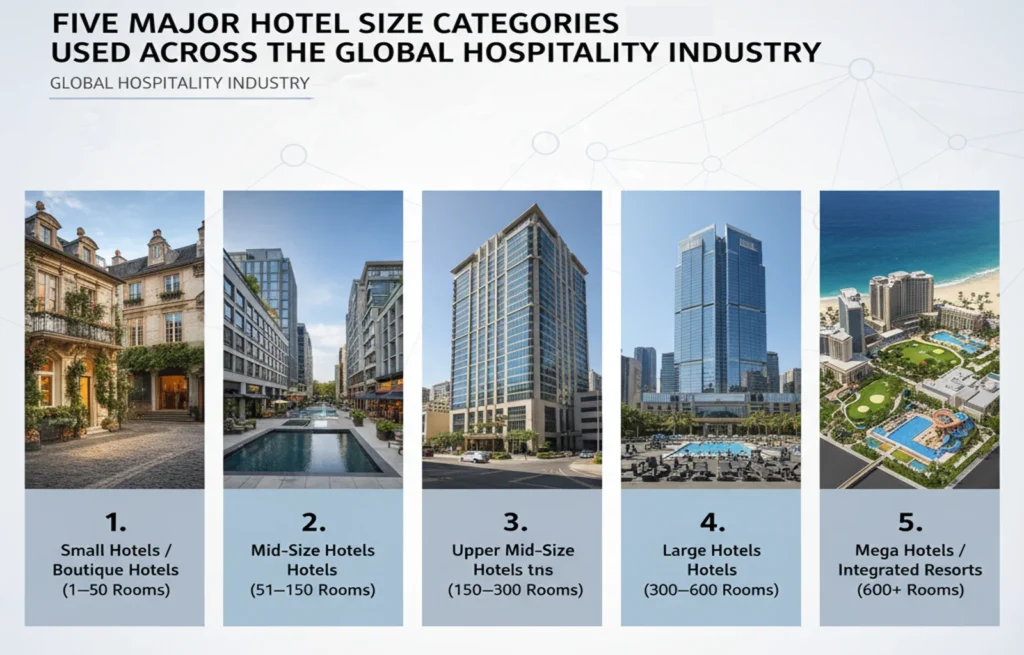
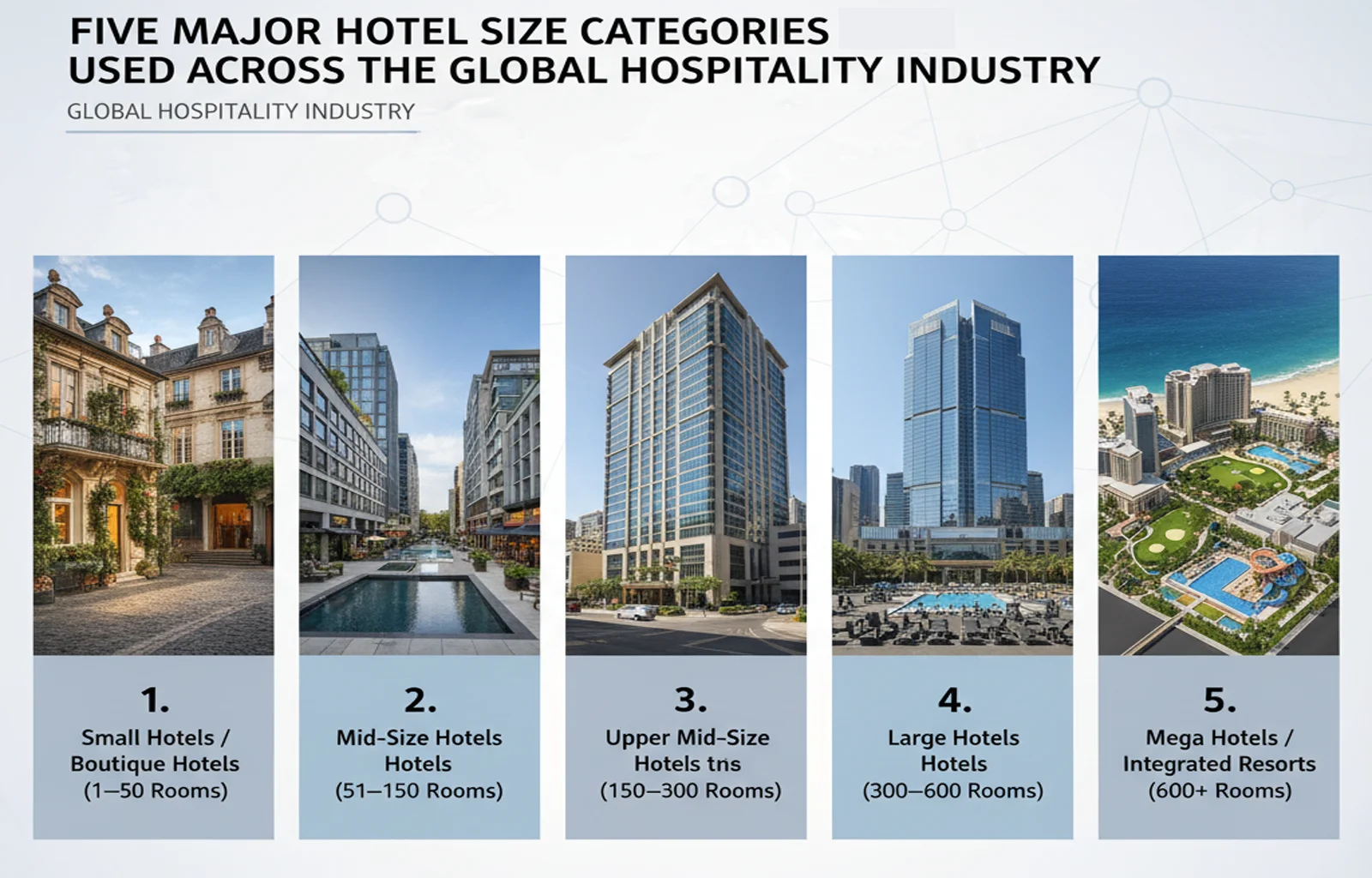
1. Small Hotels / Boutique Hotels (1–50 Rooms)
Small hotels—including boutique hotels, inns, and heritage stays—offer a deeply personalized guest experience rooted in intimacy, character, and storytelling. Their limited room inventory allows staff to know guests by name, remember preferences, and deliver emotionally resonant service moments that larger hotels struggle to replicate. With fewer operational layers, decision-making is quick and guest concerns are resolved faster, enhancing overall satisfaction. Their flexibility to adopt unique themes, local art, and community-driven experiences gives them strong branding appeal in lifestyle and experiential travel markets.
Pros:
• Highly personalized service and stronger guest loyalty
• Lower operational complexity and overheads
• Strong appeal to niche, experiential, and luxury-seeking travelers
• Flexibility in design, menu, and guest experience innovation
Cons:
• Limited economies of scale, making costs per room higher
• Lower revenue potential due to fewer rooms
• Difficult to compete with large brands for technology, distribution, and marketing
• Seasonal fluctuations hit harder due to smaller financial buffers
2. Mid-Size Hotels (51–150 Rooms)
Mid-size hotels represent the backbone of urban, business, and leisure accommodation worldwide. They balance intimacy with efficiency, offering standardized services while retaining flexibility to adapt to local guest preferences. With moderately sized F&B operations, event spaces, and amenities, they attract a blend of corporate, MICE lite, and family travellers. Their cost structures allow them to maintain profitability without the heavy overhead typical of large hotels.
Pros:
• Strong revenue stability due to balanced target segments
• Easier staffing and training compared to large hotels
• Economies of scale begin to take effect
• Ability to provide solid amenities without huge capex
Cons:
• Competitive pressure from both boutique and large chain hotels
• Limited space restricts MICE opportunities
• Brand distinction becomes difficult in saturated city markets
• Moderate marketing budgets limit global visibility
3. Upper Mid-Size Hotels (150–300 Rooms)
Hotels in this segment offer a comprehensive range of services—multiple restaurants, banqueting facilities, gyms, pools, and often a full suite of business services. They strike a sweet spot between personalized service and large-scale operations. Their room inventory supports healthy RevPAR and GOP margins, especially in metros and airport districts. These hotels serve corporate travellers, weddings, conferences, and long-stay guests, giving them multi-stream revenue security.
Pros:
• Higher revenue opportunities from rooms + events + F&B
• Greater brand visibility and stronger loyalty program integration
• Ability to attract corporate tie-ups and MICE clients
• Better negotiating power with vendors due to scale
Cons:
• Higher operational complexity demands skilled management
• Increased staffing and training costs
• Guest personalization may decline as volume increases
• Capex for renovations and upgrades becomes significantly higher
4. Large Hotels (300–600 Rooms)
Large hotels operate like small ecosystems—multiple F&B outlets, sprawling banquets, extensive recreation zones, and large-scale staffing structures. They are preferred for weddings, conventions, and high-volume tourism markets. Their size allows robust revenue diversification, from room sales to large events, conventions, and ancillary services. These properties often anchor a destination’s hospitality brand image and benefit from strong economies of scale.
Pros:
• Massive revenue potential across multiple departments
• Strong MICE capability with large halls and breakout rooms
• Competitive advantage in brand recall and marketing
• Ability to negotiate better OTA, vendor, and corporate deals
Cons:
• Very high operational overhead and fixed costs
• HR management becomes complex; turnover impacts service quality
• Personalized guest service becomes challenging
• Economic downturns create large financial stress due to heavy debt and payroll
5. Mega Hotels / Integrated Resorts (600+ Rooms)
Mega hotels, casino resorts, theme resorts, and large beachfront properties operate almost like integrated hospitality cities. They include convention centres, entertainment zones, multiple restaurants, malls, theatres, water parks, and more. Their ability to attract large-scale events—international conferences, mega weddings, tourism flows—makes them economic engines for destinations. However, they are capital-intensive and require advanced leadership, technology, and financial strategy.
Pros:
• Highest revenue and profitability potential
• Ability to host national/international MICE events
• Strong global branding and destination leadership
• Create thousands of jobs and boost local economies
Cons:
• Extremely high construction, operating, and maintenance costs
• Vulnerable to geopolitical, economic, and tourism downturns
• Operational complexity requires elite management teams
• Guest service consistency can suffer due to sheer scale