
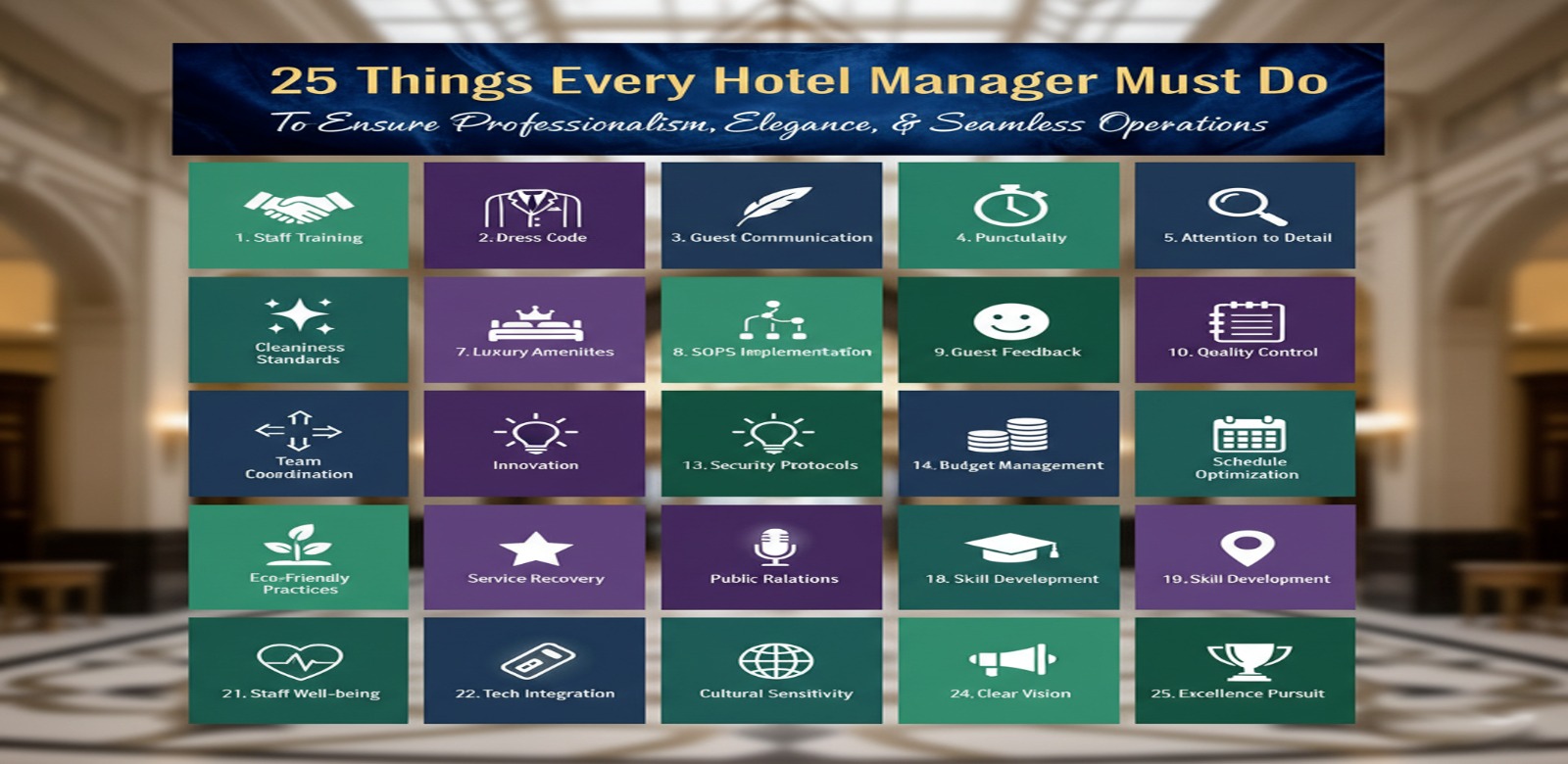
A comprehensive guide for modern hoteliers striving for operational excellence and brand distinction.
The role of a Hotel Manager extends far beyond daily operations — it embodies leadership, refinement, and consistency that define a property’s reputation. We at URAHL have identified 25 foundational practices, each essential to sustaining professionalism, elegance, and seamless guest experiences across departments.
1. Lead by Example in Professional Conduct
A hotel manager’s demeanor sets the cultural tone for the entire property. Politeness, punctuality, empathy, and grace under pressure form the cornerstone of hospitality leadership. Team members mirror what they observe; hence, consistency in professional appearance, speech, and composure is critical. When a manager demonstrates calm efficiency even during crises, it cultivates a disciplined, service-oriented environment that guests can feel and trust.
2. Maintain Impeccable Grooming and Presentation Standards
Elegance begins with visual impressions. The manager must ensure every staff member, from concierge to kitchen steward, adheres to immaculate grooming and uniform standards. Conducting daily appearance checks and investing in proper uniform maintenance communicates pride and attention to detail. This consistency across all touchpoints subtly reinforces brand credibility and guest confidence in the hotel’s quality standards.
3. Establish and Uphold Standard Operating Procedures (SOPs)
SOPs ensure uniformity, efficiency, and quality in service delivery. The manager must lead periodic reviews of all departmental SOPs — housekeeping, F&B, front office, engineering, etc. — aligning them with evolving guest expectations and global best practices. Proper documentation, team training, and audit mechanisms guarantee that service consistency remains unbroken regardless of shift or season, ensuring operational smoothness.
4. Implement Rigorous Staff Training and Cross-Departmental Knowledge
Training is not a one-time event but a continuous process. The hotel manager should enforce structured induction programs, skill enhancement workshops, and cross-training opportunities. This not only enhances staff competence but also fosters interdepartmental empathy. A front desk agent who understands kitchen constraints or a housekeeper aware of guest relations nuances can contribute far more effectively to seamless operations.
5. Prioritize Guest Experience and Personalization
Professionalism manifests through attentiveness to individual guest needs. A hotel manager must lead the culture of remembering guest preferences — from pillow type to dining habits. Regular analysis of guest feedback and CRM data helps in crafting personalized touches. Anticipating rather than reacting to guest expectations transforms service from routine to memorable, elevating the hotel’s reputation for elegance and warmth.
6. Foster a Culture of Respect and Teamwork
Hospitality thrives on harmony. The manager must ensure a respectful, inclusive, and empowering environment for all employees. Encouraging open communication, recognizing achievements, and resolving conflicts quickly fosters loyalty and cooperation. Teams that feel valued serve guests more sincerely, reducing turnover and enhancing operational fluidity across shifts and departments.
7. Conduct Daily Briefings and Walkthroughs
A disciplined daily schedule of team briefings and property walkthroughs keeps operations synchronized. The manager should review guest arrivals, VIPs, events, maintenance tasks, and service challenges. Walkthroughs allow real-time quality checks on cleanliness, décor, lighting, and ambiance. These proactive inspections ensure that no lapse escapes attention — the hallmark of a smoothly run luxury hotel.
8. Enforce Quality Control Across All Touchpoints
From food plating to linen texture, quality consistency defines a hotel’s brand. The manager must establish measurable standards and perform regular audits — including surprise checks. Engaging department heads in joint evaluations encourages accountability. A well-calibrated quality control system ensures that every guest interaction, whether visual, tactile, or experiential, meets brand promise impeccably.
9. Master Financial Acumen and Cost Efficiency
A professional hotel manager understands budgets, cost structures, and revenue levers. Monitoring key performance indicators (RevPAR, GOP, ADR, occupancy) ensures sustainable profitability. Implementing cost-control measures without compromising guest experience — such as energy optimization or smart procurement — reflects financial discipline and managerial maturity essential for long-term success.
10. Elevate Guest Communication and Complaint Resolution
A refined manager listens attentively and resolves complaints graciously. The “Listen, Empathize, Resolve, Follow-up” model should guide every service recovery process. Guests value acknowledgment more than excuses. Ensuring post-resolution follow-ups not only salvages relationships but can convert a dissatisfied visitor into a loyal advocate. Elegant communication under pressure is a true test of professionalism.
11. Oversee Hygiene, Sanitation, and Safety Standards
Health and safety are non-negotiable. The hotel manager must implement rigorous hygiene protocols — kitchen inspections, pest control, fire safety audits, and emergency drills. Post-pandemic hospitality demands visible hygiene assurance to guests. Regular training in food safety, chemical use, and sanitation SOPs ensures not only compliance but guest reassurance, thereby enhancing overall credibility.
12. Ensure Efficient Coordination Between Departments
Smooth hotel operations depend on interdepartmental synergy. The manager must institute efficient communication systems — daily reports, centralized dashboards, or operational software — to prevent misalignment. Whether it’s housekeeping syncing with front desk on room status or F&B aligning with banquets, coordination minimizes delays, errors, and guest dissatisfaction.
13. Strengthen Vendor and Procurement Management
Professional management includes ensuring reliable supplier relationships and quality control over materials. The manager must periodically review vendor performance, negotiate competitive pricing, and enforce ethical sourcing standards. From linens to produce, each item influences the guest experience. An elegant hotel operation is one where even back-end processes reflect professionalism and integrity.
14. Maintain Robust Maintenance and Engineering Oversight
The hotel’s physical environment defines guest comfort. The manager must ensure preventive maintenance schedules are meticulously followed for HVAC, elevators, lighting, and plumbing. Periodic infrastructure audits reduce breakdowns and preserve property aesthetics. A smoothly functioning, well-lit, and climate-controlled space reflects unseen excellence — the quiet elegance of operational discipline.
15. Prioritize Technology Integration for Seamless Operations
Digitalization enhances efficiency. The manager should leverage PMS (Property Management Systems), CRM tools, contactless check-ins, and IoT-based maintenance systems to streamline workflows. Technology, when used elegantly, reduces errors, accelerates service, and frees staff for personalized guest interaction. Continuous tech training ensures the staff remains confident and consistent in delivery.
16. Monitor and Improve Guest Feedback Mechanisms
Actively tracking online reviews, guest comment cards, and survey analytics helps identify gaps in service. The manager should personally respond to key reviews on major platforms, showing accountability and care. Trend analysis from guest feedback provides actionable insights for training and improvement, making the hotel’s operations self-evolving and guest-centric.
17. Practice Sustainable and Ethical Operations
A modern, elegant hotel practices sustainability as a moral and branding imperative. The manager must ensure responsible waste management, energy-efficient systems, water conservation, and local sourcing. Training staff to communicate sustainability initiatives to guests not only elevates brand image but aligns operations with global ESG principles — a mark of progressive professionalism.
18. Maintain Strong Relationships with Guests and the Community
Professionalism extends beyond transactions. The hotel manager should nurture long-term relationships with repeat guests and engage with local businesses and community leaders. Hosting charitable events or cultural programs enhances goodwill and visibility. A hotel that feels like a part of its community resonates authenticity and elegance beyond its walls.
19. Encourage Innovation and Creativity Among Staff
Great hotels evolve through ideas from within. Encouraging staff to propose creative service improvements or efficiency hacks makes them stakeholders in success. The manager can organize monthly innovation meetings or reward suggestions that enhance guest delight. Empowered employees drive continuous refinement — the essence of seamless hospitality.
20. Implement Strategic Marketing and Brand Positioning
The manager must collaborate with marketing teams to ensure the hotel’s public image reflects its service philosophy. From social media tone to photography aesthetics, every marketing element must exude elegance. Coordinating with PR agencies and online platforms ensures consistent brand storytelling, while targeted campaigns help sustain healthy occupancy throughout the year.
21. Conduct Regular Performance Reviews and Coaching
Performance management sustains professionalism. The manager must conduct structured appraisals — focusing not only on outcomes but attitude and teamwork. Constructive feedback sessions, career development discussions, and succession planning help maintain morale and excellence. Continuous improvement should be embedded in the property’s operational DNA.
22. Master Time Management and Delegation
Seamless operation depends on the manager’s ability to prioritize tasks and delegate effectively. Micromanagement disrupts efficiency; delegation with accountability builds trust and speed. Scheduling tools, daily planners, and defined reporting structures prevent chaos and ensure that every department functions like a synchronized orchestra.
23. Ensure Legal and Regulatory Compliance
From fire safety to labor laws and tax regulations, legal adherence safeguards reputation and continuity. The hotel manager must maintain updated licenses, renewals, and certifications. Regular compliance audits and liaison with legal advisors prevent violations. Professionalism also means anticipating regulatory changes — not reacting to them.
24. Curate Ambience, Décor, and Emotional Atmosphere
Elegance is sensory. The manager must oversee the visual and emotional environment — lighting, aroma, background music, floral arrangements, and staff demeanor. The goal is to evoke calmness, luxury, and belonging. Subtle environmental control transforms operational efficiency into a refined experience that guests remember long after check-out.
25. Cultivate Emotional Intelligence and Human Connection
Above all, a hotel manager must be emotionally intelligent — understanding both guest emotions and employee motivations. Compassion, patience, and active listening turn procedures into experiences. Professionalism without empathy feels mechanical; elegance without warmth feels artificial. True seamlessness arises when operational perfection meets human grace.
Conclusion
A hotel’s elegance is not just in marble lobbies or designer uniforms — it is in the invisible harmony of processes, people, and passion orchestrated by a visionary manager. The 25 practices above form the backbone of professional, refined, and efficient hotel management — ensuring every guest departure is accompanied by satisfaction, and every employee ends the day with pride.