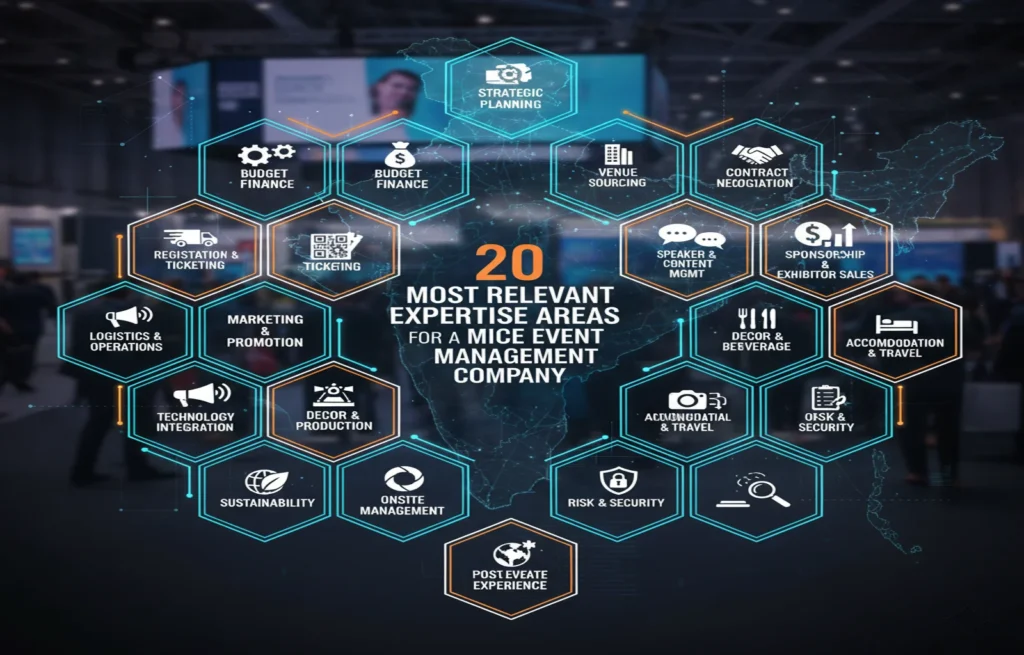
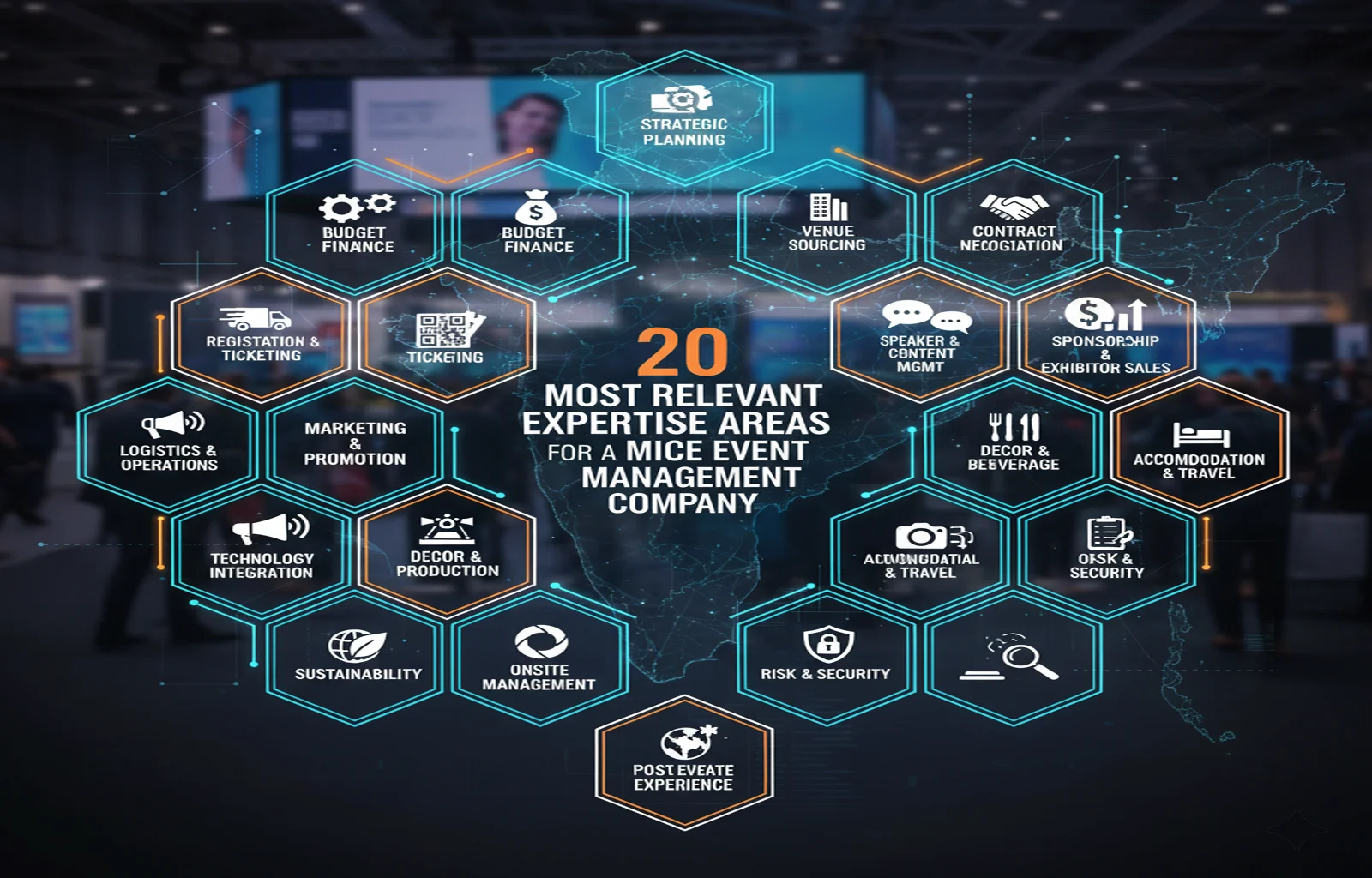
1. Strategic Event Planning & Concept Development
Strategic planning is the backbone of a world-class MICE event management company, forming the architecture upon which every conference, meeting, incentive program, or exhibition is built. It begins with deeply understanding the client’s objectives—be it brand positioning, investor confidence, internal alignment, industry thought-leadership, or customer engagement—and transforming those objectives into a structured event blueprint. This expertise includes researching audience demographics, competitive benchmarking, developing unique value propositions, analyzing stakeholder expectations, and creating a coherent event narrative that aligns with the organization’s long-term goals. Strategic planners also incorporate measurable KPIs, ROI frameworks, risk forecasts, and operational feasibility studies to ensure the event vision is creative yet realistic. They develop event journeys, session flows, speaker maps, engagement strategies, and thematic frameworks that connect content, design, and logistics into a single cohesive experience. This expertise helps avoid fragmented execution and ensures that every element of the event—the venue, technology, communication, décor, logistics, and hospitality—serves a strategic purpose. Companies strong in strategic planning reduce wastage, optimize budgets, and present clients with meticulously reasoned plans backed by data, enabling them to host events that leave lasting business impact rather than just ceremonial impressions.
2. Venue Sourcing, Contracting & Negotiation
Venue expertise is central to MICE operations because the venue influences the event experience, logistics workflow, accommodation availability, accessibility, technology integration, hospitality services, and cost structure. A MICE company must have deep knowledge of convention centers, hotels, resorts, expo grounds, business districts, and unconventional venues across countries and cities. This includes capacity analysis, compliance norms, fire and safety certifications, breakout room availability, cargo access points, backstage infrastructure, security zones, and parking layouts. The company must also master negotiation—securing competitive rates for halls, rooms, equipment, catering, and block bookings, while ensuring flexibility on attrition clauses, cancellation terms, and vendor access. Expert venue sourcing involves site inspections, layout planning, traffic flow mapping, and assessing the ability of the property to handle VIP movements, high-profile speakers, media, interpreters, and large crowds. MICE companies with strong venue expertise reduce risks like overbooking, space mismatch, technical incompatibility, or inflated costs. They also maintain long-standing industry relationships, enabling them to secure prime dates, loyalty benefits, and upgrades for clients. Venue mastery ensures that the chosen space not only fits the event’s purpose but elevates its impact.
3. Budgeting, Financial Planning & Cost Optimization
Financial expertise is crucial because MICE events involve numerous cost components—venue, accommodation, catering, AV technology, manpower, décor, logistics, transportation, security, digital platforms, printing, entertainment, and contingencies. A proficient MICE company develops precise and transparent budgets that allow clients to understand cost drivers and optimize resource allocation. Financial expertise includes forecasting, vendor rate benchmarking, multi-tier budgeting, ROI modeling, cost-benefit analysis, dynamic budget adjustments, and creating financial buffers for risk scenarios. Cost optimization is not merely about cutting expenses; it focuses on maximizing value—negotiating best deals, preventing overspending, avoiding duplication, and ensuring every expenditure adds tangible value to the guest experience. MICE financial planning also involves tracking expense leakage, maintaining real-time financial dashboards, monitoring foreign exchange impacts for international events, ensuring compliance with tax regulations, and preparing post-event financial reconciliation reports. Companies with strong financial expertise help clients conduct large-scale events without budget overruns and enable transparent, data-driven decision-making.
4. Logistics Planning, On-Ground Operations & Coordination
Logistics is the engine that transforms plans into reality. MICE events involve thousands of moving parts—airport pickups, room allocations, baggage handling, VIP transfers, large equipment movements, staging, layout changes, seating configurations, venue turnarounds, and crowd management. An expert MICE company builds a detailed logistics framework that maps each participant’s journey and each operational team’s responsibilities. This includes master scheduling, vendor coordination, manpower deployment, technical rehearsals, risk planning, equipment timelines, and contingency protocols. On-ground teams must work in harmony with hotel staff, security, AV technicians, decorators, caterers, vendors, and supervisors to ensure a seamless flow. Expertise also includes accreditation systems, transport scheduling, loading/unloading zones, last-mile connectivity, and real-time troubleshooting. MICE logistics teams handle unexpected challenges—flight delays, equipment failures, weather disruptions, VIP demands, and sudden schedule changes—with calm and precision. Their ability to execute flawlessly determines whether the event experience feels smooth and effortless to participants.
5. Audio-Visual (AV), Staging, Lighting & Technical Production
Modern MICE events rely heavily on advanced AV production, stage design, lighting architecture, and broadcast-level execution. This expertise includes understanding LED walls, projection systems, digital mapping, stage engineering, rigging, trussing, console operations, microphones, sound engineering, backstage communication, teleprompter systems, streaming equipment, hybrid setups, and interpretation cabins. A skilled MICE production team can translate event content into visually striking presentations using cinematic stage design, immersive lighting effects, synchronized soundscapes, and interactive media. They conduct technical rehearsals, script run-throughs, speaker coaching sessions, show-calling, cue management, and redundancy planning to ensure zero disruption. Expertise also includes managing power distribution, equipment safety, acoustics, and emergency backup systems. High-quality AV and stage production elevate brand perception and make speaker sessions, product launches, panel discussions, and award nights more impactful.
6. Creative Design, Event Theming & Brand Experience
Creative design expertise is what transforms a standard business event into a memorable, emotionally compelling experience. For MICE companies, this involves developing visual identities, thematic narratives, stage concepts, décor elements, and brand-infused touchpoints that shape how guests perceive the event from the moment they walk in. Theming requires an understanding of color psychology, spatial storytelling, attendee flow, cultural relevance, and brand guidelines. It’s not only about aesthetics but about crafting an experiential journey—right from registration counters, signage, photo-op zones, and installations to immersive stage backdrops and breakout room environments. Expert design teams ensure that every creative asset—presentations, digital banners, exhibition booth graphics, lighting palettes, and prop placements—aligns with the event’s message and the client’s brand identity. They also work closely with production teams to ensure creative ideas are executable within venue limitations, technical feasibility, and budgets. This expertise greatly influences audience engagement and brand recall, making the event resonate emotionally rather than merely informing. Creativity is often the differentiator that makes events go viral, motivates social sharing, and leaves a lasting imprint long after the curtains close.
7. Delegate Management, Registration & Hospitality
Managing delegates is one of the most sensitive and operationally complex components of MICE. It begins with designing registration systems—online portals, mobile apps, QR-based check-ins, RSVP tracking, preference mapping, dietary information, session selection, and automated confirmations. A MICE company must offer highly structured pre-event communication: emailers, itineraries, reminder notifications, travel advisories, and helpdesk assistance. During the event, hospitality expertise includes seamless check-in counters, badge printing, crowd flow management, multilingual support desks, concierge services, and hospitality teams that understand cultural etiquette. Delegate experience is elevated further through lounge areas, charging stations, personalized gifts, curated itineraries, and on-spot issue resolution. This expertise also extends to rooming lists, airport transfers, welcome kits, and ensuring all delegates receive timely communication during the event regarding schedules, room changes, or activity reminders. Delegate management is ultimately about creating comfort, trust, and smoothness so attendees can focus on the event’s content rather than operational friction.
8. Vendor Management, Procurement & Multi-Agency Coordination
MICE events require collaboration with dozens of vendors—AV teams, decorators, florists, transport providers, caterers, security agencies, digital specialists, printers, exhibition fabricators, emcees, entertainers, photographers, videographers, and more. Vendor management expertise ensures that every vendor understands the event’s technical requirements, timelines, safety norms, quality expectations, and budget parameters. MICE companies must conduct vendor vetting, contract negotiation, job allocation, timeline planning, onsite supervision, and final settlement. This requires clear communication, technical knowledge, and the ability to foresee potential issues before they occur. Effective vendor management minimizes inconsistencies, maintains quality control, and prevents delay cascades. Multi-agency coordination is especially crucial during tight turnarounds, complex setups, or large-scale exhibitions where multiple teams work simultaneously. A strong MICE company acts like an orchestra conductor—ensuring that each vendor performs their role in harmony with the others.
9. Content Creation, Program Design & Speaker Management
Content drives the intellectual value of MICE events. Expertise in content development includes researching industry topics, understanding the client’s communication objectives, designing session flows, structuring plenaries and breakouts, writing scripts, creating keynote presentations, drafting speaking notes, and developing storytelling frameworks. Program design is about creating a balanced agenda—mixing knowledge sharing, networking, entertainment, and engagement activities to keep participants energized throughout the event. Speaker management involves shortlisting speakers, coordinating with agencies, managing contracts, aligning content, scheduling rehearsals, handling travel and hospitality, and ensuring stage-readiness. It also includes managing VIP speakers, industry leaders, government officials, and celebrities who require special protocols. A strong content and program team ensures that the event delivers value beyond aesthetics and logistics by offering thought-provoking insights and meaningful engagement.
10. Digital Technology, Event Apps & Hybrid Event Platforms
Technology is now one of the most crucial MICE competencies. It includes developing event apps that handle registration, scheduling, networking, live polling, matchmaking, push notifications, and maps. Hybrid and virtual platforms require expertise in streaming, webcast management, simultaneous interpretation, backend configuration, breakout controls, attendee analytics, and multi-device compatibility. MICE companies must understand API integrations, CRM connections, lead capture systems, chatbots, virtual exhibition booths, and digital engagement tools such as quizzes, Q&A modules, and virtual lounges. With technology, events become more interactive, measurable, and scalable. Digital platforms allow global participation, reduce cost, and create on-demand content libraries. Companies that excel in digital transformation also ensure cybersecurity, data privacy compliance, and real-time tech support for attendees. This expertise is now a core differentiator as the world increasingly moves toward hybrid experiences.
11. Marketing, Promotions & Delegate Acquisition
A MICE event is only successful if the right audience attends. Marketing expertise includes designing compelling campaigns—digital advertising, social media promotion, email marketing, influencer outreach, sponsor promotions, and media partnerships. MICE companies handle pre-event buzz creation through teaser videos, landing pages, newsletters, press releases, ambassador programs, and targeted communication. Delegate acquisition involves segmentation, lead generation, database building, personalized invites, referral incentives, and strategic messaging. This expertise ensures high-quality participation, better networking quality, and a stronger perceived value of the event. Marketing teams also coordinate brand guidelines, outdoor visibility, venue branding, PR coverage, and post-event amplification. A strong promotional strategy enhances credibility, expands reach, and improves client visibility.
12. Sponsorship Management, Exhibitor Acquisition & Revenue Maximization
Sponsorship management is one of the most strategically significant expertise areas for any MICE event management company because it directly influences event scale, financial sustainability, and brand partnerships. A well-structured sponsorship strategy begins with understanding the event’s audience profile, industry value, competitive landscape, and market potential. The MICE company must design tiered sponsorship packages—Platinum, Gold, Silver, Knowledge Partner, Technology Partner, Networking Partner, and more—each offering distinct benefits such as stage time, branding zones, exhibition booths, digital visibility, lead-generation opportunities, and curated audience interactions. The company must articulate ROI clearly to sponsors, helping them quantify the tangible value they will gain through participation.
Exhibitor acquisition is another crucial component. This involves identifying categories of exhibitors relevant to the event’s theme, building a comprehensive outreach database, creating pitch decks, conducting sales conversations, negotiating booth deliverables, and guiding exhibitors through the end-to-end process of participation. MICE companies must also manage booth layout planning, stall fabrication coordination, exhibitor manuals, show-day requirements, and lead-capture systems.
Revenue maximization requires a balance between sponsor interests and attendee experience. A skilled MICE company ensures that sponsorship placements enhance—not overwhelm—the event environment. By creating attractive sponsorship touchpoints, maintaining transparent communication, and providing exceptional onsite support, the company cultivates long-term partnerships that extend beyond a single event.
13. Travel, Accommodation & Destination Management
Travel and destination management expertise is essential for events involving national or international delegates. It encompasses the complete movement-planning ecosystem—from booking air travel to coordinating airport pickups, luggage handling, rooming lists, hospitality desks, and city navigation. A competent MICE company begins by analyzing the event’s scale, delegate profile, and destination logistics. It must evaluate flight connectivity, peak traffic hours, local transport options, weather conditions, and cultural norms before designing a seamless travel plan.
Accommodation management includes negotiating group rates, room blocks, early check-in/late check-out arrangements, VIP suites, and special requests. The company must prepare detailed rooming lists, coordinate with hotel front office teams, manage welcome counters, and ensure rooms are ready upon arrival. For international events, visa processing assistance, travel advisories, and documentation guidance play a significant role in ensuring stress-free delegate journeys.
Destination management goes beyond logistics—it’s about curating the experience. This may include city tours, curated culinary experiences, cultural performances, shopping excursions, and guided attractions. The MICE company must also coordinate with local authorities for permits, ensure safety arrangements, understand local laws, and build relationships with tourism boards.
Ultimately, strong destination and travel management expertise ensures comfort, reliability, cultural sensitivity, and operational precision—elements that significantly influence delegates’ overall experience and the event’s reputation.
14. Food & Beverage Planning, Menu Engineering & Banquet Coordination
Food and beverage planning is a cornerstone of event satisfaction because culinary experience often leaves the strongest emotional impression on attendees. A MICE company must understand dietary diversity, cultural preferences, event schedules, and environmental factors before designing an F&B plan. Menu engineering involves curating a blend of cuisines—Indian, continental, Asian, Middle Eastern, fusion—as well as specialized requirements like vegan, Jain, gluten-free, keto-friendly, or allergen-sensitive menus. The company must coordinate tasting sessions, analyze kitchen capabilities, assess service patterns, and align meal presentations with the event’s theme or brand identity.
Banquet coordination includes scheduling meal breaks, synchronizing service with session timings, managing buffet layouts, monitoring table-turnover efficiency, ensuring proper labeling, and maintaining food temperature and hygiene standards. Close collaboration with hotel banquet teams is essential to guarantee timely replenishment, adequate service staff, and smooth flow of guests.
Live counters, coffee stations, dessert bars, and VIP dining areas require separate planning and coordination. The MICE company must also anticipate potential delays, manage long queues, and maintain high service consistency.
Well-executed F&B planning creates comfort, enhances hospitality value, and reflects positively on the event organizer. It is an expertise that blends creativity, logistics, cultural sensitivity, and hospitality finesse—making it a vital component of excellent MICE delivery.
15. Exhibition Planning, Booth Design & Floor Management
Exhibition expertise requires a unique combination of architectural understanding, branding insight, technical knowledge, and operational precision. A MICE company must begin by conceptualizing the exhibition floor—identifying zones, categorizing exhibitor types, planning aisle width, defining emergency exits, and designing visitor flow patterns to maximize engagement. This includes preparing 2D and 3D layouts, mapping shell schemes, identifying electrical and lighting requirements, and ensuring compliance with venue safety regulations.
Booth design is another critical component. Exhibitors expect the MICE team to guide them on stall structure, branding elements, lighting enhancements, product displays, digital screens, demo areas, and storage solutions. The company must coordinate closely with fabricators, graphic designers, and AV teams to ensure timely production, installation, and quality control.
Floor management during the expo involves overseeing load-in and load-out schedules, supervising stall setup, managing exhibitor queries, handling last-minute structural adjustments, monitoring safety compliance, and ensuring smooth crowd movement. Additional responsibilities include exhibitor registration, exhibitor manuals, helpdesks, signage, navigation maps, and technical troubleshooting.
Strong exhibition expertise ensures that exhibitors achieve the visibility, lead generation, and business outcomes they expect. A well-designed and well-managed expo floor enhances credibility, boosts footfall, and significantly elevates the overall success of the MICE event.
16. Risk Management, Compliance & Crisis Handling
Risk management is the backbone of professional event execution because even the most beautifully planned event can collapse if safety and compliance are not meticulously managed. A MICE company must identify potential risks across logistics, technical infrastructure, weather, crowd behavior, electrical load, venue limitations, VIP protocols, and legal requirements. This involves performing a detailed risk assessment covering fire hazards, evacuation routes, medical emergencies, structural safety, stage load calculations, and environmental factors like rain or extreme heat.
Compliance expertise requires coordination with government bodies, police, fire departments, municipal corporations, licensing authorities, and insurance providers. Permissions for sound, stage construction, drone usage, large gatherings, traffic control, and food handling must be obtained and documented.
Crisis handling expertise is crucial during unexpected situations such as power failures, equipment breakdowns, protest disruptions, weather events, medical emergencies, or transport delays. A capable MICE company prepares contingency plans, backup systems, emergency response teams, first-aid stations, and communication protocols to minimize disruption and ensure delegate safety.
Through disciplined planning, regulatory adherence, and quick decision-making, the company protects the event’s integrity and the client’s reputation, ensuring continuity even during high-pressure scenarios.
17. Security Management, Protocols & VIP Handling
Security management requires a deep understanding of crowd dynamics, threat assessment, and official protocols. A professional MICE company begins by evaluating the event type, geographical location, delegate profile, and presence of high-profile guests such as CEOs, diplomats, government ministers, or celebrities. This assessment helps determine the scale of security deployment including armed personnel, access control systems, CCTV placement, metal detectors, bag scanners, and emergency teams.
VIP handling adds another layer of complexity. It requires escort teams, dedicated check-in counters, green rooms, restricted-access areas, protocol officers, vehicle coordination, and adherence to government or diplomatic guidelines. The MICE team must also ensure secure backstage movement, timed entry and exit mapping, and confidentiality regarding schedules.
Security protocols extend to badge categorization, crowd segregation, perimeter monitoring, cyber-security for digital check-ins, anti-sabotage checks, and liaison with police or private agencies. Effective communication systems such as walkie-talkies, command centers, and emergency response units ensure quick action when needed.
With strong security and protocol expertise, a MICE company creates a safe, controlled, and dignified environment where delegates feel confident, VIPs feel respected, and event operations flow without interruption.
18. Networking Facilitation & Business Matchmaking
A major value driver for MICE events is their ability to create meaningful professional connections. Networking facilitation expertise involves understanding the attendee mix—buyers, sellers, partners, investors, policymakers, and thought leaders—and designing formats that maximize interaction. This includes curated networking lounges, industry-specific roundtables, hosted-buyer programs, speed networking sessions, investor meet-ups, and pre-scheduled appointments.
Business matchmaking requires sophisticated data analysis and personalized planning. MICE companies may use digital tools or AI platforms to map participant profiles, interests, and objectives, enabling recommended meeting pairings. They also design meeting pods, private cabins, discussion zones, and digital appointment schedulers to streamline interactions.
Facilitation teams ensure meetings start on time, are well-coordinated, and achieve measurable outcomes. This includes supporting attendees with reminders, escorts, follow-up coordination, and lead-capture tools. Post-event analytics help measure deal-flow, lead quality, partnership conversions, and engagement outcomes.
By strengthening the business value of events, networking and matchmaking expertise significantly enhances attendee satisfaction, sponsor ROI, and overall event reputation. It turns a regular event into a platform for lasting collaboration and commercial growth.
19. Team Leadership, Workforce Training & Manpower Deployment
A successful MICE event requires a highly trained and well-coordinated workforce. Team leadership begins with assembling the right professionals—event coordinators, registration staff, hospitality teams, ushers, AV technicians, decorators, production crews, exhibition managers, logistics supervisors, and protocol officers. Each member must understand their responsibilities clearly and be trained in communication, grooming, problem-solving, and customer service.
Manpower deployment expertise includes mapping staff strength to event size, planning shift rotations, assigning zone-wise responsibilities, and ensuring adequate coverage at registration counters, backstage areas, helpdesks, exhibition aisles, and VIP sections. The MICE company must also conduct briefing sessions, rehearsals, and rapid response drills before the event.
Training extends to etiquette, cultural sensitivity, emergency procedures, walkie-talkie communication, guest interaction, and conflict resolution. Senior leaders must maintain oversight, coordinate inter-departmental communication, solve escalations, and inspire team morale even under pressure.
A well-led workforce brings discipline, speed, precision, and hospitality excellence to the event, significantly elevating the overall experience for delegates and clients.
20. Post-Event Reporting, Analytics & ROI Measurement
Post-event reporting is essential for understanding the event’s impact, improving future editions, and demonstrating measurable value to clients. This expertise includes collecting data on delegate attendance, demographics, session participation, time spent in exhibition zones, sponsor visibility, digital engagement rates, social media impressions, and lead-generation outcomes. Feedback forms, app analytics, RFID tracking, QR scans, and surveys form the backbone of data collection.
Analytics teams must convert raw data into actionable insights. This involves evaluating session popularity, speaker performance, networking success, exhibitor ROI, service efficiency, and overall satisfaction scores. Financial reconciliation is also essential—tracking expenditure, sponsor payouts, vendor payments, and cost-efficiency benchmarks.
ROI measurement frameworks allow clients to quantify benefits such as brand exposure, partnership inquiries, sales leads, thought-leadership positioning, and stakeholder goodwill. The MICE company provides a detailed post-event report with recommendations, visual dashboards, gap analysis, and suggestions for scaling future editions.
Post-event analytics demonstrate accountability, transparency, and strategic thinking—qualities that strengthen long-term client relationships and position the MICE company as a trusted partner for future events.